“My son”: The two words that came to Smit Machchhar’s mind when asked whom he thought of first during the fight to survive.
5 Oct 2026 | 12:06 For Machchhar, who is now recovering from the traumatic incident, the memory of the attack remains difficult to revisit. Because his wife and two children live with him in the UAE, the thought of his family was especially significant. He confirmed that it was his first time flying with the co-pilot involved in the incident. He managed to open the door, but the situation escalated, and he lost consciousness for the first time. By then, he was struggling to remain conscious and had lost a significant amount of blood.
“My son,” Machchhar said when asked whom he thought of first during the ordeal, in an interview with Sky News Arabia. Recalling the beginning of the flight, Machchhar said there had been nothing unusual about the journey. “There was nothing which would make me raise my eyebrows,” he told Sky News Arabia, explaining that the flight had proceeded normally through the usual formalities and procedures. During the conversation, the co-pilot said he wanted to pray. “He kept on hitting,” Machchhar recalled. He said his vision quickly narrowed to just a few inches, making it difficult to see properly. As an experienced pilot, he said, he could recognise what was happening even without looking at the instruments. Even after speaking to doctors and psychologists, he said, he has not been able to piece together everything that happened. Machchhar said it was something he would remember for the rest of his life. “Everyone in world did the best in their capacity to save the day,” he said. In the days immediately after the attack, Machchhar said he would experience sudden flashes of the first blow to his head. “One thing that I would take away from that day was the determination, the sheer determination of everyone to survive,” he told Sky News Arabia, referring to both the crew and the passengers. He said he realised he was out of danger only when the aircraft touched down. He said he would never forget the support and treatment he received, particularly from the medical teams and the UAE government. Now recovering, Machchhar said he was still trying to process the trauma of what had happened. “It almost feels unbelievable to be able to now sit and have a conversation with you,” he said, reflecting on the care he had received and his ability to spend time with his family again.
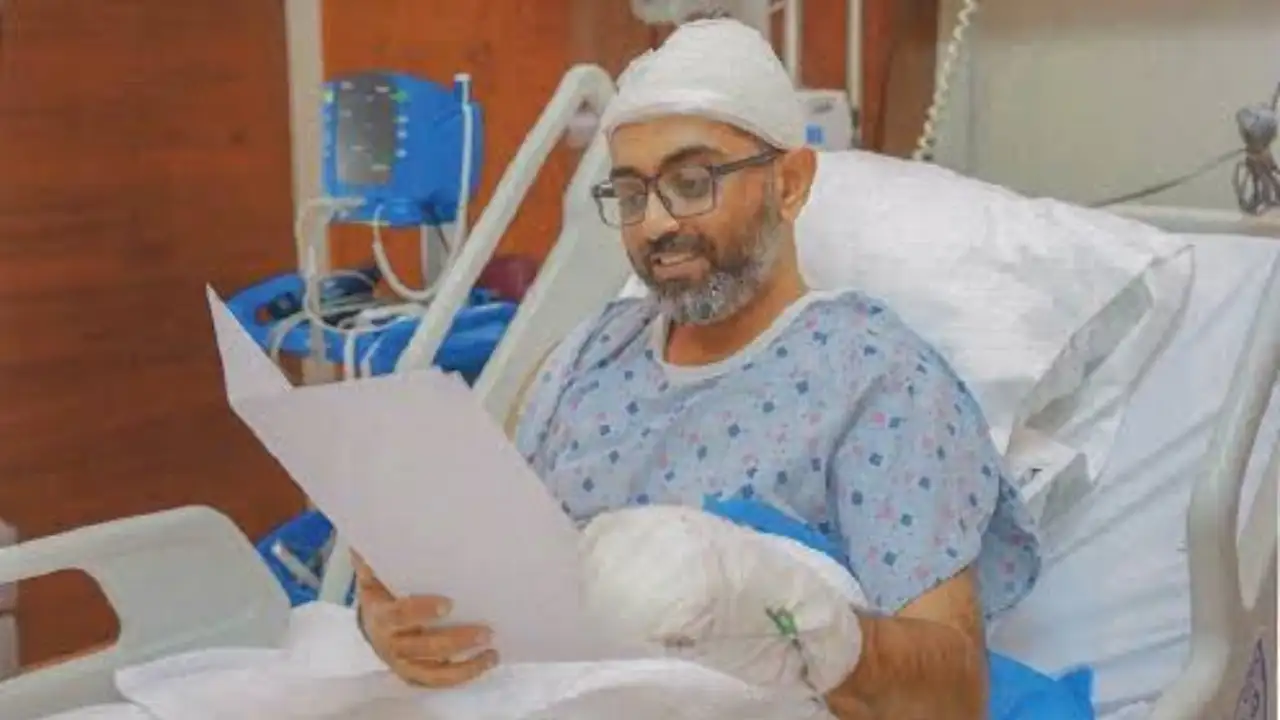
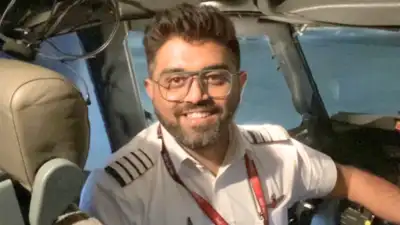
Indian pilot Smit Machchhar has recalled the terrifying moments when he was allegedly attacked by his co-pilot in the cockpit, describing how repeated blows to his head left him drifting in and out of consciousness as the aircraft went into a dive. Amid the struggle to stay alive, one thought stood out above everything else: his two-year-old son. His wife, son and daughter live with him in the UAE, where he was eventually brought back for medical treatment after receiving care in Saudi Arabia. But as he recounted what happened that day, he also spoke about the determination of the people on board to survive, the actions of the crew who helped save lives and the medical care he received afterwards. He had been flying the same route for a long time, and working with a new crew was a routine part of the job. The flight also had an augmented crew, with another set of crew members scheduled to take over the operating duties on the return journey after landing in Tel Aviv. Another captain, a colleague who was expected to operate the return flight, had entered the cockpit to speak with the crew. The other captain stepped out, respecting his request, while Machchhar continued with his work. Machchhar initially struggled to understand what had happened. His first thought was that something from the aircraft’s roof might have broken off and hit him, causing serious damage. He tried to regain his composure and assess the situation, relying on his training as a pilot. But within seconds, he realised that he was being attacked. He attempted to protect himself from further blows, unbuckling his seat belt and trying to block the attack. During the struggle, he was also hit on the hand. Realising he needed help, he tried to call the other captain back into the cockpit. Machchhar recalled hearing shouting and sensing that the co-pilot had threatened to hit the other crew members as well. The door was subsequently shut. Soon afterwards, he heard the engine sounds change and felt the aircraft going into a dive. The aircraft was descending, and he was repeatedly slipping in and out of consciousness. Machchhar described the fight to survive as a series of fragmented memories. He also acknowledged the role of the other captain, who took over the controls and helped save the situation. Asked what he wanted people to understand about the incident, he emphasised that the effort to save the aircraft and those on board was not the work of one person alone. Even while sitting normally, the memory could return without warning, leaving him palpitating and shaken. Yet the incident also left him with a lasting impression of the determination shown by everyone involved. a doctor and members of the crew worked to keep him conscious While he was being attended to in the galley. For him, the immediate priority was to keep fighting and not give up on life. And when asked whom he thought of first in that struggle, his answer was simple: his two-year-old son. Machchhar expressed deep gratitude for the medical care he received in Saudi Arabia and after being brought back to the UAE. Speaking about his condition roughly two and a half weeks after the incident, he described himself as better, though not fully recovered. “Grateful is the word I would say right now. His account offers a glimpse into the moments of fear, confusion and determination that unfolded inside the cockpit, as well as the personal thought that remained with him while he fought to survive: his young son. You use AI every day. Now get your AI Quotient. Take the AIQ test Get the latest Lifestyle News and more. Download the TOI app.
The change in crew arrangements was not unusual, according to Machchhar. “Grateful is the word I would say right now”: Smit Machchhar on recovering from the ordeal and being able to spend time with his family again. “I told myself that, Smith, do something.
Nothing about the flight had led him to anticipate what would happen next. The attack began around two hours into the journey, while he was seated in the cockpit carrying out routine checks. As he checked information such as the aircraft’s expected landing time and fuel, he was suddenly struck hard on the back of his head. He remembers trying to reach the cockpit door, somehow locking his leg in place and pushing himself forward. His next memory was of the door being open and himself lying between the cockpit and the galley. There was a moment when he realised that he might not survive unless he acted. You can’t die like this,” he recalled. The memory remains deeply emotional for him. he described the moment as one in which he understood that he had to do something to stay alive While he did not say that he had accepted death.