
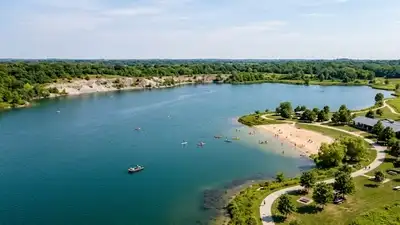
AI-generated representative image. Credits – Gemini
It opened to the public in spring 2001 with a lake of 115 acres, a visitor centre and an amphitheatre. From gravel pit to disposal site According to an EPA fact sheet on reuse, the quarry was in operation from 1952 to 1971. By the time it closed, much of the topsoil was gone, and the sides had vertical walls of up to 60 feet high. It would be a tough place to adore, but the Lake County Forest Preserve District purchased the area in 1979 and began designing a preserve around it.
Old gravel pits are a common sight in the American Midwest. When the sand and stone are exhausted, they often are left as deep pits with steep walls, and some of them silently turn into dumping places. It’s not often you get a second life as a spot where families swim, rent boats and set up on a lawn for summer concerts. That’s what happened at the former Petersen Sand and Gravel quarry in Libertyville, Lake County, Illinois. Once the barrels of paint and solvent waste were excavated and hauled away and the federal and state agencies decided no additional cleanup was necessary, the Lake County Forest Preserve District completed the conversion of the pit into Independence Grove Forest Preserve.
Petersen was refused a permit for a landfill in 1971, and the Illinois Environmental Protection Agency investigated allegations of illegal dumping and ordered it stopped. Between 400 and 500 drums of paint and solvent waste were removed in 1977. Lake County Grading, the mining firm the district had contracted to regrade the pit in exchange for the remaining gravel, found hidden drums while regrading in 1983. That year, a forest preserve district contractor removed contaminated soil and about 500 drums of solvents and 1,000 paint cans. Checking the site The pit was included on the federal Superfund National Priorities List in 1986, and the Illinois EPA, with help from the US EPA, conducted a detailed examination. Fieldwork was carried out between October 1986 and December 1987, with the final report submitted in April 1988. They analysed groundwater for more than 150 compounds, and only iron and manganese went above drinking water guidelines set for taste and odour, a level that was also exceeded in groundwater upgradient of the site. They took soil borings at the three known dumping areas and 23 other locations and did buried metal surveys over a 20-acre grid. A 1988 EPA document summed up the findings: the earlier waste removals had been enough to protect people and the environment, and no unacceptable danger remained, so no further cleanup was required. The facility was removed off the Superfund list in 1991. crews pumped around 1.7 million gallons of water a night from a sump pond into the neighbouring Des Plaines River to keep the pit dry While mining continued. The pit floor sat about 20 feet below the river level, so it had to be pumped dry for mining to continue.
Because no one could accurately predict conditions once a lake filled the pit, the agencies asked the county to monitor surface water and sediment before and after the lake was formed. Credits – Gemini Creating the lake and the preserve The district signed an agreement with Lake County Grading to regrade and restore the property in exchange for mining the remaining gravel. The pit’s darker history began when its owner, Raymond Petersen, let people deposit waste in a worked-out corner from the mid-1950s, state records show. Nobody knows when the paint, the paint debris and the solvents started coming. Later, there were more. Investigators took samples of groundwater, soil, surface water and sediment. Soil showed low levels of a few solvents, such as toluene, plus traces of pesticides and one low reading of PCBs. Investigators were also keen to make sure no more drums were hidden. Nothing came up. There was one requirement. AI-generated representative image. What began as plans for walks, picnicking, swimming and boating expanded to include a visitor centre, a marina complex, a cafe, an event pavilion, an amphitheatre and a native plant garden.
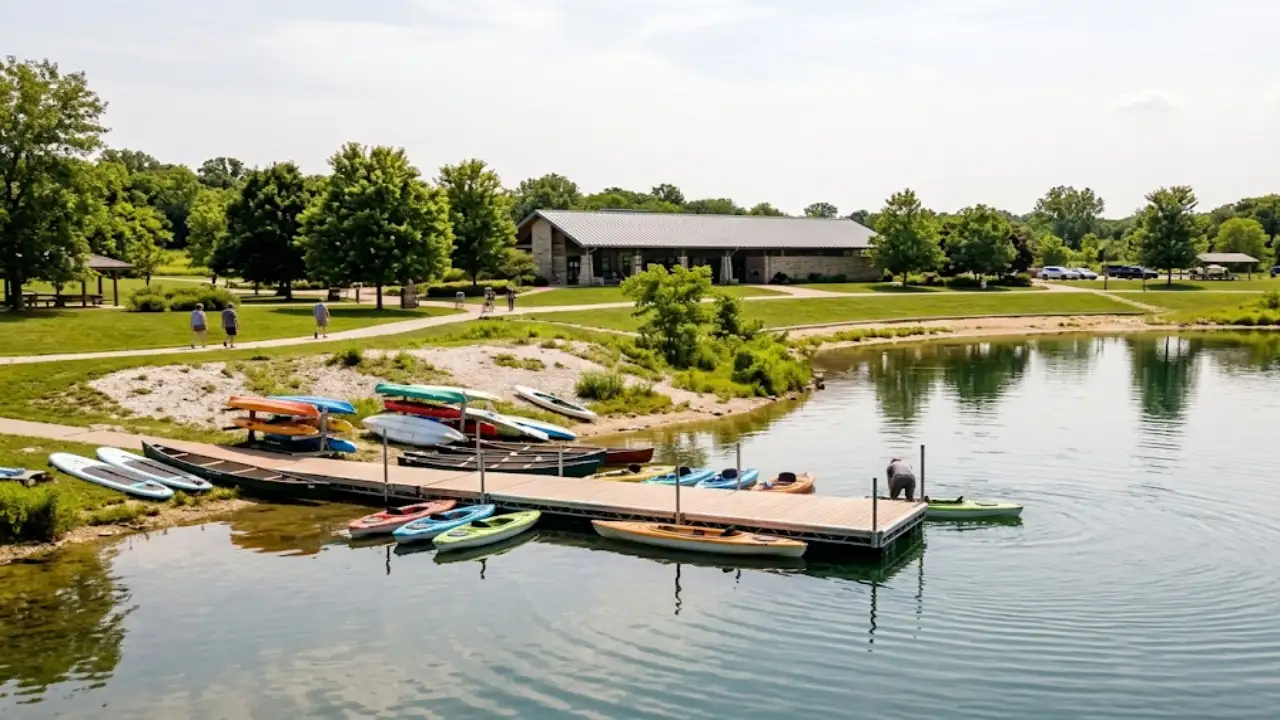
When the work was done, the 120-acre former quarry site formed part of a forest preserve of more than 1,100 acres, centred on a 115-acre lake. The visitor centre covers 19,000 square feet and hosts changing exhibits. As of 2007, the site had not had any further environmental problems since it was redeveloped, and a visitor would be hard-pressed to tell that the lake sits in a former quarry and garbage dumping area, the fact sheet says.
The preserve also features a marina with boat rentals, a beach, catch-and-release fishing, miles of trails and guided night hikes with naturalists. The amphitheatre hosts an annual summer concert series next to a fountain and native garden. You use AI every day. Now get your AI Quotient. Take the AIQ test.
The lesson from Libertyville is not that of a magical cleanup but of patience, testing and monitoring that allowed a ruined gravel pit to become a lake that visitors today use for swimming, boating and fishing.