
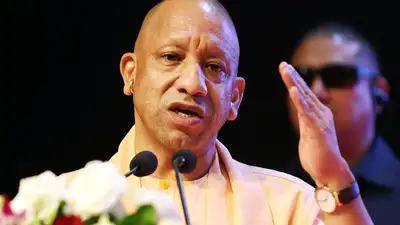
Under Yogi Adityanath, Uttar Pradesh aims to move beyond traditional industries by integrating manufacturing, technology, innovation, infrastructure, startups and skilled talent.
LUCKNOW: Rs 43,000 crore investment and more than 3 lakh employment opportunities generated in electronics sector; more than 55 percent of India’s mobile phones manufactured in Uttar Pradesh. Semiconductor ecosystem takes shape with Rs 3,700 crore ATMP facility and 1,000-acre semiconductor park. More than 24,000 DPIIT-registered startups and expanding AI, robotics and deep-tech ecosystem strengthen technology-driven growth Uttar Pradesh is undergoing a significant transformation in its industrial and technology landscape, emerging as an important destination for electronics manufacturing, semiconductors, artificial intelligence, robotics, deep-tech and other future-oriented industries. More than 200 companies are operating in the electronics sector, with investments exceeding Rs 43,000 crore and more than three lakh employment opportunities generated.
Under the leadership of chief minister Yogi Adityanath , the state has sought to move beyond traditional industrial sectors and create an ecosystem where manufacturing, technology, innovation, infrastructure, startups and skilled human resources reinforce one another. The expansion of the electronics sector is among the clearest indicators of this transformation. Supported by investment-friendly policies, improved infrastructure, better connectivity and a large technical workforce, Uttar Pradesh has developed a substantial electronics manufacturing ecosystem. This expansion is creating a wider industrial base extending from mobile phones and consumer electronics to components, appliances, drones and emerging technologies.
The Uttar Pradesh Electronics Components Manufacturing Policy-2025 has been designed to strengthen the state’s position not merely as an assembly destination but also as a location for component manufacturing. The 75-acre Robotics and AI Computing Park in Greater Noida represents an effort to develop infrastructure for emerging technologies alongside conventional electronics manufacturing. Investments exceeding Rs7,000 crore have been recorded under the IT Policy. The 100-acre HCL IT City in Lucknow and seven STPI IT Parks across the state are contributing to the expansion of IT-related activities. Investments of more than Rs 21,000 crore have been recorded in the data centre sector, according to the factsheet. Uttar Pradesh now has more than 24,000 DPIIT-registered startups. The Uttar Pradesh Startup Policy-2026 and U-Hub centres in Noida and Lucknow are aimed at strengthening this ecosystem. Uttar Pradesh possesses one of the country’s largest technical human resource bases, with more than 760 colleges and over four lakh students enrolled every year. The state is targeting a $1 trillion economy, and technology-intensive industries can contribute through investment, manufacturing, exports, productivity and high-value employment. The more than Rs43,000 crore investment in electronics, over three lakh employment opportunities, the Rs3,700 crore semiconductor ATMP facility, the proposed 1,000-acre semiconductor park and the presence of more than 24,000 DPIIT-registered startups illustrate the scale of this emerging ecosystem.
Because mobile manufacturing has a wide supply chain encompassing components, assembly, testing, packaging, logistics, warehousing, design and associated services, the development is particularly significant. The concentration of manufacturing activity in the state has therefore helped create opportunities beyond the final assembly line and contributed to the emergence of a broader electronics ecosystem. Because modern manufacturing itself is becoming more automated and data-driven, the convergence of electronics, computing, AI and robotics is increasingly important. The presence of robotics and AI capabilities can therefore support both technology startups and established manufacturing companies. Their growth can therefore complement the development of AI, deep-tech and electronics industries. Because semiconductor design, artificial intelligence, robotics, advanced manufacturing and other technology sectors require long-term research, specialised skills and access to incubation and investment, greater emphasis on deep-tech startups is particularly relevant.
Two electronics manufacturing clusters have also been developed in the Gautam Buddh Nagar region, reinforcing the state’s position as a major electronics production centre. The region benefits from its proximity to the National Capital Region, international connectivity, expressways, airports and established industrial infrastructure. The growing concentration of manufacturing units and supporting enterprises is helping create economies of scale and opportunities for ancillary industries. The electronics ecosystem in Uttar Pradesh is increasingly diversified. Alongside mobile phones, the state is witnessing activity in tablets, laptops, consumer electronics, household appliances, solar cells, defence and logistics drones, robotics and other technology-intensive products. Companies such as LG, Haier, Dixon, Raphe, Addverb, Samsung and Bhagwati are part of the expanding ecosystem. Their presence reflects the increasing diversity of manufacturing and technology capabilities developing within the state. Policy support has been an important component of this expansion. Uttar Pradesh is also building capabilities in semiconductor design and associated technologies. The presence of companies and technology organisations such as NXP, Renesas, Qualcomm and Cadence adds another dimension to the state’s emerging semiconductor ecosystem. The development of design, engineering, packaging, testing and related activities can create opportunities for highly skilled employment and encourage greater interaction between industry, educational institutions and startups. Infrastructure is another important factor behind the state’s technology ambitions. Technology-intensive industries require reliable transport networks, airports, industrial land, power, digital infrastructure and efficient movement of goods. Uttar Pradesh has substantially expanded its connectivity network, including expressways and dedicated freight corridors. The Jewar International Airport, the Eastern Dedicated Freight Corridor and Western Dedicated Freight Corridor, together with the state’s extensive expressway network, are strengthening the logistics foundation required for high-value manufacturing. The technology ecosystem is also expanding into artificial intelligence and robotics. Greater Noida and the wider Gautam Buddh Nagar region are emerging as important nodes in this technology network, while Lucknow is developing as another major centre. The broader objective is to create a technology corridor connecting different strengths of the state rather than concentrating all technology activity in a single location. The information technology sector provides another important layer to this ecosystem. These facilities provide opportunities for software development, IT services, technology companies and skilled employment while creating links between traditional IT services and newer technology sectors. Data infrastructure is also becoming increasingly important as the state expands its digital economy. Data centres provide the digital infrastructure required by cloud computing, artificial intelligence, financial technology, e-commerce, enterprise applications and a wide range of digital services. A rapidly expanding startup ecosystem is adding an innovation dimension to this transformation. This represents a substantial expansion in entrepreneurial activity and creates a base from which technology-focused enterprises can emerge. The state’s startup ecosystem is increasingly moving beyond conventional service-sector businesses towards deep-tech and innovation-driven enterprises. Human capital will remain central to the success of this transformation. Semiconductor manufacturing, AI, robotics and deep-tech industries require engineers, technicians, researchers, designers, software professionals and other specialised workers. Institutions such as IIT Kanpur and IIT BHU, along with technical and educational institutions across the NCR and other parts of the state, provide a significant talent pool. The state’s technology strategy is consequently not limited to attracting factories. The larger objective is to create an integrated ecosystem linking education, skills, research, startups, manufacturing and infrastructure. Such integration can allow students and young engineers to move from educational institutions into startups, research organisations, technology companies and manufacturing units within the state. For Uttar Pradesh, the emergence of electronics and semiconductors also has significance for the broader objective of becoming a larger and more diversified economy. The electronics sector can generate opportunities across the manufacturing chain, while semiconductors, AI, robotics and deep-tech can create higher-value activities based on engineering and innovation. The evolution of the state’s technology landscape also reflects a broader shift in the nature of industrial development. Uttar Pradesh is seeking to combine its traditional strengths—large markets, extensive industrial land, connectivity and human resources—with newer strengths in electronics, digital technology and advanced manufacturing. The combination can potentially create opportunities for both large global companies and domestic startups. From mobile phone manufacturing to semiconductor packaging, from IT services to data centres, and from electronics to AI and robotics, Uttar Pradesh is building a technology ecosystem with multiple interconnected components.
More than 55 percent of the mobile phones manufactured in the country are now being produced in Uttar Pradesh. Under the Central Government’s Semicon India Programme 2.0, with a financial outlay of Rs 1.27 lakh crore, efforts are being made to build a resilient semiconductor ecosystem in the country. Operated by India Chip Private Limited, the facility is located in Sector-28 of the Yamuna Expressway Industrial Development Authority area and represents an investment of more than Rs3,700 crore.
You Can Also Check: Gold Rate in Lucknow | Silver Rate in Lucknow | Bank Holidays in Lucknow | Public Holidays in Lucknow | Lucknow AQI | Weather in Lucknow | Petrol Price in Lucknow | Diesel Price in Lucknow | CNG Price in Lucknow | LPG Price in Lucknow Stay updated with the latest Lucknow news. Mobile manufacturing has emerged as a major pillar of this growth. Uttar Pradesh has already secured an important position in this emerging landscape. A semiconductor ATMP, or Assembly, Testing, Marking and Packaging, facility has been approved by the Central Government. The importance of such a facility extends beyond the investment itself. Semiconductor manufacturing involves a complex chain of activities, and assembly, testing and packaging are essential stages in converting semiconductor devices into usable components. The establishment of such capabilities can encourage the development of suppliers, specialised logistics, testing services, engineering companies and skilled technical manpower around the facility. Download the TOI App.
Investments exceeding Rs 3,800 crore have already been attracted under the policy, according to the factsheet. The proposed 1,000-acre semiconductor park in the Yamuna Expressway region further strengthens this long-term vision. Because a competitive electronics industry requires a robust domestic supply chain, the emphasis on components is particularly important. The state’s technology journey is therefore moving from individual industrial projects towards the creation of a broader network of manufacturing, innovation and skills.
Uttar Pradesh has also been awarded the status of “Top Performer” in the DPIIT State Startup Ranking Framework-2024. Greater availability of components, materials, testing facilities and supporting services can reduce dependence on external sources while creating additional opportunities for domestic enterprises. The next major frontier for Uttar Pradesh is semiconductors. Semiconductors are at the heart of virtually every modern technology, from smartphones and computers to electric vehicles, defence systems, artificial intelligence infrastructure and advanced industrial machinery. Recognising the strategic importance of this sector, the state is now positioning itself to participate in India’s emerging semiconductor ecosystem. The availability of a dedicated industrial area can provide space for semiconductor-related companies, component manufacturers, suppliers, research facilities and other technology enterprises. With the semiconductor industry requiring specialised infrastructure and a reliable ecosystem, the planned park can become an important anchor for technology-intensive industrial development in the region. Creating platforms where entrepreneurs can connect with mentors, investors, institutions and industry can help strengthen the pipeline from ideas to commercial enterprises. The recognition reflects the state’s efforts to develop institutional support for entrepreneurship and innovation. For a state with a very large young population, the expansion of startups also creates an alternative pathway for employment generation through entrepreneurship and technology-led businesses. With continued infrastructure development, policy support, industry participation and investment in human capital, electronics and emerging technologies are increasingly becoming important components of Uttar Pradesh’s economic development strategy. The combination of a young workforce, technical talent, industrial infrastructure, connectivity and a growing startup base is providing the foundation for Uttar Pradesh to expand its role in India’s technology and manufacturing economy.