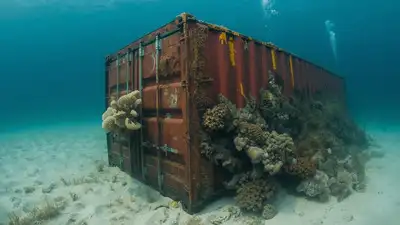
Representative AI image of a rusted industrial shipping container transformed into a thriving artificial reef. (Image Credits: ChatGPT)
South Carolina began developing an artificial reef off Charleston in 2014 by using retired industrial equipment. The initial installations included two 270-foot barges loaded with a large crane, a truck chassis, shipping containers and radio towers, according to the South Carolina Memorial Reef Fund. The Highway 41 bridge reef project was estimated to cost $180,000, with much of the expense covered through private donations and conservation contributions, according to the South Carolina Department of Natural Resources. The bridge was then welded to a retired 130-foot barge to create a structure with 44 feet of vertical relief above the seabed. The Department of Natural Resources announced the bridge’s removal and planned reef deployment in August 2017. The South Carolina Memorial Reef Fund’s project information identifies 27 October 2017 as the sinking date.
These currents influence nutrient-rich upwellings that stimulate baitfish activity and draw in larger pelagic species, according to Roff’s Ocean Fishing Forecasting Service. Initially, the project was supposed to use concrete and steel salvaged from the demolition of Charleston’s Cooper River bridges. When those materials were unavailable, organisers arranged alternatives, including shipping containers, radio towers and other discarded infrastructure, with help from Stevens Towing and Metal Trades. finding the funds for reef materials proved to be difficult Although the necessary permissions had been secured. Retired equipment was prepared for deployment as underwater structures, giving the materials a new use at the offshore site. The reef structures are beneficial to the surrounding water while providing habitat to marine life. These factors have elevated the site as a well-known area for encounters with blue marlin and sailfish, while ongoing monitoring showed it also hosts deep-water snapper and grouper