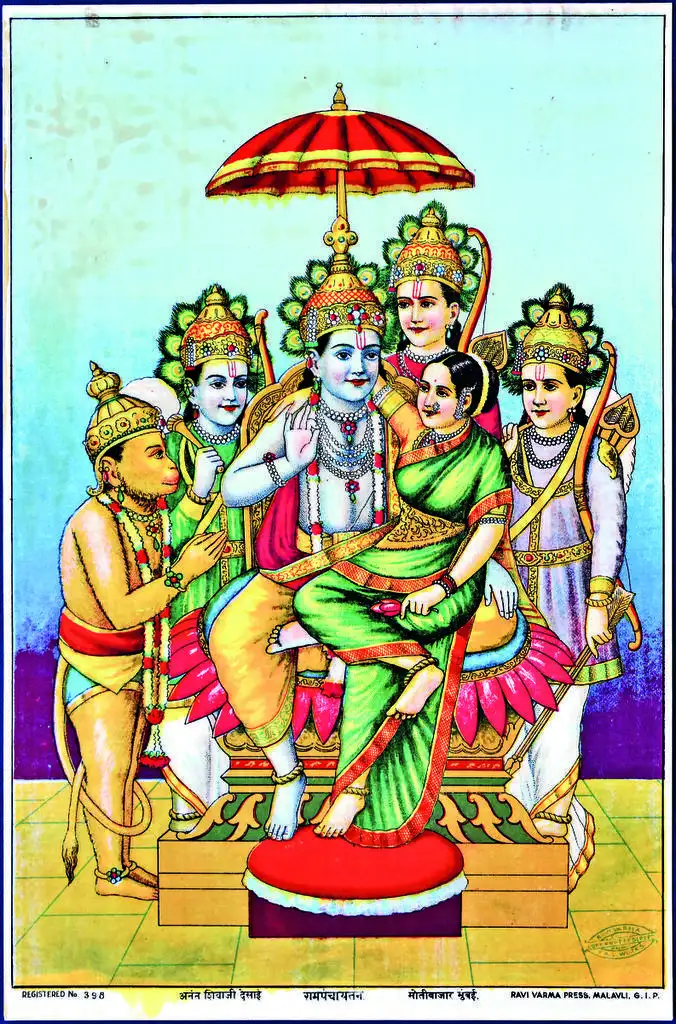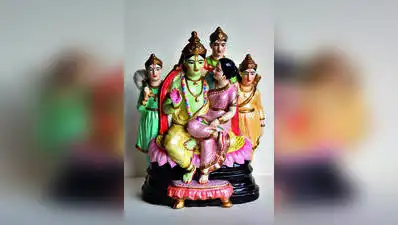
Lithograph’s 3D evolution
You Can Also Check: Gold Rate in Ahmedabad | Silver Rate in Ahmedabad | Bank Holidays in Ahmedabad | Public Holidays in Ahmedabad | Ahmedabad AQI | Weather in Ahmedabad | Petrol Price in Ahmedabad | Diesel Price in Ahmedabad | CNG Price in Ahmedabad | LPG Price in Ahmedabad Stay updated with the latest Ahmedabad news.
Relia said that the advent of mass chromolithography, particularly through artists such as Raja Ravi Varma and printing establishments including Calcutta Art Studio, Chor Bagan, and Kansari Para Art Studios, made previously inaccessible religious and mythological imagery available as inexpensive prints. Ahmedabad: The ongoing exhibition, ‘Porcelain: The Lithographic Mould’, curated by art expert Anil Relia at LD Museum, explores how lithographic imagery, colonial-era commerce, and Indian devotional traditions united in the making of porcelain objects. At first glance, the porcelain figure of Krishna performing Kaliya Daman appears to belong to the familiar world of Indian devotional imagery. Krishna stands poised upon the many-hooded serpent Kaliya, while two attendant figures raise their hands in devotion. The colours are vivid — yellow, pink, blue and green — and the glazed surface gives the work the unmistakable character of a decorative porcelain object. Yet, this seemingly simple devotional object tells a much larger story: one of print culture, industrial production, colonial trade, popular visual culture, and the transformation of two-dimensional religious imagery into three-dimensional objects. From image to object of devotion Porcelain art The late nineteenth and early twentieth centuries witnessed a profound transformation in the way Indians encountered images of gods, goddesses, and mythological figures. Complex form, wide-ranging reach The exhibition’s central insight is that these porcelain objects were not isolated inventions. As chromolithographs became increasingly popular, manufacturers recognised the commercial potential. European and Japanese porcelain makers, as well as emerging Indian enterprises such as Bengal Potteries, responded to a growing market for objects depicting familiar Indian religious subjects. Artists and craftsmen first created clay models based on the poses and compositions found in popular prints. These models had to translate the flat, carefully composed world of the lithograph into a three-dimensional form. Drapery, jewellery, anatomy, gestures, and facial expressions had to be reinterpreted for porcelain. Hence, an image that had originated as a mass-produced print could return to India as a three-dimensional porcelain devotional object. Significance of the exhibition An image originally created for mass consumption could acquire an intimate devotional meaning for its owner. This was part of a much broader transformation in Indian material culture. That shift is elucidated by the exhibition, which places these porcelain objects alongside the lithographs that inspired them, allowing visitors to understand the transition from the two-dimensional printed image to the three-dimensional object. The exhibition has been made possible through the loan of works from Relia’s collection. Download the TOI App.