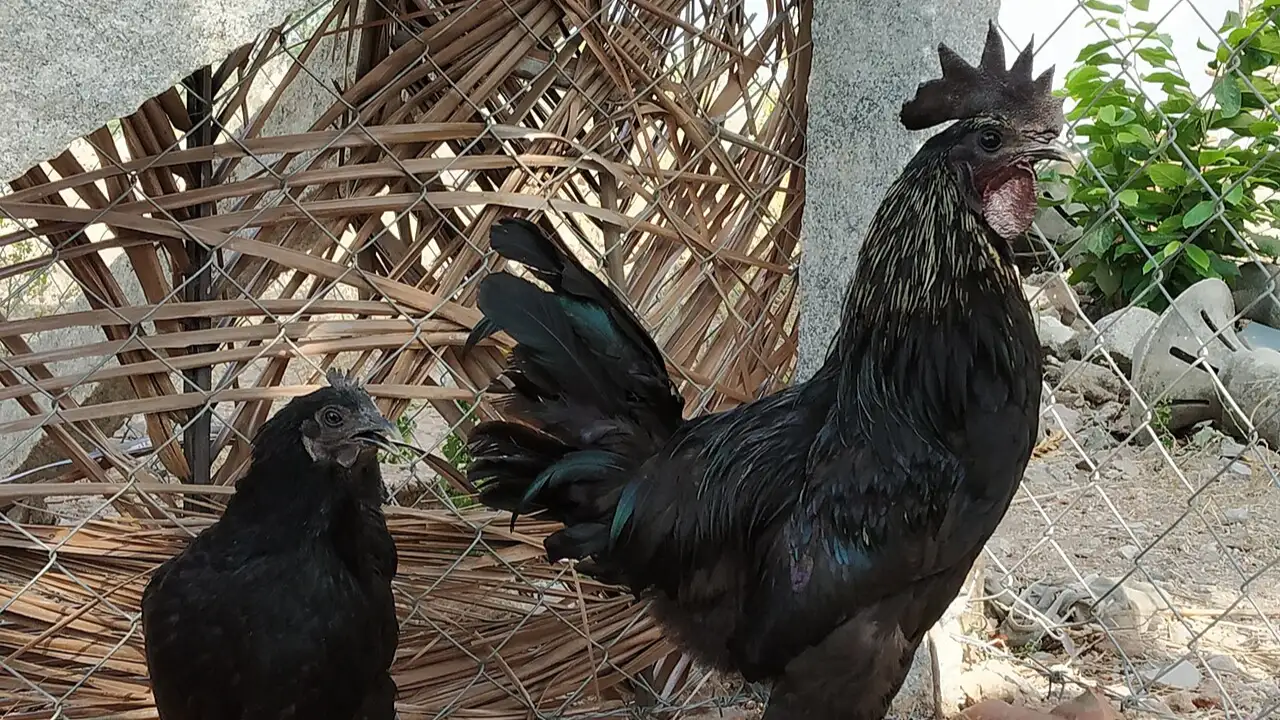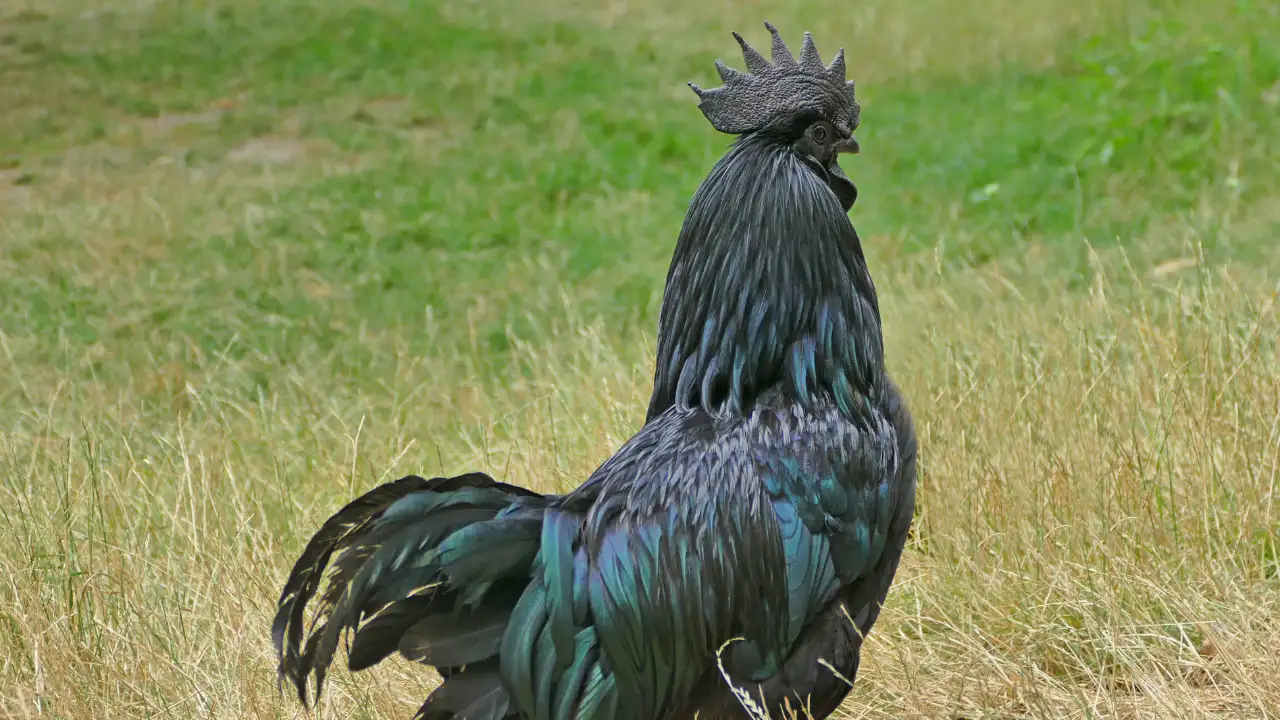
Kadaknath, or the Indian black chicken.
In 2019, a poultry investment scheme run by Maharashtra-based Maharayat Agro India Private Limited came under investigation after farmers alleged that they had been cheated . Another report from the same year described a case registered in Satara district, where farmers alleged they had been promised profits of up to ₹3 lakh after investing ₹75,000 in the scheme. The alleged losses in that case amounted to ₹1.48 crore. In a 2008, political campaigners across party lines would demand Kadaknath for dinner after a long day of campaigning in Jhabua.
Kadaknath is, therefore, much more than a novelty for the dinner table. Did you know chickens also have aesthetics? A standard rooster is, of course, cottagecore. But there are goth chickens as well! From its feathers to its meat and bones, the Kadaknath chicken is almost completely black. It looks like something out of a Tim Burton movie, except it is found in our very own Madhya Pradesh. And this isn’t just a bird with an unusual appearance. It has a GI tag, a loyal following and a history rooted in the lives of the state’s tribal communities. The Kadaknath chicken is also known as Kali Masi , which translates to fowl having black flesh. Among the few black chicken breeds found across the world, including the Ayam Cemani of Indonesia, Kadaknath is an indigenous Indian breed. This breed is primarily associated with the Jhabua and Dhar districts of Madhya Pradesh, where the Bhil and Bhilala communities have reared it for generations. The bird is popular among local Adivasi communities for its adaptability to the local environment, hardiness and the distinctive quality, texture and flavour of its meat. The irony is that the same qualities that make Kadaknath desirable, including its high market value and reputation for special health benefits, can also put pressure on the breed. Protecting it requires supporting the communities that raise it and ensuring that the financial returns make the effort worthwhile. With a bird that fetches such a high price, it is hardly surprising that Kadaknath has attracted its share of scams. The company reportedly promised attractive returns through Kadaknath farming and a buy-back arrangement for eggs and grown birds. Four officials were arrested as police investigated complaints from farmers across several districts. The company was accused of failing to buy back the eggs and mature birds, leaving farmers struggling to find buyers. And then there is the rather entertaining story of Kadaknath’s political popularity . The bird was so coveted that the demand itself was reportedly threatening its survival, with people scrambling to source the dwindling supply. In Jhabua, at least, a shared appetite for this black chicken could apparently cross party lines. It is an indigenous breed shaped by generations of local poultry keeping, valued for its meat and recognised for its cultural and agricultural significance. You use AI every day. Now get your AI Quotient. Take the AIQ test Get the latest Lifestyle News and more. Download the TOI app.
A 2022 study by researchers at ICAR’s Directorate of Poultry Research found that Kadaknath meat had a higher protein proportion and lower fat content compared to the commercial broiler samples examined. Kadaknath meat costs between ₹800 and ₹1,000 per kilogram, depending on the seller and location, and its eggs sell for ₹20 to ₹35 each. Kadaknath Chicken Meat of Jhabua got a Geographical Indication (GI) tag in 2018. The official registration was granted on 30 July 2018.
Kadaknath’s pigmentation is due to a genetic condition known as fibromelanosis . Because of the breed’s popularity, government agricultural programs have also been instituted. Because it can adjust to local conditions, but it still needs proper care and protection from disease, it is especially well-suited to backyard farming. Conservation efforts have therefore focused on helping farmers rear the birds more successfully, rather than simply increasing demand for their meat.
Its meat is also sought after for its nutritional value. However, the way the meat is measured or cut can produce varied results. This is also what makes the bird expensive. These prices are considerably higher than those of regular broiler chicken. But there is a catch. Despite being hardy and relatively well suited to backyard poultry farming, Kadaknath has a slower growth rate, lower egg production and later sexual maturity than commercial breeds. These factors make raising it a longer-term investment for farmers. Two Kadaknath chickens.Source: Wikimedia Commons The Kadaknath chicken is black inside and out: from its bones to its meat to feathers. Its legs and toenails, beak, tongue, comb and wattles are pigmented black. In fact, even its internal organs are black! But why does this breed possess such a uniquely dark tone? This leads to an abnormal accumulation of melanin, the pigment that colors skin and connective tissue, in the bird’s body. This gives Kadaknath its distinctive appearance. The registration recognises its association with Madhya Pradesh and helps protect the geographical identity of this prized product. The tag also carries significance for the local communities that have reared the breed for generations. Kadaknath is not just another expensive poultry variety; it is part of the region’s agricultural heritage and a potential source of income for small-scale farmers. Krishi Vigyan Kendras and other agricultural institutions had promoted Kadaknath rearing through distribution of chicks, training of farmers, vaccination and improved poultry management. Despite its popularity, Kadaknath is an endangered species. For all its popularity, Kadaknath has faced concerns about declining numbers and the loss of its genetic diversity.
ICAR researchers have previously documented the breed’s declining population, linking its vulnerability to slow growth, high chick mortality and the pressures of maintaining a traditional backyard poultry system.