
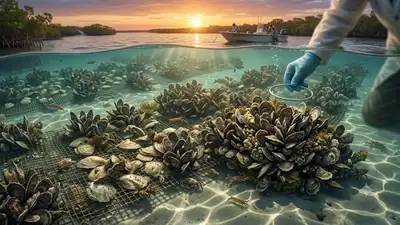
In 2004, researchers started testing small mats fitted with recycled oyster shells, placing them in areas where boat traffic had damaged existing reefs. Each mat carried 36 shells, held in place by plastic ties and arranged on a mesh base. ‘ The Use of Non-Plastic Materials for Oyster Reef and Shoreline Restoration: Understanding What Is Needed and Where the Field Is Headed ’, over the following years, the restored areas developed into productive oyster habitat, with average densities reaching around 1,000 live oysters per square metre, according to the study published in Sustainability by MDPI titled.
In Florida’s Mosquito Lagoon, the return of oyster reefs began with a relatively simple idea: give young oysters somewhere stable to settle. The approach was designed to recreate the structure of a natural reef in parts of the lagoon where oysters struggled to survive. The results also raised questions about the materials used to achieve that recovery.
Reportedly, between 1943 and 2009, oyster acreage in Mosquito Lagoon declined by more than 40%, according to research cited in the restoration assessment. Within three to eight years of deployment, the restored reefs averaged about 1,000 live oysters per square metre, according to the research cited in the assessment. Because they draw water through their bodies while feeding, filter-feeding animals such as oysters are of particular interest.
Several pressures have contributed to oyster declines across the southeastern United States, including disease, harmful algal blooms, changes in freshwater flows and human activity along the coast. In this part of Florida, recreational boating presented a particular problem. Those densities met or exceeded the levels recorded on intact natural reefs in the same local environment. The findings suggested that a relatively low-profile structure could help restore oyster habitat when placed in suitable conditions. The researchers were not attempting to build a completely artificial reef from scratch. The original mats achieved their intended purpose, but their construction relied on plastic mesh and cable ties. As concern about plastic pollution in marine environments grew, restoration practitioners began looking more closely at the materials being left in coastal waters. Microplastics have been documented across marine environments, including estuaries, and have been detected in many species. The research assessment does not establish that the Mosquito Lagoon restoration mats caused increased microplastic pollution, but it describes a wider concern that adding plastic structures to marine environments could contribute to an existing problem.
Instead, they were providing a stable base in areas where oysters had historically occurred but where disturbance had made it harder for reef structure to persist.