
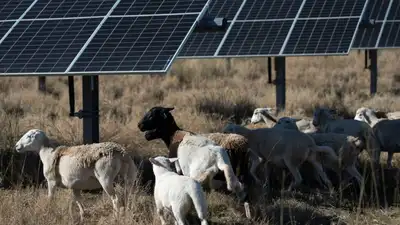
When JR Howard considered selling his small flock of 27 sheep, he was struggling to make a living from farming in Texas. Today, he manages 10,000 sheep that graze across 40,000 acres of large solar farms throughout the state. As reported by the San Antonio Express-News, that first deal gave him the income and opportunity he needed to grow his business into one of the largest solar grazing operations in North America.
The change began when a developer built a solar project near his property. Instead of seeing the energy project as a threat to farming, Howard secured a contract to let his sheep graze on the site and control plant growth. This approach, known as agrivoltaics or solar grazing, has become a practical business option for renewable energy companies and livestock farmers facing rising land costs and ongoing drought.
Energy company Enel North America hired Howard to supply 6,000 sheep to graze across 10,000 acres of solar fields, according to a report by Canary Media on large solar projects in Texas. Data collected by Enel from earlier solar grazing projects showed that soil organic matter increased by 200 per cent over time. This was due to natural fertilization from the animals.
Jesse Puckett, director of sustainability projects and community affairs at Enel North America, told Canary Media that the approach helps improve project profits while supporting the company’s sustainability goals. Speaking to Canary Media, Howard described the rapid growth of solar installations across the American West as “the greatest opportunity for the sheep industry in my lifetime”. For energy companies, using livestock at solar sites can lower long-term maintenance costs while also offering environmental benefits. “Ultimately, we’re a business. This is one way that we can enhance the bottom line and build sustainability into our project,” Puckett explained to Canary Media. He added that sheep can move around the complex layouts beneath solar panels without damaging the equipment. Along with cutting mowing costs, grazing can improve soil quality. Grazing also removed the carbon emissions linked to petrol-powered lawn mowers. Managing thousands of sheep across widely spread industrial sites brings its own challenges. Farmers must look after the animals’ health, arrange transport between locations, and set up suitable watering systems across large areas. To meet growing demand, Howard has made sub-leasing deals with nearby ranchers. These ranchers supply extra sheep to help him meet large contracts with energy companies. “Your mindset really has to change to do this. Yes, you’re still managing a flock and managing grass, but you have to do things a little differently on these sites. You have to realize this is a service industry,” Howard stated to Sheep Industry News. His company continues to expand its flocks to meet demand as new solar projects begin operating across Texas.