
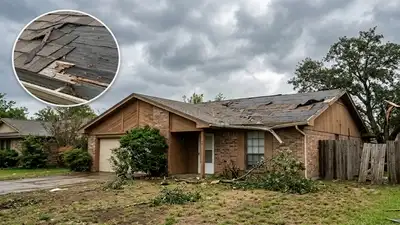
AI-generated representative image showing a Texas-style suburban home with tornado-related roof damage beneath a cloudy sky; the inset highlights torn shingles and exposed roofing material. Credits – Gemini
The Smiths held a homeowners policy with State Farm Lloyds, and in 2019 a tornado hit their property. State Farm paid them $292,901.67 for covered losses and additional living expenses, but the Smiths felt they deserved considerably more. After a five-day trial, a jury sided with the insurer, and on December 2, 2025, the Fifth Circuit , a US federal appeals court, affirmed the verdict in an unpublished opinion. From inspection to lawsuit By closing argument, the sum they were asking for had grown to somewhere between $25 million and $250 million. What the jury heard The trial lasted for five days and included eight witnesses, 36 factual stipulations, or facts the two parties agreed to in advance, and 384 exhibits. Shahid had taken 993 photos of the property and relied on them in part for his report, but the insurer did not turn them over until the eve of trial.
Because insurance covers insured losses rather than guaranteeing a home restored to the owner’s specifications, the gap between the two figures becomes the point of contention,. Shahid had been deposed by the Smiths before and they knew his views; therefore, there was nothing surprising about his testimony, it said.
The Smiths said that award should send a message to the insurer. Another expert for the insurer, Gary Boyd, who specialises in construction methods and repair costs, said the Smiths’ estimates were inflated and indicated a full remodel rather than necessary repairs. A tornado can leave a family with two problems at once. Besides the damaged house itself, there is the repair estimate, which arrives later and is rarely in line with what the insurer is willing to pay. Few such disputes reach a jury; most end in settlement. Gary and Martha Smith, a couple from Texas, took theirs all the way. The jury then weighed five days of evidence before reaching its verdict. Experts were called in from both sides, but they disagreed fiercely on the extent of the damage. The insurer’s engineer, Joe Shahid, testified that the house could be restored to its pre-tornado condition with minimal modifications. The Smiths’ own experts disagreed, but a jury is entitled to believe the evidence of one party. The jury found that the insurer had not breached its policy, had not engaged in any unfair or deceptive behaviour and had not failed to pay the whole claim. The appeals court added that the insurer had prepared its own estimate of the damage, shared it with the couple and even offered to resolve any differences in repair costs. The couple’s appeal focused on a procedural misstep by the insurer rather than on the size of the claim. AI-generated representative image showing roof-damage photographs, repair estimates and house keys beside a window overlooking a storm-damaged home under cloudy skies. Credits – Gemini Why the appeal failed The stumbling block was photographs. That was a breach of the court’s scheduling order and restrictions on disclosure of expert material. The Smiths requested the judge to strike Shahid in its entirety. Instead, the court limited his evidence to the images that had been shared on time, excluded the late ones, struck any mention of them and kept them out of the jury chamber. The appeals court approved their selections. The pictures also mostly used images they had already received. The couple had multiple opportunities to ask for a mistrial and at one point rejected the judge’s offer to declare one. The court held that since they had accepted the judge’s directions at the time, they could not dispute the verdict on the same grounds later on. Appeals courts are reluctant to overturn jury verdicts. The Fifth Circuit emphasised the role of the jury, not the judge, in weighing evidence and deciding which witnesses to believe. The verdict is sufficient as long as there is competent evidence in the record to support it. The trial court had also refused to grant a new trial, judging the jury’s findings to be sound.
They wanted $2.5 million before any lawsuit was filed. The ruling was not published and, as such, is not binding on other courts, but it shows how far a bad faith claim can travel and how a payment of nearly $293,000 can still become the centrepiece of a five-day trial. After the tornado, the insurer sent an inspector to assess the damage. The Smiths were not happy with the assessment and claimed that the company had acted in bad faith, a term that often refers to an insurer arbitrarily withholding money it owes. They sued in the US District Court for the Eastern District of Texas, alleging breach of contract and violations of Texas insurance law. But homeowners who believe an offer is too low do have options before a case hits the courtroom. The Texas Department of Insurance proposes submitting documentation, like a contractor’s estimate, to explain the dispute to the insurer, using the policy’s appraisal procedure if available, or filing a complaint with the department. If those measures fail, mediation and litigation remain options. The case of the Smiths is an example of the power of a jury’s judgment when the evidence is presented. You use AI every day. Now get your AI Quotient. Take the AIQ test.