
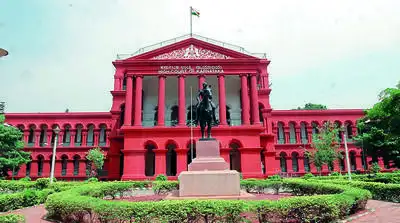
Karnataka high court
In July, after noticing certain illegal Bangladeshi nationals staying behind Govt School at Kodathi village, Sarjapur Main Road, the petitioner had reported the matter to police.
“When contemporaneous official records, the chronology of events and the attendant circumstances together demonstrate that the prosecution is manifestly actuated by vengeance, the constitutional court cannot remain a mute spectator and permit the criminal process itself to become the punishment,” the judge added while quashing the proceedings against Nagendrappa in both the cases. Bengaluru: Karnataka high court has directed the state govt to constitute and operationalise district-level committees within three months by strictly following the standard operating procedure to deal with cases of illegal immigration. However, two criminal cases were registered against him at the behest of the immigrants, alleging that he had threatened and assaulted them. He had challenged the two cases registered by Bellandur and Varthur police, apart from seeking compensation in a separate third petition over his arrest. Justice Nagaprasanna noted that what disturbs the conscience of the court is not merely the registration of an FIR, but the extraordinary sequence in which the criminal process appears to have been invoked. The judge noted that the complainant against the petitioner, Mohammed Saidul Islam, is a person detained on account of his unauthorised entry and stay in India, substantiated by the restriction order passed by FRRO. “It presents a challenge to the sovereignty of the state, the integrity of its borders and the efficacy of its internal security apparatus. Unregulated and undocumented movement of persons across national frontiers, when left unchecked, has the potential to create serious vulnerabilities in the machinery of governance. It may facilitate identity fraud, exploitation by trafficking syndicates, organised criminal networks and other unlawful activities, besides placing unforeseen pressures upon public infrastructure, welfare administration and the legitimate distribution of public resources,” the judge added.
A comprehensive compliance report evidencing the constitution, composition and operational status of the committees should be placed before the registry of the court, Justice M Nagaprasanna specified in his order while granting relief to T Nagendrappa, a Bengaluru-based doctor in two cases.