
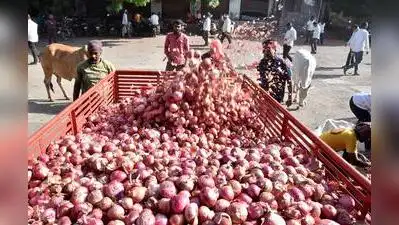
The fresh kharif crop is currently selling at an average wholesale price of around Rs 2,500 per quintal
Nashik: Arrivals of new kharif onion crop have started at Lasalgaon APMC, India’s largest wholesale onion market, but volumes remain thin at just 30-40 quintals per day. The fresh kharif crop is currently selling at an average wholesale price of around Rs 2,500 per quintal, significantly lower than the Rs 4,100 per quintal being realised by stored summer onions. In Nashik district, kharif onion cultivation area is estimated at 21,242 hectares, down nearly 35% from the normal average of 32,450 hectares. At Lasalgaon APMC on Friday, about 38 quintals of kharif onions were auctioned. Prices ranged between Rs 2,400 and Rs 3,400 per quintal, with the average price pegged at Rs 2,501 per quintal. In comparison, around 4,500 quintals of summer onions were traded during the day. Prices ranged from Rs 900 to Rs 4,571 per quintal, while the average wholesale rate stood at Rs 4,100 per quintal.
Planting, typically undertaken between July and mid-Sept, was delayed by about a month due to a late onset of rains, pushing back harvesting and arrivals,” an official said. You Can Also Check: Gold Rate in Nashik | Silver Rate in Nashik | Bank Holidays in Nashik | Public Holidays in Nashik | Petrol Price in Nashik | Diesel Price in Nashik | CNG Price in Nashik | LPG Price in Nashik Stay updated with the latest Nashik news. Traders and market officials expect arrivals to gather pace by the first or second week of Nov as harvesting picks up across key onion-growing regions. New-season arrivals are also expected to begin in the major onion belts of Dhule and Malegaon during the first half of Nov, adding to market supplies. “This year’s kharif onion crop has reached markets nearly a month later than usual. Normally, fresh kharif onions start arriving in markets by the second week of Oct and gain momentum towards the end of the month. The delayed and uneven monsoon has also reduced acreage. Download the TOI App.
Kharif onions can be stored for only 25-30 days before deterioration sets in, forcing farmers to sell soon after harvest. Traders attributed the price gap to differences in storage life. Summer onions, by contrast, can be stored for more than six months, allowing growers to hold stocks and sell when market conditions are favourable.