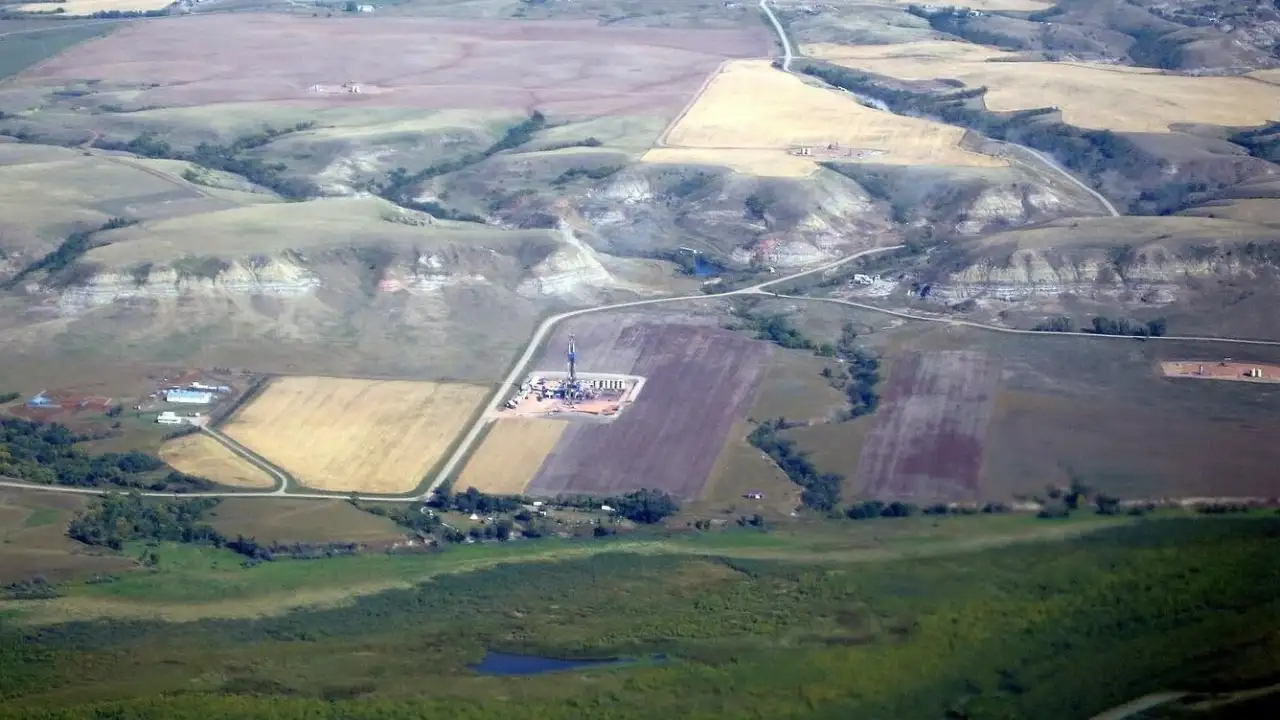
An oil well pad in North Dakota’s Bakken Formation, where oil production transformed parts of the state’s agricultural landscape | Wyoming-Montana Water Science Centre / USGS
Bartelson, aged 65, was among the many landowners who started earning money from oil beneath fields that had, for a very long time, been used only to grow wheat. Because of two oil wells that were drilled on his land, in North Dakota, a wheat farmer with the name of John Bartelson, started generating royalty payments. Because of the oil boom in the Bakken formation, according to a June 2008 Bloomberg report, the finances of farmers across the northern Great Plains were changing.
The state’s first major oil discovery came in 1951, when a well near Tioga struck oil in the Williston Basin. The State Historical Society of North Dakota states that there were renewed expectations for oil in 2007, and its history of the state’s oil industry describes how mineral rights and oil leases had been traded separately from the surface land for a very long time. Because just owning the surface of a property did not always mean that they owned the mineral rights beneath it, but when a landowner held the relevant mineral interest and a producing well was drilled, the lease could provide royalty income, it mattered to farmers. Because of the geology beneath their land, as companies expanded across the Bakken, farmers such as Bartelson were learning how drastically their income could be affected.
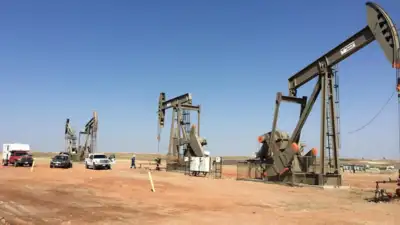
The two wells on Bartelson’s property were drilled by Houston-based EOG Resources Inc. in the previous year, and upon the arrival of his first royalty cheque, he said that he went into town for a beer. The money came from the oil that was being produced below the field, under an arrangement that permitted an energy company to drill while the person who owned the land received a cut of the revenue. Oil beneath the wheat fields drew new attention There was a growing interest in the Bakken formation, which is a large oil-bearing rock formation beneath parts of North Dakota, Montana and southern Canada. New drilling methods made it a lot more practical for companies to extract oil from rock that had once been difficult to develop, while rising oil prices also encouraged companies to invest in exploration and production. Production from early fields later declined, but companies began focusing on the Bakken, and interest returned. Royalty payments changed the economics of a farm A farm’s earnings usually depend on certain factors such as crop prices, yields, livestock and operating costs, and income from royalty became another source of money for landowners if their properties included oil reserves that were commercially productive. The amount that was paid could differ based on production, oil prices and the terms of the lease. Bartelson’s monthly payments were substantial, but they were kept specific to his wells and ownership arrangement, and were not a standard payment that was received by every farmer in the region. Drilling, equipment, services, transport and other work were paid for by oil companies, with North Dakota also collecting taxes and receiving revenue from mineral leases that were state-owned. It was estimated by a state economic report that private oil and gas royalties that were paid to North Dakota residents had managed to reach hundreds of millions of dollars in the mid-2000s, although those figures covered the wider industry. Oil wells in Bakken | Seth Haines/USGS The boom brought opportunity, not a guarantee The Bakken boom opened up a new financial possibility for some rural landowners, but it goes without saying that the benefits depended on where the oil was located, who owned the mineral rights and whether it was commercially viable to drill. Recoverable oil was not found on every parcel, and not every landowner was entitled to royalties, while lease terms also affected the amount of money that reached the property owner. Bartelson’s experience was an example of a larger change in North Dakota, where advances in drilling technology and higher oil prices brought companies into areas that once upon a time had been known mainly for farming and ranching. Farmers used this opportunity since most of the land could continue to support agriculture at the surface and also produce oil below it. The change meant that mineral rights could become a valuable asset and could sometimes be worth more than the crops that are grown above them. You use AI every day. Now get your AI Quotient. Take the AIQ test.