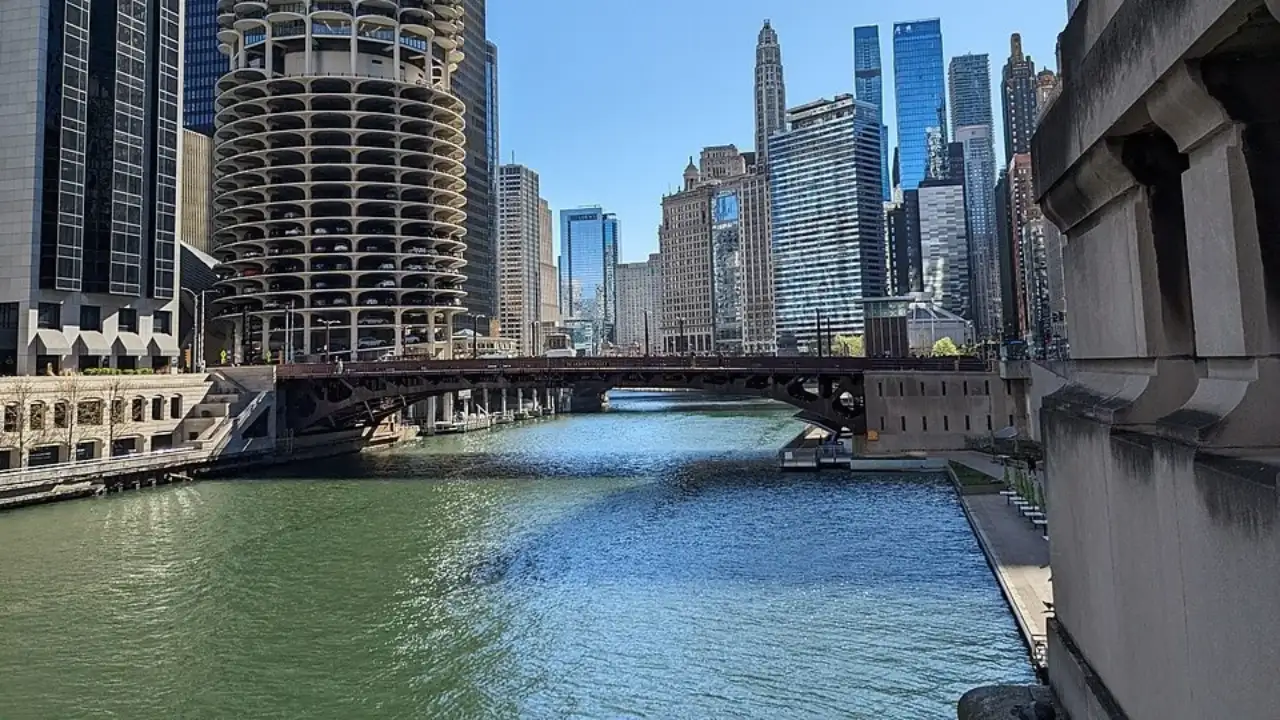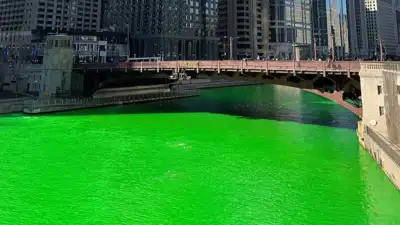
Chicago river dyed green on St. Patrick’s Day, looking east from Michigan Avenue bridge | Wikimedia Commons
Friends of the Chicago River has argued that the event needs to be closely scrutinized as the amount of dye used has grown, and in a March 2026 statement, the organisation said that the green colour can remain visible for days and called for a review of whether the discharge should require a permit. It was concerned with the volume of dye released and the need to assess the river’s health. You use AI every day. Now get your AI Quotient. Take the AIQ test.
The new study adds chemical measurements to a debate that earlier relied heavily on claims about the dye’s safety, and its findings support a low-risk assessment for the fluorescein concentrations measured during the event, while leaving wider questions about repeated annual releases and the river’s full ecosystem outside the scope of that conclusion.
The study was published on September 9, 2026, in Environmental Science & Technology Letters , where researchers identified the green dye as fluorescein, measured its concentration in the Chicago River after the annual St. The highest measured concentration was 63 ± 4 micrograms per litre, which was recorded within two hours of the dye being applied, and the authors said that the measured levels were well below concentrations that were predicted to cause harmful effects on aquatic life. Patrick’s Day since 1962, a tradition which began when city workers used dye to trace sources of pollution in the river. The exact formula was kept secret for decades, but in a 2025 report, Chemical & Engineering News noted that the dye was believed to be a fluorescein salt, but the ingredients had not been independently confirmed. The 2026 study provides direct chemical evidence that identifies fluorescein in water samples that were collected during the event. Why the river’s changing chemistry matters beyond the green colour The 2026 study reported an apparent attenuation half-life of about 15 hours and found that the decline was consistent with photochemical transformation, which is a process in which light helps break down or alter a chemical.
Researchers tracked how quickly the chemical disappeared The team measured fluorescein concentrations after the dye entered the river and estimated an apparent attenuation half-life of about 15 hours, which means that the measured concentration declined through a combination of processes, including photochemical transformation. Because a substance’s concentration can fall as it transforms, while the resulting compounds may have different properties, that matters. Patrick’s Day celebration, and found that levels fell close to the river’s background level within a few days. The dye’s identity had remained a mystery Chicago has dyed its river green for St. The event later became an annual celebration, with members of the Chicago Journeymen Plumbers Union spreading an orange powder that turns the water green. Within days, the readings were close to background concentrations. The authors compared the measured levels with predicted no-effect concentrations, which are estimates used to assess whether a chemical concentration is likely to harm aquatic organisms. The fluorescein concentrations that were measured were well below those thresholds, and the researchers came to the conclusion that the results indicated low ecological risk under the conditions they studied, which is not the same as proving that every possible effect on the river’s ecosystem has been ruled out. The researchers’ measurements establish how fluorescein behaved in the Chicago River during the event they studied, instead of relying on the dye’s appearance as a measure of its persistence. Their findings also provide a starting point for further work on the environmental fate of the dye, and the study’s low-risk assessment applies to the concentrations that were measured and the ecological benchmarks that were used, and should not be interpreted as proof that every possible effect of repeated dye releases has been ruled out. View of the Chicago River and the Dearborn St bridge, from the Clark St bridge | Wikimedia Commons Environmental groups still want oversight