
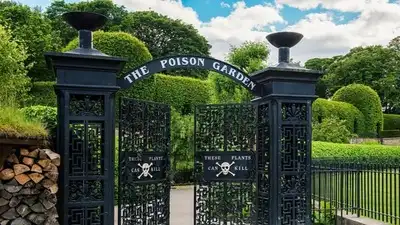
It’s filled with around 100 toxic, intoxicating and narcotic plants, and visitors are strictly forbidden from smelling, touching or tasting any of them, according to the Alnwick Garden’s own website. Most gardens invite you to wander, sniff the roses and pick a flower. One of the most famous gardens in England does the exact opposite. Tucked away next to Alnwick Castle in Northumberland, the Poison Garden sits behind black iron gates that stay locked, and you can only go in with a guide. It’s a garden built to teach people that beauty and danger can grow side by side.
The garden was started in 2005 by Jane Percy, the Duchess of Northumberland, as part of the 12-acre Alnwick Garden on the grounds of her family’s estate, according to NPR. Atlas Obscura adds that the garden is locked at night under a 24-hour security watch.
The Alnwick Garden’s website says the most hazardous ones are kept inside giant cages. HGTV says black henbane gives off a strong smell that can be overwhelming on a warm day, and visitors often faint near it, which is why there’s a bench nearby and first aiders on standby. The Alnwick Garden itself says some visitors still occasionally pass out from breathing in toxic fumes.
HGTV reports that she created it to help educate schoolchildren about the dangers of harmful and illicit drugs, which come from the sort of compounds these plants produce. In the Middle Ages and Renaissance, plants like these were used both as medicines and as poisons, so the garden also tells a long human story about how thin that line can be. The gates themselves set the tone. National Geographic describes the black iron gates as decorated with skulls, and the garden is packed with more than a hundred varieties of plants so deadly you can’t enter without supervision. Some plants are considered so dangerous that they live in cages. Even the people who look after the plants take no chances, and National Geographic shows professional handlers working in masks, gloves and hazmat suits. For the rest of us, simply standing in the garden means keeping our hands to ourselves and staying close to the guide. Some of the plants don’t need to be touched to cause trouble. Angel’s trumpet, or Brugmansia, has fragrant blooms that disguise a potent hallucinogen. National Geographic reports that the keepers expect many fainters every year. For all its drama, the garden’s main message is surprisingly down to earth. National Geographic notes that visitors learn about the dangers of poisonous plants, including ones that grow in ordinary backyards. A castor plant grows in the garden, as NPR points out, and the plant is far more common than many people realise. Guides also run a foraging-themed tour on what not to pick in the wild. Leave with one lesson: unfamiliar plants deserve respect, and a pretty flower isn’t always a harmless one.