
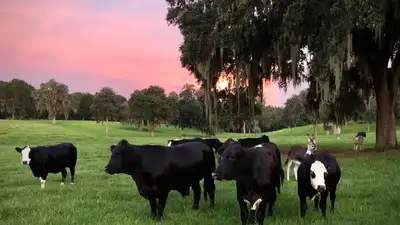
Pic credit: Critter Creek Farm Sanctuary
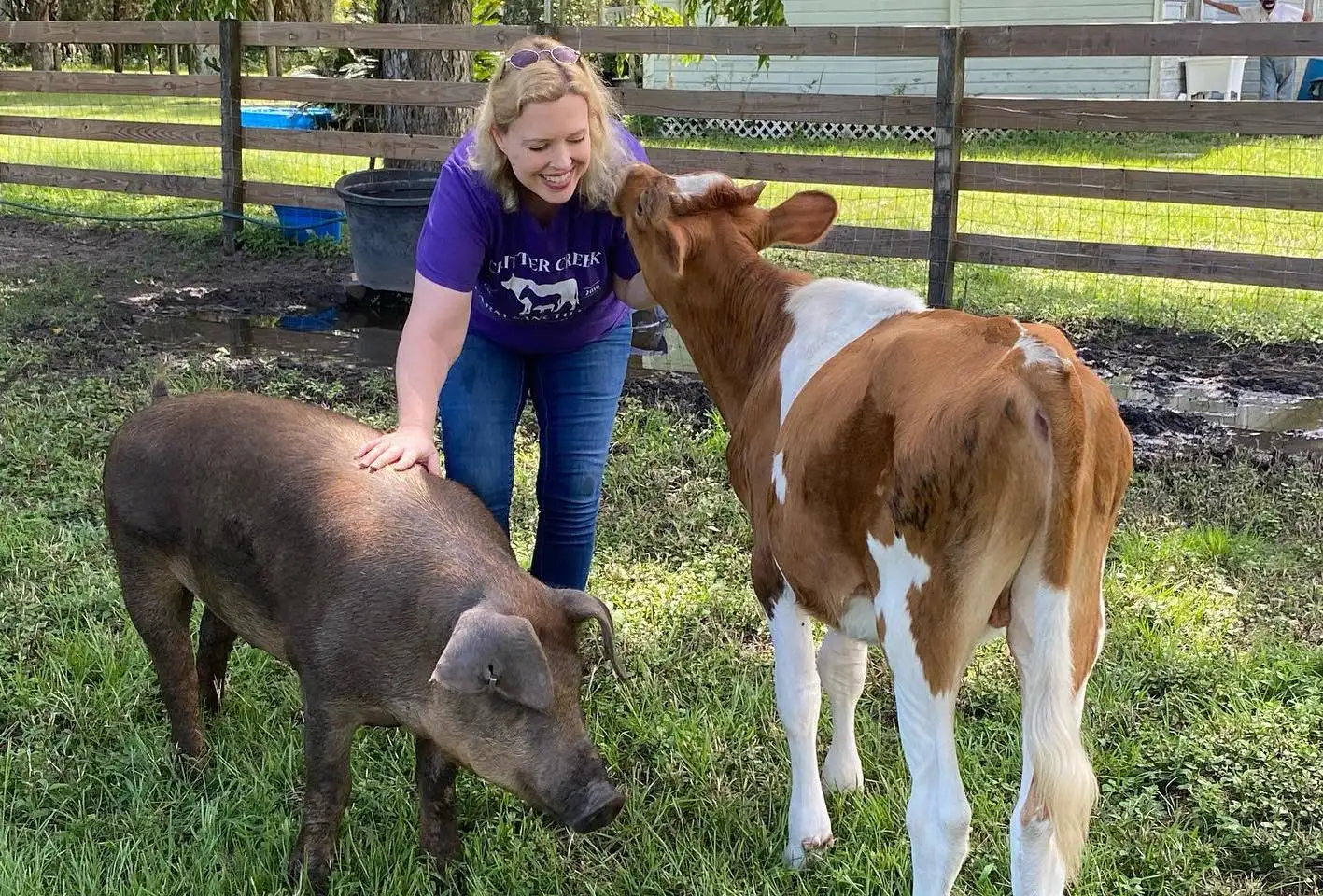
This very incident led her to co-found Critter Creek Farm Sanctuary with her husband, Chris Amerman, in 2016. In 2015, they purchased the original 210-acre Critter Creek farm and wildlife preserve near Gainesville, Florida. Today, it has grown into the largest bovine sanctuary in the US, with three facilities totalling 420 acres. In 2019, the Amermans gave up the dream house they had been saving for. Instead, they put that money towards Critter Hills, a 200-acre ranch and hay farm in Alachua. Today, Critter Creek Farm Sanctuary is home to more than 180 cows, making it the largest cow sanctuary in the country. In 2021, the sanctuary took in roughly 40 cows from a neglect case in Sunrise, Florida.
“Our mission is to foster compassion for all animals through science-based rescue, outreach and conservation,” they state on their website. Erin held one, and he was sweet. But he did pee on her! Guess which animal came home? Not the hamster, but the sweet little rat she named Templeton! Besides peeing on her, Templeton also taught her something priceless: how society treats two species of animals differently. Hamsters are welcomed into homes, while rats are often feared or rejected. A year later, they founded Critter Creek Farm Sanctuary, a non-profit organisation that began with three rescued cows. It is a farmed-animal sanctuary, wildlife refuge and community organisation. The land has become a home for animals that had nowhere else to go. Keeping a rescue running takes space, and space costs money. “We realised that if we’re going to keep this rescue thing going, well, we’re gonna need a bigger ark. People have asked them why they focus on cows, and they have a reason. Cows need a lot of room, live a long time with good care and require plenty of food. Many rescues simply can’t take them. Critter Hills gave the sanctuary space to care for a substantial herd, and cows now make up most of its residents.
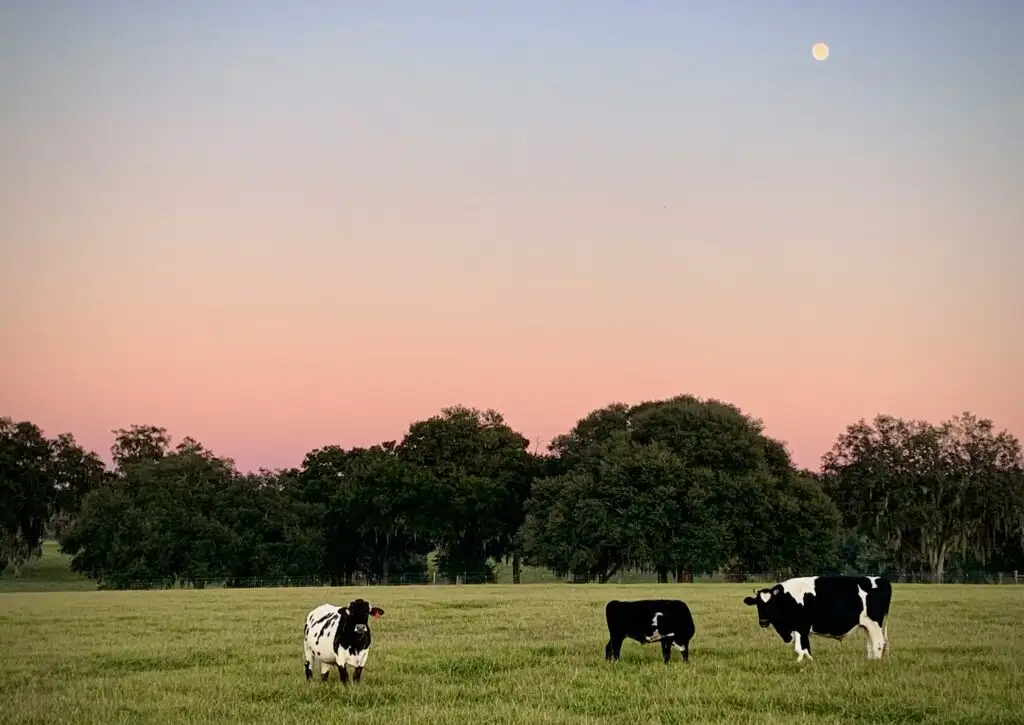
The sanctuary is home to 10 donkeys, 26 pigs, one turkey, 12 horses, a bison and a ‘very demanding’ water buffalo. Cows are not the only animals rescued here. “We encourage everyone to come meet the residents of CCFS and see that these animals are no different from the companion animals we all call friends. The couple hosts monthly tours and annual public events to facilitate these encounters. They hope that meeting these animals will inspire people to treat them with compassion and leave animal products off their plates.