
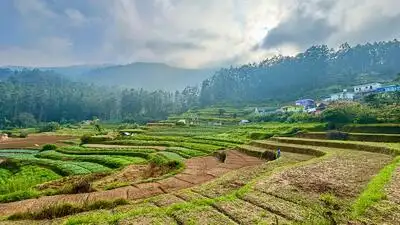
Vattavada
The area under vegetable cultivation has dipped from 2,000 hectares to less than 800 hectares in the past five years, farmers said. You Can Also Check: Gold Rate in Kochi | Silver Rate in Kochi | Bank Holidays in Kochi | Public Holidays in Kochi Stay updated with the latest Kochi news.
Siddique said he would visit Vattavada after the conclusion of the assembly session and convene a state-level meeting to discuss the issues faced by farmers. He said special attention would be given to strengthening agricultural production in the area. Idukki : Vattavada, Keralam’s major source of winter vegetables, is witnessing a steep decline in cultivation, with farmers struggling to cope with crop losses, rising input costs and mounting debts. They say vegetable production has dropped to nearly one-fifth, threatening the livelihoods of hundreds of farmer families in Idukki’s high-range region. Large stretches of farmland that once yielded garlic, carrots, cabbage, potatoes, butter beans, green peas and coriander now lie barren. Agriculture minister T Siddique has promised to address the concerns of farmers in Vattavada and Kanthalloor, Keralam’s key winter vegetable-growing regions. Download the TOI App.
Growing garlic and potato on one hectare costs Rs 3-3.5 lakh and Rs 2 lakh, respectively. The cost of cultivating carrots and cabbage exceeds Rs 1.5 lakh per hectare. Between 2010 and 2017, they received subsidies of up to Rs 22,500 per hectare.
In the absence of adequate rain and dependable irrigation, crops have withered before harvest. The cost of cultivation has made the situation even more difficult. Crop failure has let down many farmers, who are struggling to repay even the interest on the loans availed from private lenders and intermediaries. Subsidy support withdrawn Farmers allege that the withdrawal of financial assistance has left them increasingly vulnerable. They claim that such assistance is no longer available from the agriculture department or local self-govt institutions. The absence of adequate price support and the role of intermediaries in the marketing chain have further reduced the returns from cultivation. No facilities to store rain Despite the availability of natural water sources, Vattavada lacks adequate infrastructure to store monsoon runoff and distribute water during dry spells. Farmers have called for the construction of check dams and the introduction of scientific irrigation systems to ensure a reliable water supply throughout the cultivation cycle. They allege that demands for such projects have not been met. A decline in production could have implications beyond Vattavada. A further fall in output could affect market availability and put upward pressure on prices. Farmers have urged govt to restore agricultural subsidies, provide seeds and fertilisers at subsidised rates and implement irrigation projects without delay. They warn that without timely assistance, more families may be forced to abandon farming.