
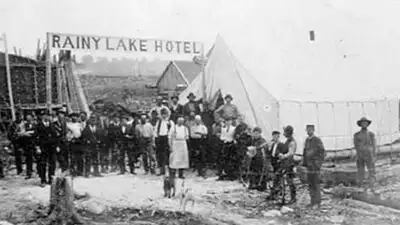
Image Credit: Forgotten Minnesota
The settlement had 3 general stores, 3 hotels, 2 restaurants, a hardware store, a barber shop, 5 saloons, a post office, a customs office and a school. At the Little American Mine, the ore was taken by boat for roughly a mile to Rainy Lake City, where a 5-stamp mill crushed the rock into powder. NPS notes that the mill operated from 1894 to 1897. The operation commonly employed 15 to 20 men on Little American Island, including underground miners and surface workers. Miners received $2 a day, while labourers earned $1.50.
As reported by Forgotten Minnesota, Davis initially struggled to secure the money needed to develop the discovery. A newspaper, The Rainy Lake Journal, reported on local developments, while a bank was established as the community expanded. He eventually sold the mineral rights to a group of businessmen from Duluth, who moved ahead with plans to extract the gold. Its facilities reflected the expectations surrounding the gold discovery. Many residents lived in tents, covered wagons, log houses and simple buildings made from tar paper. its growing population created demand for accommodation, food, equipment and other essentials Although the settlement was remote. The scale of this development showed how quickly mineral discoveries could transform an isolated area. Yet the town’s prosperity depended heavily on the success of the mines, leaving it vulnerable if gold production failed to meet expectations. The main challenge was the nature of the gold deposits. The gold at Rainy Lake was embedded in quartz veins rather than lying loose in streambeds and gravel. Miners had to break into solid rock to reach it. This method required considerable effort, equipment and money. Workers used explosives to create underground shafts and remove rock containing the mineral deposits. The extracted material then had to be transported away for processing. The gold was then separated from the crushed material using mercury. These wages were only part of the expense. Owners also had to pay for machinery, transport and the running of the mill. The difficult journey into the region made supplying the operation more expensive, adding to the financial pressure on the mining companies.
In 1894, the discovery of gold near Rainy Lake in northern Minnesota sparked a rush of prospectors, investors and workers hoping to make their fortunes. Despite years of mining activity and repeated attempts to increase production, the operation recovered only $4,500 worth of gold before closing in 1898. Prospectors had searched northern Minnesota for gold for decades, but an important discovery came in the summer of 1893, according to the National Park Service. Rainy Lake City, June 1895. Image Credit: Koochiching County NPS records that Rainy Lake City was incorporated on March 17, 1894, as development of the Little American Mine gathered pace. The population had reached approximately 400 by the autumn of 1894, according to Koochiching County’s historical account. At the height of the mining boom, around 500 people lived there.
Because earlier reports had already encouraged people to believe that northern Minnesota contained valuable mineral deposits, the discovery attracted attention. Rainy Lake City quickly grew into a busy settlement, complete with hotels, shops, saloons and a school. However, the gold deposits proved less rewarding than many had expected. Within seven years of its incorporation, the once-promising settlement had become a ghost town. The story began before Rainy Lake City existed. Prospector George W. Davis was exploring Rainy Lake when he found a vein of gold-bearing quartz on Little American Island, near Black Bay Narrows. Quartz is a common rock that can contain gold and other minerals. Davis collected samples that showed promising results, raising hopes that the remote region could support a profitable mining industry. This time, however, investors were prepared to establish an operation rather than rely on speculation alone. The settlement was established to support the mining activities taking place on the nearby islands. The town expanded quickly as prospectors, labourers, business owners and other newcomers arrived.
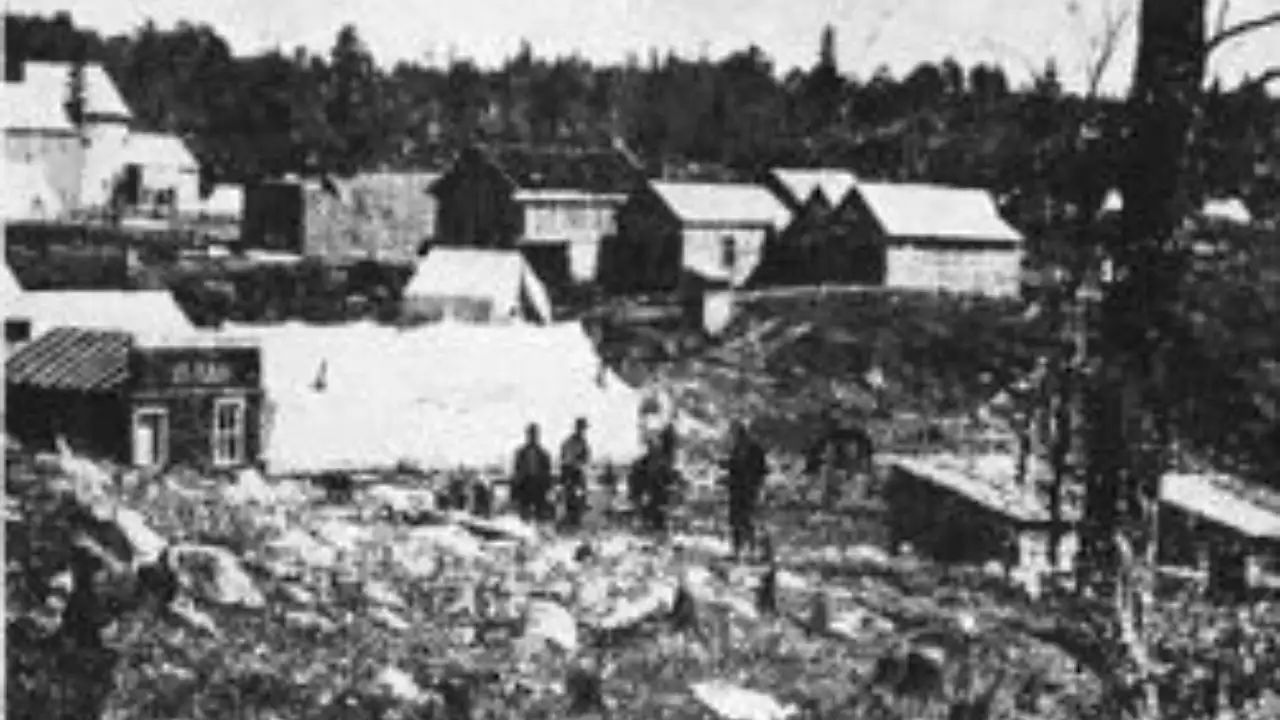
Several mining ventures failed to deliver the expected returns
Forgotten Minnesota reports that the gold-bearing material processed in 1894 was valued at around $30 per ton. A dispute between the partners forced a lengthy interruption in 1895. NPS identifies the Lyle Mine, the Big American Mine, the Bushyhead Mine and the Soldier Mine among the ventures that attracted attention during the 1894 rush. The mine on Dryweed Island operated for only a short time, while the Bushyhead Island mine remained in production for about 2 years, according to Koochiching County. By 1897, the Little American Mine was still attracting investment. A new company introduced a larger, 10-stamp mill and extended a shaft deeper into the rock in the hope of reaching richer quartz. Mining at Little American Island stopped in 1898, after the total value of the recovered gold reached just $4,500. The town had become a ghost town by 1901.
The Little American Mine initially appeared promising. The operation expanded, with a vertical shaft and underground passages developed to reach the deposits. However, the mine’s progress was uneven. Later attempts to restart production encountered further difficulties, including the discovery of lower-quality gold than expected. Other mining prospects opened in the surrounding area. These operations generated hopes of a much larger mining industry, but their results were limited. The Little American Mine performed better than the other local ventures, but its owners still struggled to turn the discovery into a lasting commercial success. Changes in ownership and repeated attempts to improve production reflected the continuing search for enough gold to justify the expense. However, the improvements could not save the operation. NPS notes that this amount was insufficient to sustain the costly operation. The closure brought the wider gold rush to an end. With the principal source of employment and business activity gone, Rainy Lake City’s shops and services could no longer rely on the steady flow of miners and workers. The school and newspaper office closed as the settlement declined. The end of mining did not mean every trace of the gold rush vanished. Forgotten Minnesota reports that abandoned shafts and other excavations remain on Little American Island, although vegetation has grown over much of the old mining site. The former mining area is now part of Voyageurs National Park, which preserves the natural landscape and historical remains of the region. Visitors can still find evidence of the Little American Mine, including the remains of vertical and horizontal shafts. The discovery also formed part of a wider period of exploration in northern Minnesota. mining activity encouraged people to travel into the region and search for other resources Although the local gold industry failed to develop into the lasting boom that investors had anticipated. Koochiching County records that some former residents settled in Koochiching after the mines closed. The community later became known as International Falls, which developed into an important centre for the lumber industry. You use AI every day. Now get your AI Quotient. Take the AIQ test.