
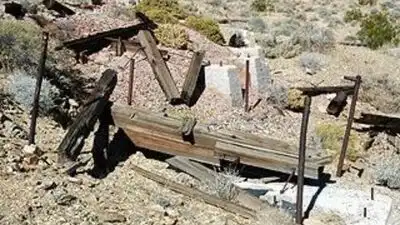
Chloride Cliff. Image Credit: Digital Desert
In 1905, a mining rush brought prospectors to Chloride City in California’s Death Valley, where they hoped to make money from mineral deposits in the surrounding mountains. The discovery of gold in the Bullfrog district in 1904 encouraged prospectors to revisit older claims and search for new deposits, according to the National Park Service. The settlement occupied a wide, shallow saddle about 4,800 feet above Death Valley. The Death Valley Mining and Milling Company shut down its operations in late July 1906. The NPS and the Death Valley Natural History Association identify the remains of 3 stamp mills among its surviving features.
With local mining activity suspended, Chloride City lost the economic foundation on which it depended. The settlement developed as a base for nearby mining operations, attracting workers who believed the area could support a profitable industry. However, the excitement did not last. Within a year, mining activity had declined, leaving the settlement largely abandoned. Chloride City emerged during a period of renewed interest in mining across Death Valley and neighbouring Nevada. the location was exposed to strong winds and harsh winter weather Although its elevated position offered views across the surrounding landscape. By the end of that year, the settlement had become a ghost town. evidence of its mining history remains scattered across the site Although Chloride City ceased to function as a community. Another surviving feature is the grave of James McKay. Little is known about him. His age, the circumstances of his death and the time when he died remain uncertain.
Today, collapsed buildings, abandoned mine workings and the remains of stamp mills offer a glimpse into the short-lived community that once occupied this remote desert landscape.