
For the last two decades Indian cities have been busy widening roads, building flyovers and creating signal-free corridors.
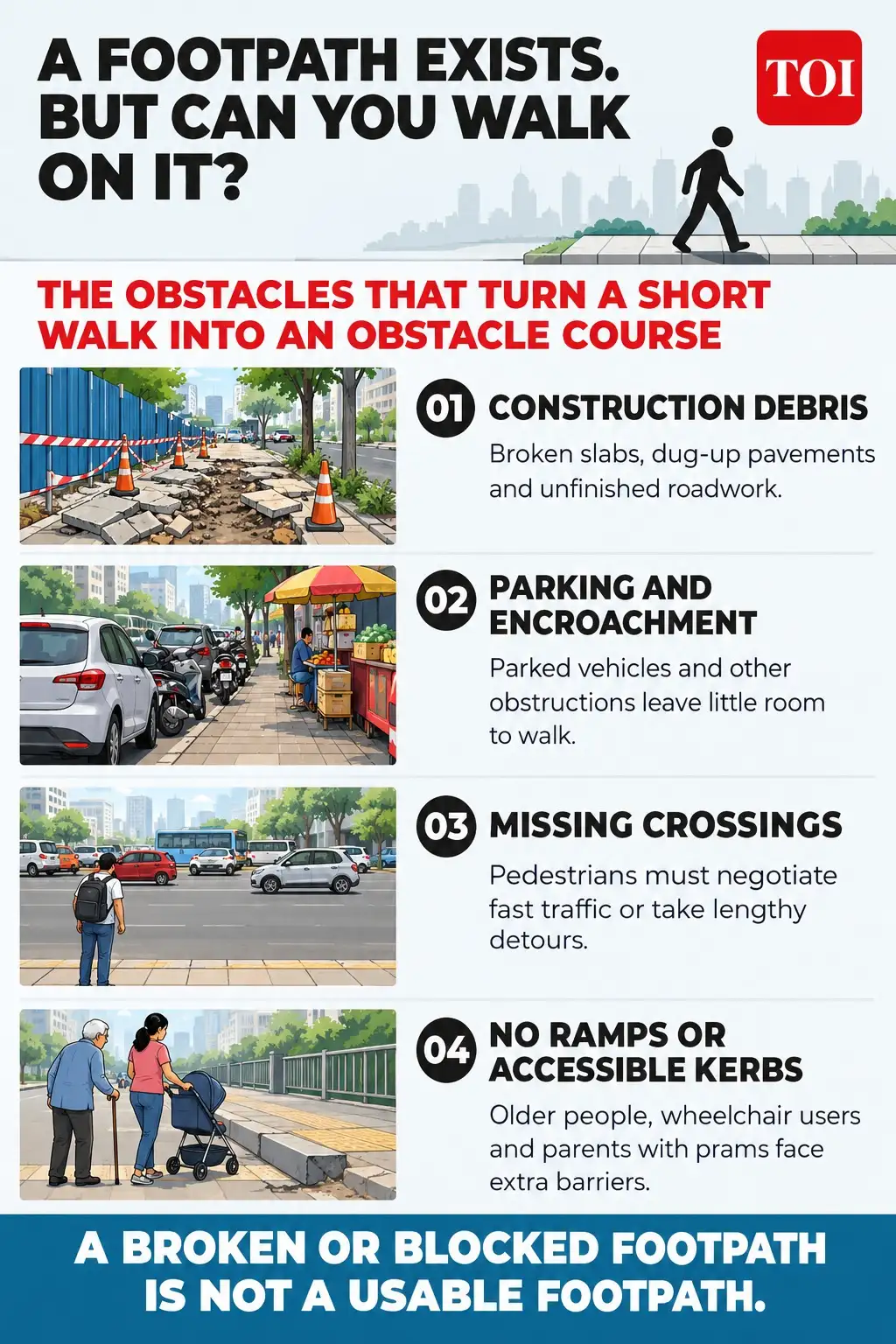
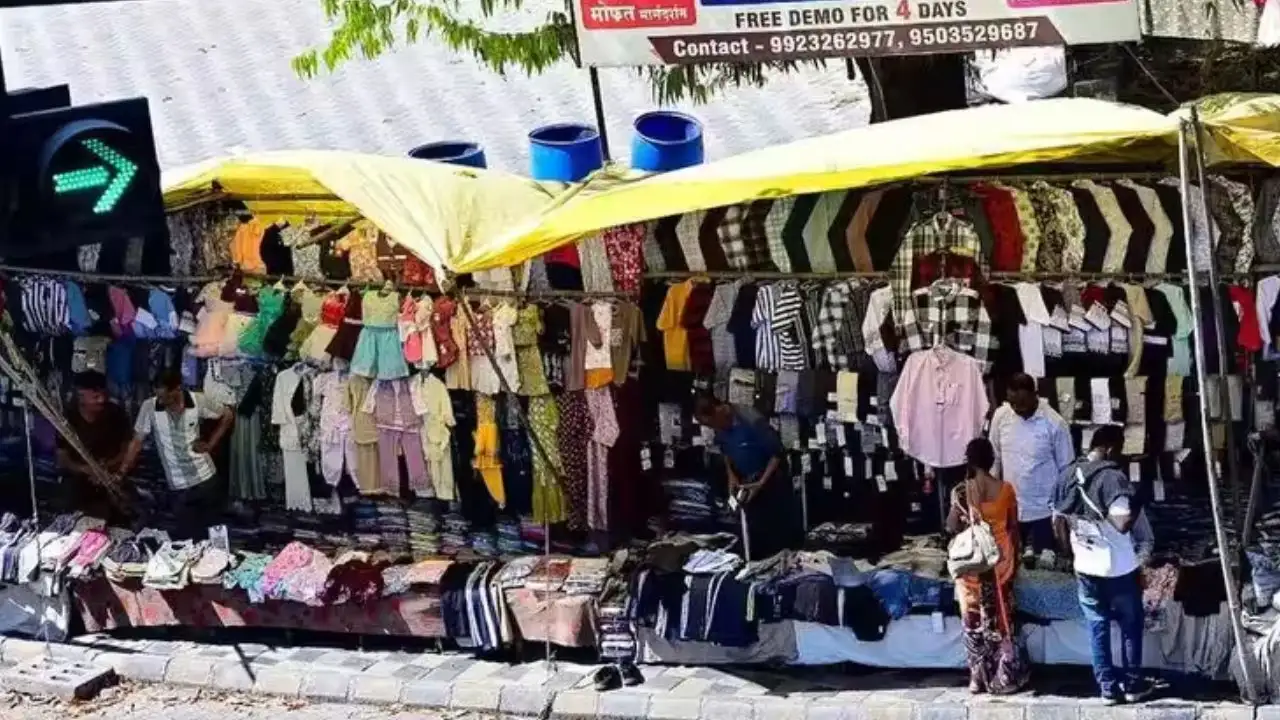
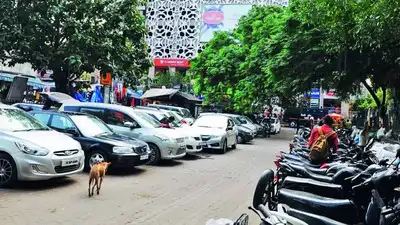
For the last two decades Indian cities have been busy widening roads, building flyovers and creating signal-free corridors. The idea was to speed up vehicles and the space for it in many places was taken straight off the footpath. Pedestrians are rarely included in discussions about road budgets, but make up a significant portion of daily trips. Figures from Delhi and Mumbai consistently show that pedestrians are a large part of the road deaths. When those most at risk are the least prepared for, the result is predictable. Each city fails walkers in its own unique way. The pain points in Delhi are wide, fast roads, long distances between crossing and summer heat that makes walking at midday punishing. In Mumbai pavements often are the only open space available and so they double up as markets, parking and storefronts.
It’s not that people have become lazy or temperamentally car-dependent and therefore walked less; the city has made walking difficult, uncomfortable and sometimes dangerous. The fixes are well understood, if difficult to implement. Cities need uninterrupted and unobstructed footpaths of a minimum standard width, with frequent and well-timed crossings. The footpaths and livelihoods can co-exist. Vendors should be provided with designated, legal space and not be treated as encroachers. Street trees, covered drains and good lighting take care of comfort and safety at the same time. Most importantly, road budgets and design standards should be based on the premise that pedestrians are the primary users of a street, not an afterthought. Some cities have started pilot projects such as retrofitting for pedestrian friendliness and complete streets guidelines, but the real test will be scaling them up beyond a few showcase stretches. What no one tells you about walking in India’s biggest cities is that it is almost never the walker’s fault. As long as footpaths are considered leftover space rather than essential infrastructure, the most basic form of urban mobility will continue to lose ground.