
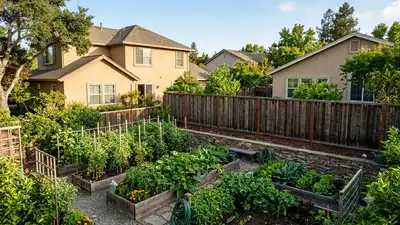
Rupert Clayton and Miriam Pinchuk bought their Oakland home in 2019, unaware that their neighbours would later claim ownership of its garden. (AI image)
Rupert Clayton and Miriam Pinchuk had bought their Oakland home in 2019 believing that the 20-by-20-foot garden was included in the property. The disagreement continued until December 2021, when Canada contacted the police and reported that Clayton and Pinchuk were trespassing. By the time the case went to trial, the people who had made the original arrangement in 1955 were no longer available to explain what had happened.
The disagreement was unusual because the garden had been separated from the neighbouring property for decades, according to the California Judicial Branch . The court therefore had to rely on surviving documents and testimony from family members. A small garden became the centre of a legal battle between two California couples after a property survey revealed that the land belonged to a neighbouring house.
Larry Reom said he had seen a written record of the agreement among his parents’ papers, but he could not locate it when the case was heard. But their neighbours, Herbert Canada and Bernadette Rodriguez, claimed the land was legally theirs. A retaining wall and fence stood between the two homes, making the disputed area appear to be part of Clayton and Pinchuk’s backyard. Thick vegetation also made it difficult to access the garden from the other property. When the couple bought their house, the garden was already well maintained. They considered it an important part of their new home and began using it regularly. The couple stopped using the garden while they pursued the matter in court. Other documents, including old correspondence, supported the account that the families had agreed to exchange the garden area for money, babysitting, and the surrender of alleyway access rights. The court also considered how the land had been used since the 1950s. The Reom family had maintained the garden for decades, while the wall and fence had kept it physically separate from the Kroeger property. After hearing the evidence, the trial court decided that Clayton and Pinchuk should be allowed to continue gardening there, even though it could not establish that ownership of the land had been legally transferred. It granted them an equitable easement, a legal right allowing someone to use another person’s land for a particular purpose without owning it. Canada and Rodriguez challenged the trial court’s decision, arguing that the couple should not have been given exclusive gardening rights over land that legally belonged to them.
The dispute eventually reached the California Court of Appeal, which ruled on Monday that Clayton and Pinchuk could continue using the garden exclusively.
The answer to why the garden was enclosed within one property but legally belonged to another lay in an agreement made in 1955. The agreement also involved a payment of $250 and babysitting services provided by Carol Reom for the Kroegers’ young child. Harry and Carol Reom continued using the area as a garden for more than 50 years. Canada and Rodriguez purchased the Piedmont property in 2017. In 2018, he needed permission to connect to a drainage pipe on their property for renovation work. The garden issue came up again in 2020, when Clayton and Pinchuk discussed replacing the boundary fence with their neighbours.
Because the previous owners of the neighbouring property had already benefited from it by being able to build their garage, the judges considered the 1955 arrangement particularly important.
But although the two families had reached an agreement, the necessary property records were never properly completed, according to the findings later examined in court. During those discussions, Larry Reom, the son of Harry and Carol, told him about the old land agreement and provided a document describing it. However, the confusion had begun long before either couple moved into the neighbourhood. In the 1950s, the two properties belonged to the Reom and Kroeger families. The Kroegers wanted to replace their garage, but their plans would interfere with an alleyway that the Reoms had the right to use. The families eventually reached an arrangement that allowed the construction to go ahead. The Reoms agreed to surrender their alleyway access rights, while the Kroegers agreed to give them a small section of land. Following the arrangement, the Kroegers built their new garage and put up a retaining wall and fence. The small piece of land was enclosed within the Reom family’s backyard, where it remained for decades. That missing paperwork became important when the houses changed hands and the new owners began questioning where one property ended and the other began. Two years later, Clayton and Pinchuk bought the adjoining Oakland house from the Reom family trust. Larry later testified that Canada had indicated he would have the document officially recorded. The Reom family subsequently allowed the drainage connection without asking for payment. Canada showed them a survey indicating that the garden was legally part of his property. This came as a surprise to the couple, who had believed that the garden was included in their purchase. The appeal required the judges to consider whether allowing Clayton and Pinchuk to keep using the garden would be fair, given the history of the two properties. One important consideration was how much the couple stood to lose. They had bought their home believing that the garden was included and had spent two years developing it. The area also had fertile soil and was among the flattest parts of their backyard. The court found that Canada and Rodriguez had made little use of the disputed land. Their drainage needs had also been addressed through the separate permission granted by the Reom family. The appellate court ultimately agreed with the trial court’s assessment and upheld its decision. You use AI every day. Now get your AI Quotient. Take the AIQ test.
Before the second sale, however, Canada had already been in contact with the Reom family over a separate matter.