
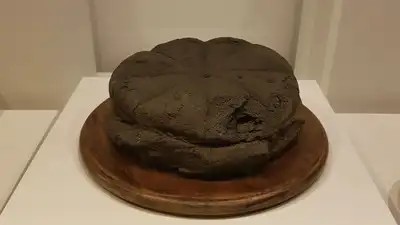
A 2,000-year-old preserved loaf of bread from Herculaneum. (Photo: National Maritime Museum, Sydney, via World History Encyclopedia)
When Mount Vesuvius erupted in AD 79, a loaf of bread was still inside an oven in the Roman town of Herculaneum. Nearly 2,000 years later, archaeologists found the loaf during excavations in 1930. The British Museum brought attention to the loaf during an exhibition on Pompeii and Herculaneum in 2013. The museum later shared the recipe and a video of the preparation process in July 2020. For its 2013 exhibition, chef Giorgio Locatelli made a round loaf using ingredients listed in a recipe later published by the museum.
They were probably displayed for sale in thermopolia, shops that sold prepared food, according to the archaeological park. The eruption buried the town, leaving the bread trapped beneath volcanic material. the bread had survived, giving researchers a rare opportunity to examine food prepared by people living in ancient Rome Although it had turned black and become carbonised. The discovery offered something that written records alone could not provide. It was an actual piece of food from the period, recovered from the place where it had been baked. The museum also invited Italian chef Giorgio Locatelli to prepare a version of the ancient bread. He recreated it in his London kitchen, following a recipe intended to reproduce the appearance of Roman loaves. The British Museum’s recreation offered a way to understand the preparation process. The ingredients included wholemeal or plain flour, spelt or buckwheat flour, salt, sugar, water and biga acida, a sourdough preparation. The excavations did not reveal only large loaves. Archaeologists also found smaller flatbreads, providing further evidence of the food available in Herculaneum. Three groups of these flatbreads were found stacked along the Lower Decumanus, a street in the ancient town.