
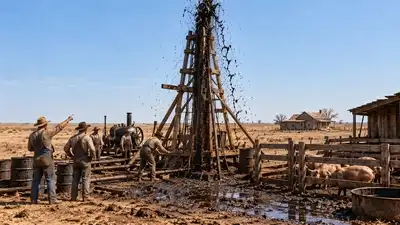
AI-generated representative image of an oil well striking oil in 1918 on drought-stricken Texas farmland near a hog pen. Image credits: ChatGPT
Drought threatened the livelihoods of cotton farmers Shields and Cassie Fowler in the summer of 1918. 1, struck oil in late July at a depth of approximately 1,735 feet, with a reported flowing potential of 2,500 barrels a day. Eventually, as reported by the Texas State Historical Association (TSHA) , the investors in Fowler Farm Oil Company sold their interests to Magnolia Petroleum Company for $1.8 million in cash. Near Electra in 1911, the county’s first commercial oil discovery was recorded. This was followed by further discoveries around Burkburnett in 1912. Contributors invested between $100 and $500 each or supplied materials needed for the project, according to the TSHA. Their neighbour Walter Cline, who owned three drilling rigs, agreed to provide a rig and crew in exchange for a $1,000 interest. It reportedly reached a depth of about 1,735 feet in the Cisco sands and had an alleged potential of 2,500 barrels a day. By late August 1918, around three weeks following the discovery, 56 rigs were drilling in the town, as noted by the TSHA. Additionally, lease prices rose as landowners and investors competed for promising sites, with some town-lot leases reaching $1,000.
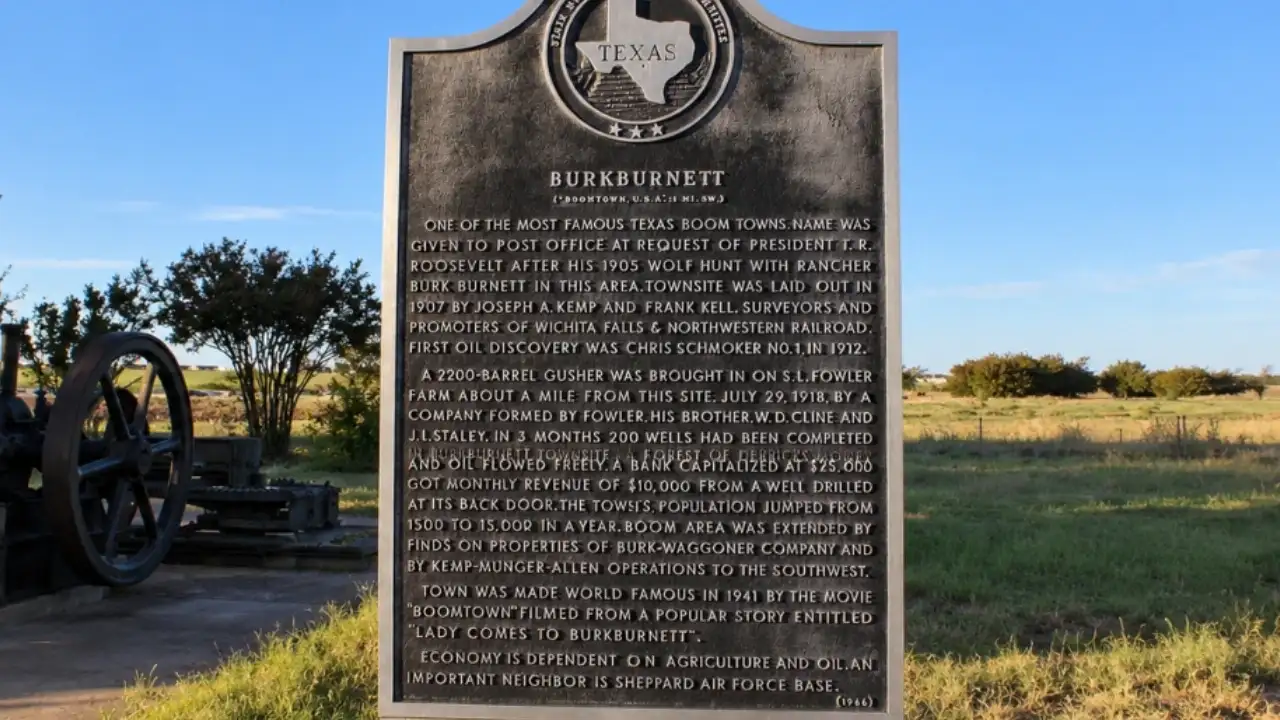
The Fowlers gathered financial and material support from their relatives, neighbours and local businesses, and began drilling near their hog pen. The well, known as Fowler No. The discovery helped launch the Burkburnett Townsite oil boom. From a drought-stricken farm to an oil prospect The Fowlers’ decision came as oil exploration was already reportedly expanding across Wichita County. These discoveries showed that oil could be found beneath North Texas farmland. However, drilling remained financially risky as investors could spend a fortune on a well without finding commercially productive oil. Meanwhile, for the Fowlers, the drought threatened their agricultural livelihood; thus, the nearby discoveries offered a reason to try an alternative. S.L. Fowler persuaded friends, neighbours and local businesses to help finance a well on his farm. As Fowler lacked structural space on his operational land, the crew set up the rig and began drilling directly alongside his hog pen. The participants planned to form Fowler Farm Oil Company if the well proved productive. Though the exact date of the discovery varies among historical accounts, the sources agree that the well struck oil in late July. A discovery that accelerated the Burkburnett oil boom The Fowler well prompted a rush to secure drilling sites in Burkburnett. With the rise in crude prices, the surge was further fueled. Burkburnett, Texas Historical Marker. Image credits: Wikimedia Commons
The pair were considering leaving their farm near Burkburnett in Wichita County, Texas; instead, they decided to explore for oil after they learned about earlier discoveries in the surrounding area.
Initially, many wells in the developing field flowed between 100 and 500 barrels a day, while some produced 1,000 to 3,000 barrels daily. To support transport of the increasing volume of crude, the Texas Company laid a four-inch pipeline with a capacity of approximately 5,000 to 6,000 barrels a day. The TSHA documents mention that they sold their interests to Magnolia Petroleum for $1.8 million in cash. By the end of 1918, Wichita County’s annual crude production had exceeded around 11.5 million barrels, as noted by TSHA.
Therefore, the Fowler discovery could be seen as the one that opened the way for this transition, although later discoveries, especially in 1919 and 1920, contributed further to the region’s petroleum development. The Fowler discovery could be looked at as part of a broader expansion in the county’s oil industry, rather than the beginning of oil exploration there. Notably, for the investors in Fowler Farm Oil Company, the discovery brought a substantial financial return. The figure refers to the investors’ interest in the venture. Nevertheless, the transaction underscores the value that a successful discovery could command during the early stages of the Burkburnett boom. The local demand for housing, supplies, transport and other services also increased with the influx of drilling crews, investors and businesses. You use AI every day. Now get your AI Quotient. Take the AIQ test.