
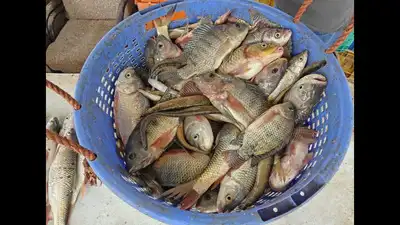
Photo by J jackson
Because of exotic dominance, many people aren’t aware of indigenous species.
“The civic body should pitch in to restore native fish populations.“ The Tamil Nadu Wetland Mission has identified and listed Tilapia, Mosquito fish, Guppy, Sailfin Catfishes/Sucker mouth, African Catfish and Common Carp as major invasive species recorded in and around the wetlands in the state. R Manikandan, founder of Kovai Kulangal Pathukapu Amaipu, says all tanks linked to the Noyyal river system are filled with exotic species. COIMBATORE: After the rejuvenation project, most of the lakes in the city look nothing but spectacular with lots of amenities for the visitors to unwind. But don’t be hoodwinked by the outer beauty. These lakes are increasingly dominated by invasive fish species, threatening aquatic biodiversity and disrupting ecological balance. Experts point out that invasive fish could displace native species for food and habitat, prey on indigenous fish and other aquatic organisms, and alter food chains. The presence of pollutants, including heavy metals entering lakes through sewage inflows, adds another dimension to the problem, raising concerns about contamination within aquatic food webs and the potential accumulation of toxic substances in fish. Environmentalists are, hence, seeking measures to regulate the spread of invasive fish species and control fishing practices that have also led to the dominance of exotic varieties. They also raise concerns over the continued sale of African catfish in the city despite a ban on the species. This, they say, speaks volumes for the gaps in enforcement. “Tilapia could be seen even at the foothills of Kovai Kutralam. The govt should survey all the waterbodies and reinstate indigenous varieties.“
Invasive species like African catfish, tank-cleaner fish, Tilapia (Jilebi) and common carp (Catla) today outnumber indigenous fish species, leading to long-term ecological imbalances, according to reliable sources.