
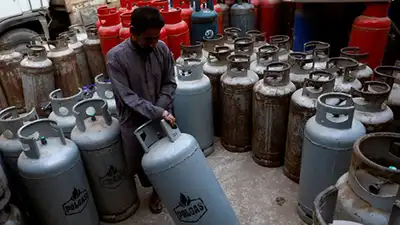
File photo: Pakistan’s fuel crisis forces families back to firewood and coal
Residents are also facing steep increases in the cost of LPG cylinders, with a new domestic cylinder selling for PKR13,500 (approx Rs 4644), compared with PKR10,000 (approx Rs 3440) earlier. Refill charges have risen from PKR3,000 (approx Rs 1032) to PKR5,000 (approx Rs 1720), while commercial cylinder refills have nearly doubled to PKR25,000 (approx Rs 8600).
Households are increasingly relying on cheaper alternatives such as discarded furniture wood and sawdust, according to a report by The Express Tribune.
He said households were spending PKR10,000 (approx Rs 3440) to PKR12,000 (approx Rs 4127) a month on LPG. But LPG is reportedly selling for as much as PKR 630 (approx Rs 217) per kg in the open market, while company-operated franchises are charging up to PKR 400 (approx Rs 138) per kg. Ogra said the increase followed a 6.47% rise in Saudi Aramco’s contract price, despite a marginal 0.12% decline in the average dollar exchange rate. He claimed that at least 70% of Pakistan’s LPG was imported from Iran, with the remaining 30% produced locally, and urged the government to curb market manipulation. Meanwhile, the Pakistan LPG Marketers Association has threatened to shut down businesses from November 16 if the government sidelines the private sector under its proposed LPG policy. Haider said that of around 1.3 million tonnes of LPG consumed, approximately 225,000 tonnes were imported from the Gulf, largely by private companies. The association also criticised the petroleum development levy of Rs4,669 per tonne on locally produced LPG under the 2016 policy.
Because of the closure of the Iran border, lPG Distributors Association of Pakistan chairman Irfan Khokhar said the situation was serious.
Shehzad Manzoor Kiyani, divisional president of the All-Pakistan Clerks Association, said inflation and unreliable gas supplies had forced government employees to return to firewood and coal. Association chairman Ali Haider said the government should retain the sector’s deregulated structure, arguing that the private sector played a major role in imports. In a letter to petroleum minister Ali Pervaiz Malik, the association said the draft policy sent to the prime minister had been prepared without private-sector input and called for complete deregulation of the LPG sector.
The levy was intended to help state-owned entities, including Pakistan State Oil, Parco and Sui Southern Gas Company, import LPG during winter and emergencies. Haider alleged that despite billions of rupees being collected through the levy, these entities had failed to import supplies during the current shortage.