
A wooden staircase with cast-iron railings inside the building on Sudder Street

10 Sudder Street, as it stands now A wooden staircase with cast-iron railings inside the building on Sudder Street 10 Sudder Street, as it stands now A wooden staircase with cast-iron railings inside the building on Sudder Street “We have yet to take any decision on the downgrading of the heritage building on Sudder Street, which is famous for its association with Tagore. Graphic * Located in the heart of Kolkata, 10 Sudder Street originally served as a prominent colonial-era residential property. * Between 1881 and 1882, the address became the home of Jyotirindranath Tagore and his wife, Kadambari Devi. * During this time, young Rabindranath Tagore stayed with them briefly after returning from his travels to England. * It was on the balcony of this house where Rabindranath experienced a sudden spiritual and creative epiphany while watching a morning sunrise. You Can Also Check: Gold Rate in Kolkata | Silver Rate in Kolkata | Bank Holidays in Kolkata | Public Holidays in Kolkata | Kolkata AQI | Weather in Kolkata | Petrol Price in Kolkata | Diesel Price in Kolkata | CNG Price in Kolkata | LPG Price in Kolkata Stay updated with the latest Kolkata news.
We have to visit the space and take stock of whatever changes have taken place recently defying heritage rules,” said an official. Inspired by this profound moment, he immediately composed his legendary poem “Nirjharer Swapna Bhanga” (The Awakening of the Waterfall), marking a historic turning point in his literary life. Download the TOI App.
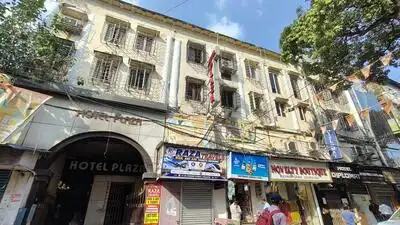
The heritage building on 10 Sudder Street, which houses Hotel Plaza, is among the many establishments in central Kolkata that have been shut following a fire-safety crackdown triggered by the Aug 19 blaze at a lodge on Free School Street that claimed nine lives. Jyotirindranath, Tagore’s elder brother, and his wife Kadambari Devi lived there around 150 years ago. And it was in this very house that Rabindranath, then 21 and still unmarried, had experienced a moment of profound creative awakening in 1882. The civic body had in 2012 received an application from the owner of the building to downgrade its heritage status from grade-I to grade-III to carry out necessary structural changes, according to a Kolkata Municipal Corporation source. But the updated list of the city’s heritage buildings published by KMC in 2022 shows the status of the application as pending.
Tagore later wrote that he, standing on the balcony of the building one morning and watching the sunrise, felt the world “bathed in a wonderful radiance”, with “waves of beauty and joy” rising around him. The experience, he wrote, pierced through the sadness that had gathered in his heart and filled it with “universal light”. Kolkata: A century-and-a-half-old building that has witnessed the best of times, including a moment in history that shaped one of the world’s greatest literary figures, is passing through one of its worst phases, enveloped in darkness and languishing in neglect. The building’s electricity connection has been snapped to prevent the hotel from resuming operations without clearance, leaving the once-busy property in darkness. The closure would have been one more entry in the list of hotels and lodges pulled up for safety violations but for the building’s association with Rabindranath Tagore . That same day, Tagore composed ‘Nirjharer Swapnabhanga’, or ‘Awakening of the Waterfall’, a poem widely regarded as a turning point in his literary journey. The building’s association with that moment survives in two plaques on Sudder Street. One stands outside, beside a crude bust of Tagore that bears little resemblance to him but for the beard. The other is inside the hotel building. Below the plaque is a fading red cross, metaphorically indicating the building’s ailing health. The building has changed over the years. The balcony from which the young Tagore watched the sunrise no longer exists. But the stately wooden staircase with cast-iron railings still stands. On the first floor hangs a painting of Tagore, a fading reminder of a significant chapter in his life and Bengal’s cultural history.