
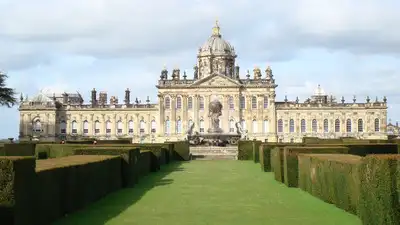
Image of Castle Howard and its garden. (Image Credits: Wikimedia Commons)
The dome of Castle Howard collapsed into the Great Hall after a fire broke out on 9 November 1940. Flames spread from a chimney and, by extension, destroyed more than 20 rooms in the North Yorkshire House. The latest phase, unveiled in 2025, retrieved long-lost decorative features to view and brought rooms affected by the fire back into the visitor experience. A fire that altered the house Well before the smoke cleared from the 1940 flames, the Howards of Castle Howard had already lived a lifetime. The fire was just a bookmark in the chapters of Castle Howard’s history; its story started when the 3rd Earl of Carlisle commissioned John Vanbrugh in 1699, along with architect Nicholas Hawksmoor. But Vanbrugh’s untimely death in 1726, before the house was complete, coupled with the 3rd Earl’s death in 1738, dampened its future.
The fire also took much of the house’s historical contents with it, and rooms that had formed part of the house for generations were lost. The structure became a testimony to how a house can survive a fire and still carry its consequences for generations. The damage left a substantial part of the building in need of restoration. The house turned a new leaf when it passed into the next phase of development under the stewardship of the 4th Earl of Carlisle. Girls evacuated from Queen Margaret’s School helped salvage possessions from the burning building.
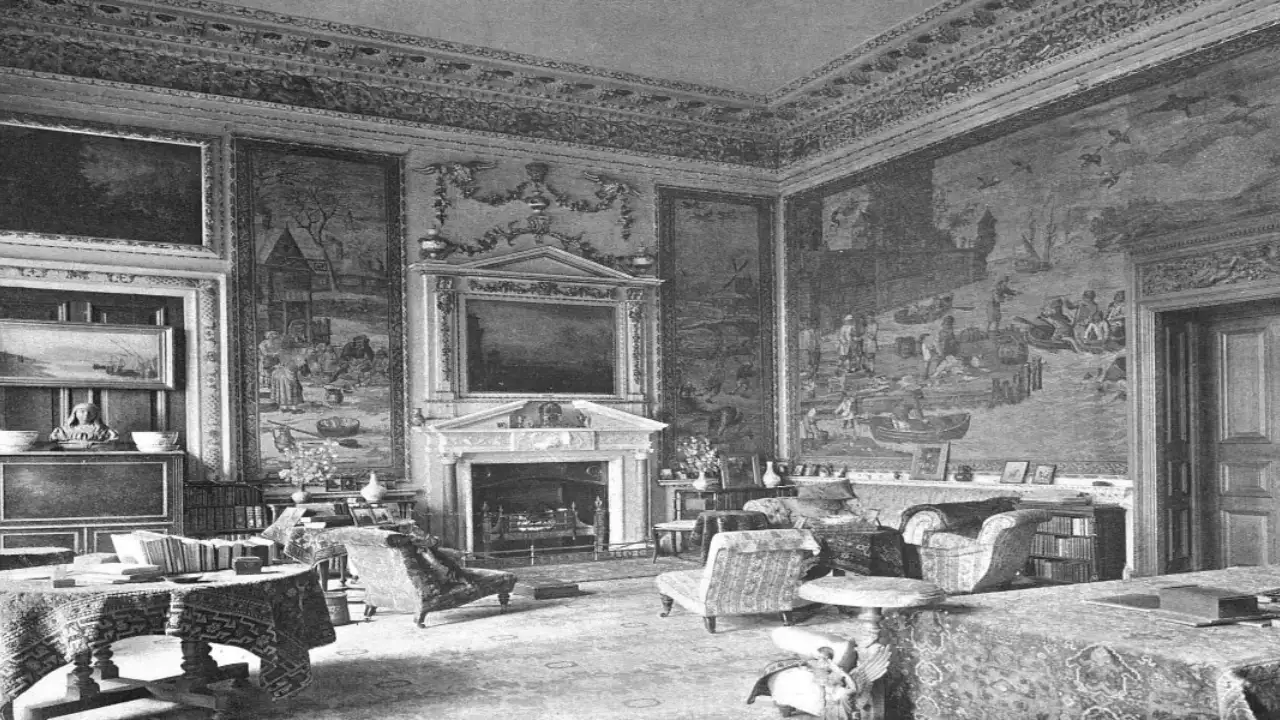
Castle Howard opened a newly restored group of interiors to visitors on 25 April 2025. After the restoration, it returned to its original 18th-century look with four tapestries woven by John Vanderbank in 1706, according to Castle Howard’s announcement. The work included the Tapestry Drawing Room, the Grand Staircase and the Long Gallery. Smithsonian Magazine’s article from the same date and year described the reopening and the family’s continuing effort to repair the house. The Tapestry Drawing Room had been gutted in the fire, and reconstruction had not taken place afterwards. The scene embodies the four seasons and derives from works by David Teniers. The Grand staircase, dating from the 1870s, was also rearranged. It now displays objects associated with the Grand Tour, alongside new plaster casts and busts. The Long Gallery was rehung with Italian Paintings of Rome by Giovanni Paolo Pannini, commissioned by the 4th Earl of Carlisle, as well as portraits of the family.