
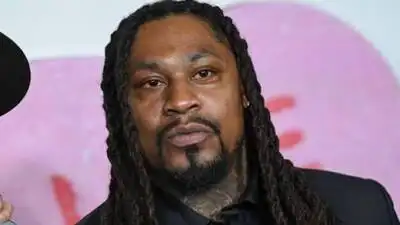
Marshawn Lynch’s agent doubted his $10,000 Beast Mode gamble, years later the NFL star turned a simple hoodie idea into a seven-figure business empire
His agent initially questioned whether spending $10,000 to protect the name was a wise move. Marshawn Lynch was known for breaking tackles and running through defenders, but he was also thinking about life beyond football. he took a nickname that fans already connected with him and turned it into a clothing business While playing in the NFL. Years later, Beast Mode had become a seven-figure brand, with its own stores and major retail partnerships.
Lynch filed to trademark Beast Mode in December 2008, during his early years in the NFL. At the time, Lynch was a young player, and spending around $10,000 to protect a phrase seemed like a risk when there was no guarantee that it would become a successful business. By 2013, before the clothing line had officially launched, he was already earning money through licensing. ESPN reported in January 2014 that Lynch had made mid-six figures from licensing Beast Mode in 2013, according to Hendrickson. By January 2015, Beast Mode had around 25 products. More than 1,000 hats had also sold out through its online store and a temporary shop in Scottsdale, Arizona. The first major sign of its growth came in 2015, around the time Lynch and the Seahawks were preparing for Super Bowl XLIX. Chris Bevans told ESPN that, if the team built the company properly, it could reach $50 million in sales within five years. Beast Mode took another step forward in July 2020, when Lynch announced a multi-year partnership with Fanatics.
Fanatics said it was the first time it had powered a branded e-commerce business for an athlete, celebrity or influencer. His agent, Doug Hendrickson, was not immediately convinced. Lynch, however, stuck with the idea. The trademark gave him a way to protect the name as he began building a brand around it. He worked with Chris Bevans, a former Nike apparel designer, who helped develop the clothing line and manage its creative direction. The business was still young, but it was beginning to attract customers beyond people who simply wanted to support Lynch on game day. The brand had an online store and a temporary pop-up shop, while its clothing was gaining attention among fans. The business was also exploring licensing and retail opportunities. That was a future target, not a figure the company had already achieved. Under the deal, Fanatics would operate a new online and mobile shopping experience for the apparel company.