
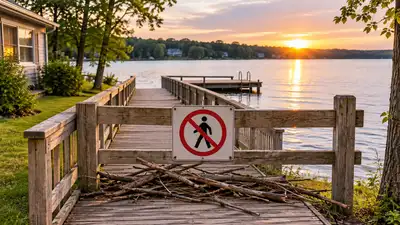
Representative Image (AI-generated)
The conflict escalated after the Leffrings listed their home for sale and planned to lease it to tenants until the property was sold. Cahill and Bissett then installed a ‘No Trespassing’ sign along the boardwalk and placed a pile of sticks along the route used by the Leffrings, their family members and guests. The couple subsequently sought legal protection to continue accessing the lake.
In its October 28, 2026, unpublished decision in Jeremy Leffring v. Mark Cahill, available on Justia , the Michigan Court of Appeals upheld a $55,750 award to the couple for improvements they had made to the neighbouring property. Under Michigan Court Rule 3.411(F), a party who loses a claim to title to disputed property may seek compensation for the increase in the property’s value resulting from buildings or improvements they made. The Michigan Court of Appeals affirmed the lower court’s decision, leaving the $55,750 compensation award intact.
Because there was no written agreement, the court agreed that they had not established an enforceable easement. Because they had not acted in bad faith when constructing and maintaining the boardwalk and dock, however, it found that they were entitled to compensation. Because michigan’s statute of frauds required the agreement to be documented in writing, the trial court concluded that the verbal arrangement did not create an enforceable easement. The court therefore awarded the couple $55,750, representing their contribution to the increase in the value of the neighbouring property through the improvements.
The appeals court also upheld the dismissal of the new owners’ claim seeking indemnification from the previous owners. However, the court considered whether the Leffrings could receive compensation for the improvements they had made to the Updykes’ property. However, compensation is not available if those improvements were made in bad faith. After a bench trial, the court found that the Leffrings had acted in good faith. They had mutually agreed with the previous owners to build and maintain the boardwalk and dock, shared the construction expenses and continued maintaining the facilities after the property changed hands. The new owners had also initially allowed them to use the facilities without objection and even helped with annual maintenance during their first year of ownership. The appeals court found that the new owners could not simultaneously argue that no enforceable easement existed and claim compensation for the failure to disclose an easement that had no legal validity. It also rejected their argument for equitable indemnification, finding insufficient evidence that the Updykes had been unjustly enriched at their expense. The ruling highlights the financial risks of relying on informal property arrangements. the court recognised their good-faith investment in improvements that increased the value of land they did not own Although the Leffrings could not secure a legal right to continue accessing the lake.