
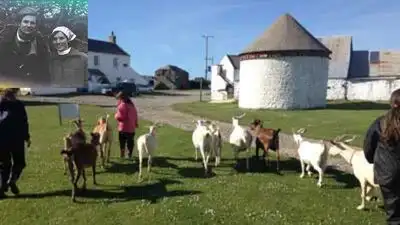
Michael Morpurgo and his wife Clare are celebrating 50 years of Farms for City Children. Image Credit: Farms for City Children/Website
Michael Morpurgo and his wife Clare are celebrating 50 years of Farms for City Children, the charity they founded to give young people the chance to experience life on a working farm. Since welcoming its first school in Devon in 1976, the organisation has taken more than 104,500 children and young people into the countryside, where they can care for animals, grow food and learn about nature. As it reaches the milestone in 2026, the charity is looking to build on its work by making outdoor learning and meaningful experiences in nature accessible to more children. Michael and Clare Morpurgo established the organisation in 1976, welcoming their first visiting school to Nethercott House in Devon, according to the charity’s website. The charity’s anniversary timeline also highlights the involvement of poet Ted Hughes, who became its founding president in 1976. Lower Treginnis in Pembrokeshire joined the charity in 1989, followed by Wick Court in Gloucestershire in 1998. Visiting children usually spend 5 days at one of its three farms, taking part in activities that connect classroom subjects with practical experience, according to the charity’s 2024-25 impact report. The impact report recorded 3,553 children and young people visiting the farms in the 2024-25 academic year. They represented 116 schools and groups and 482 adults. Thirty-seven per cent of the children and young people involved were eligible for pupil premium funding, and 48% of the school beneficiaries were from the 30% most deprived areas in England and Wales. Some 76% said they had a better knowledge of where their food came from, while 72% said they had a better attitude toward perseverance. The report also notes that 60% of households experiencing financial strain said they struggled to afford school trips. Meanwhile, 35% of the schools surveyed in research cited by the charity said their pupils would not experience any outdoor learning. All surveyed leaders reported a positive impact on young people’s awareness of nature, while 99% said the visits improved their understanding of how food travels from farms to consumers. In its January 2026 announcement, Farms for City Children said it would mark the milestone with events across all 3 farms, stories from former visitors and staff, and activities involving schools and community groups. One of the planned activities is an anniversary competition called The further adventures of the Golden Goose, aimed at schools and community groups visiting the farms during 2026. In 1995, the organisation adopted the Goose Girl illustration by Quentin Blake as its logo, following its appearance in Morpurgo’s book Muck and Magic. In 2022, it welcomed its first youth community groups during school holidays and began an agroforestry project with the Woodland Trust at Nethercott House. Its 2024-25 impact report describes efforts to create new wildlife habitats, increase biodiversity and introduce more sustainable farming practices across its sites.
Research cited in an impact report for 2024-25 said nearly half of primary schools in England had cut spending on school trips and enrichment activities due to the cost-of-living crisis. All school and group leaders surveyed reported a good or outstanding impact of the residential experience on the development of a growth mindset amongst the young people.
The impact report said all school and group leaders surveyed felt the visits had a good or outstanding effect on children’s social connections and wellbeing. She said the effects often continued after children returned home, influencing their conversations, writing, attitudes and confidence. The idea behind Farms for City Children began with a belief that children should have opportunities to understand the natural world through direct experience. The couple wanted children, particularly those growing up in urban areas, to experience a different environment from their everyday surroundings. Rather than simply learning about farming from books or lessons, visiting pupils could spend time on a working farm, take part in practical activities and discover how food and nature are connected. Over the following decades, the organisation expanded beyond its original Devon base. The programme is designed to make learning part of everyday farm life. Their responsibilities include feeding and caring for livestock, planting seeds, harvesting produce and helping prepare meals. They also take part in nature walks, outdoor activities and other tasks that introduce them to the work involved in running a farm. The report also found improvements in children’s comprehension and confidence. The charity’s work has become even more important as opportunities for children to get outdoors have become harder to come by. Farms for City Children aims to fill this gap by providing residential experiences for children of all backgrounds to explore a different environment. The findings also highlighted the environmental benefits of the programme. Theresa Moses, headteacher at Paxton Academy, described the school’s visit to Wick Court and explained how children who initially appeared hesitant became more curious and confident through practical activities. In her account, published in the charity’s article, Moses explained that caring for animals and completing meaningful tasks gave pupils opportunities to succeed outside the familiar classroom environment. She also highlighted how teamwork, resilience and a sense of belonging could develop through shared experiences. The 50th anniversary celebrations are also an opportunity to recognise the people who have helped sustain the organisation over five decades. Its anniversary timeline records other important developments in its history. The organisation has also continued developing its educational activities and environmental work. You use AI every day. Now get your AI Quotient. Take the AIQ test.