
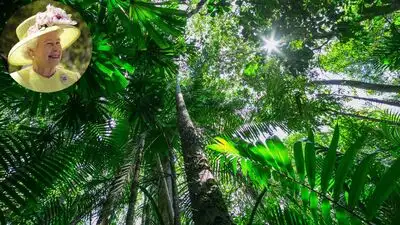
Image Credit: Cool Earth/Website
Queen Elizabeth II’s environmental contribution continues to benefit forests and wildlife across the Commonwealth, with a conservation initiative established in her name helping protect more than 12 million hectares of indigenous forests and botanical gardens. The program, which started in 2015, eventually included all Commonwealth countries, creating a network of conservation projects to protect native forests, increase biodiversity and promote international collaboration on environmental protection. The Great Bear Rainforest Agreement, announced in February 2016, established a framework for protecting the region while maintaining economic opportunities and employment for local communities. The agreements and subsequent conservation measures aim to protect 85% of the rainforest and more than 70% of its old-growth forests over time, according to the provincial government.
The Queen’s Commonwealth Canopy brought countries together to safeguard important natural landscapes and recognise the monarch’s decades of service to the Commonwealth.
The Queen’s Commonwealth Canopy was launched in November 2015 at the Commonwealth Heads of Government Meeting in Malta as an initiative to protect the world’s forests. The Royal Family’s official explanation stated that the initiative was intended to unite all 53 Commonwealth countries to protect indigenous forests. By 2022, the initiative had attracted participation across the Commonwealth, the Royal Commonwealth Society said. Its network comprised some 115 sites and projects protecting more than 12 million hectares of indigenous forests and botanical gardens. A November 2015 announcement by Prime Minister John Key committed an additional $1 million over 3 years to help the trust extend its conservation work.
The Royal Commonwealth Society said the initiative was created to leave a lasting environmental legacy for Queen Elizabeth II by protecting indigenous forests across Commonwealth nations. The programme encouraged participating countries to exchange experience and learn from successful approaches to forest management, according to Cool Earth. New Zealand’s government also supported the initiative financially.