
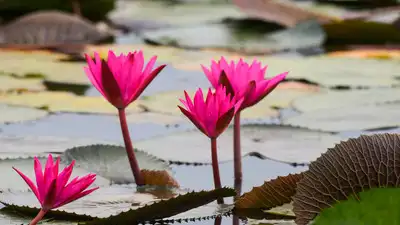
Representative Image
Researchers estimate that only 30 to 50 individuals may exist in the wild, raising concerns about its survival. They are working towards an official assessment for the International Union for Conservation of Nature’s Red List, aiming for a Critically Endangered classification. Harris photographed the plants in Colombia’s Inírida region in 2021, believing they were Victoria amazonica. During five days in the region, the team initially found plants without flowers, which were needed to distinguish the species. On the final night, they departed by boat at 1 am and reached a small lake before sunrise. Further surveys could reveal additional plants, making the 30-to-50 figure an estimate rather than a confirmed total. Conservation proposals include collecting seeds for cultivation at Bogotá’s botanical garden and establishing a population in a more accessible lake within Indigenous territory. Its predecessor, Victoria boliviana, was identified in 2022 after Kew’s collections had misidentified specimens for 177 years.
Because the location lay outside the genus’s previously known natural range. He examined satellite images of the river and surrounding lakes and located floating pads that warranted further investigation, magdalena questioned that identification.
Researchers formally described the plant as Victoria colombiana last month. “Now that we know this waterlily exists, our responsibility is to understand it better and protect it,” Magdalena said. Giant waterlily photos shared on Instagram have led scientists to a new species. Pictures posted by US plant nursery owner Jeremiah Harris on the Meta-owned social media platform caught the attention of the UK’s Kew waterlily expert Carlos Magdalena, prompting a search through satellite imagery and an expedition to remote Colombian lakes. The search brought together researchers from Kew and Bogotá’s botanical garden, alongside Indigenous community members familiar with the waterways. Kew’s species profile Planning the expedition took nearly two years. There they found five plants, including one in flower. They documented seven individuals across two lakes. Nilo Rodríguez, Jaime Hernández and Gustavo Melo helped organise and guide the search. Their knowledge of the region was central to locating the plants. The estimated population is small, but its full extent remains uncertain. That could support protection, research and community ecotourism. Bogotá city government Victoria colombiana adds four known species to the genus. Kew’s Bolivian waterlily profile You use AI every day. Now get your AI Quotient. Take the AIQ test.
That earlier discovery was the first new giant waterlily species recognised in more than a century.