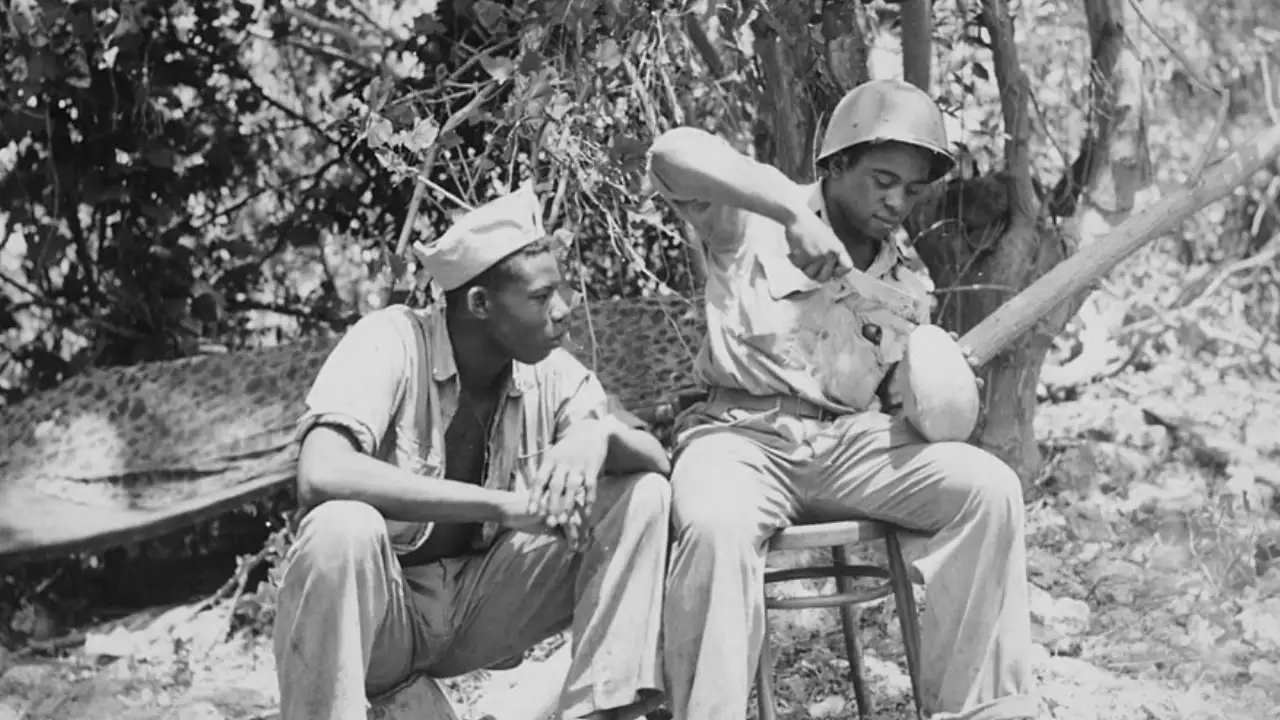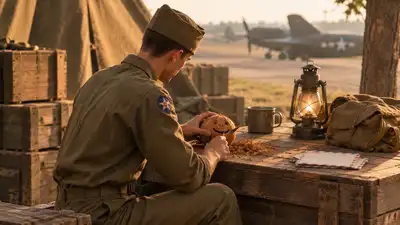
A representative AI image of a soldier in the middle of World War carving a smiling face into a coconut. Image Credits: ChatGPT.
US Army Air Corps Captain David Fransen was stationed in the Philippines in 1943. The US military devised Victory Mail, or V-Mail, in 1942. A small wartime object became part of historical preservation Chapman University’s 2015 exhibition drew new attention to his coconut during a celebration of the 70th anniversary of the conclusion of the Second World War. The exhibit, World War 2: The Pacific Theatre, featured letters from American service members who had fought throughout the Pacific.
Because the coconut could carry both a personal decoration and the information needed for delivery, it also made the message unique. Because it demonstrated that communication did not always have to take the form of conventional paper letters, fransen’s coconut stood out.
A coconut became an unusual message from the Philippines According to Chapman University’s Leatherby Libraries , Captain David Fransen was in the Philippines. Between the Second World War and modern times, many military men and women were separated from their loved ones by vast distances. They sent letters and packages back and forth, but sometimes a service member wanted to keep communication simple and personal. He wanted to tell his five-year-old daughter that he loved her. He carved a coconut with a smile on it, and then sent it through the mail to his daughter, so she would have a keepsake from her father. He came up with a unique way to communicate with his daughter, Susan. Instead of simply mailing a letter, he sent a coconut. He etched a smiley face on the shell and addressed it with the five-year-old’s mailing information, creating the shipping capsule for his palm-sized message. The gesture showed the ingenuity with which servicemen were able to connect with their loved ones through the conflict. Fransen’s choice of a coconut made the message especially memorable. For a young girl waiting for news of her father, the coconut must have been a memorable reminder. The coconut was among the wartime correspondence later highlighted by the University Centre of American War Letters archive, which collects personal letters and other written records from American servicemen and women, preserving accounts that provide a more intimate understanding of military history. Wartime correspondence carried emotional importance Fransen’s unusual piece of mail was a part of a larger story of connection between American soldiers abroad and their families. In the Second World War, millions of servicemen and women served overseas and were often separated from loved ones for months or even years. Letters provided one of the main means of sharing information, staying in touch, and reassuring loved ones about family affairs. The amount of mail posed serious problems for the service post office space, with floods of correspondence. It photographed handwritten notes on microfilm for overseas movement, where they were reproduced on smaller sheets of paper. A study in war in history examined how postcards shaped relationships between civilians and military personnel during World War I. it highlights how written messages helped maintain connections across great distances Although the study focused on a different form of communication. The coconut offered a more unusual way to achieve the same purpose. Rather than sending an ordinary letter or postcard, he chose an object that reflected the environment in which he was serving. The carved, grinning face gave the coconut a personal touch, while the address written on its shell turned it into an unconventional means of communication. During World War II, Captain David Fransen creatively sent a carved coconut to his daughter. Image Credits: Wikimedia Commons. The correspondence was displayed alongside other wartime letters chronicling the experiences of those often broken apart from their loved ones by duty. The archive was formed to collect and maintain correspondence from different times in American military history, providing historians with the type of material that is usually absent from the official record. You use AI every day. Now get your AI Quotient. Take the AIQ test.