
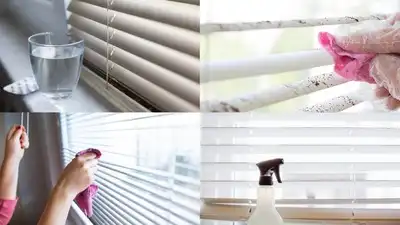
Window blinds quietly collect everything that drifts in from outside: city dust, cooking fumes, a sticky film of oil in the kitchen, even the odd dead insect. You don’t notice it until the sun hits them at a certain angle, and suddenly they look grey and tired. Replacing them is expensive, and fiddly cleaners aren’t always needed. A simple mix of white vinegar and water can cut through that grime and leave your blinds looking fresh, with ingredients you already have. Here’s a quick way to do it.
Mix equal parts of white vinegar and warm water in a spray bottle. That’s all you need. This works well on vinyl, aluminium and metal blinds, and it also helps loosen grime and fingerprints. Before you start, test it on a small hidden spot, such as the very bottom slat, to make sure it doesn’t affect the finish. And if your blinds are made of real wood or fabric, read the note at the end before you reach for the spray.
Dust them first, always
Because it will pick up a lot of dirt, rinse and wring out the cloth often,. Follow with a dry cloth to wipe each slat, so that no water marks or streaks remain. It might be tempting to jump straight in with the spray, but wetting dusty blinds just turns the dust into muddy streaks. So start dry. Close the blinds so the slats lie flat, and wipe each one from top to bottom with a microfibre cloth or a duster. You can also use a vacuum cleaner with a soft brush attachment on the lowest setting. Do one side, then flip the slats and do the other. Once the loose dust is gone, the real cleaning becomes much easier. Don’t spray the blinds directly. Instead, mist a clean microfibre cloth, or an old sock slipped over your hand, until it’s damp, not dripping. Gently wipe each slat from one end to the other, then flip them and do the other side. Blinds in the kitchen often have greasy, sticky patches. For these, spray the solution lightly onto the spot, let it sit for a few minutes, then wipe it away. If you struggle to reach between the slats, try the tongs trick. Wrap a cloth or sock around each side of a pair of kitchen tongs, secure it with rubber bands, then clamp it over a slat and slide it along. It cleans both sides at once, and it saves a lot of time. Never leave the blinds wet. Go over them with a dry cloth, or leave the window open so they can air-dry. Remember that real wood and cellular shades don’t like water or vinegar, so use a barely damp cloth, or a wood cleaner, for these. To keep your blinds clean for longer, dust them every week or two, clean your windows first, and shake your cloth outside as it fills up with dust, so you don’t put it back on the slats. It’s a small chore, but it makes a big difference. Once your blinds are clean, the light that comes through them looks brighter, and the whole room feels fresher. This article is intended for general informational purposes only. Vinegar and water are suitable for many vinyl, aluminium and metal blinds, but not all materials, so test a small hidden area first. Avoid soaking blinds, and do not use water or vinegar on real wood, bamboo, cellular or delicate fabric blinds without checking the manufacturer’s care instructions. Take care when using a step stool to reach high blinds. You use AI every day. Now get your AI Quotient. Take the AIQ test Get the latest Lifestyle News and more. Download the TOI app.