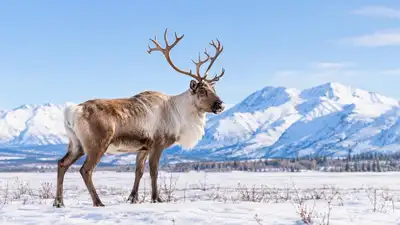
AI Representation: Reindeer in 1900, less than a decade after Sheldon Jackson began introducing Siberian reindeer to the Seward Peninsula. Image credits: Chatgpt
Jackson’s 1891 plan for Northwestern Alaska Reindeer first reached Alaska near Teller, on the Seward Peninsula, in 1891, brought by Reverend Sheldon Jackson. The Alaska Department of Fish and Game (ADF&G) states that roughly 1,280 Siberian reindeer were introduced between 1892 and 1902 and that Sámi herders were brought over to teach herding to Alaska Natives. Herds passed 600,000 by 1932 The National Park Service article on Frank Churchill’s 1905 Documentation of the Reindeer Service in Alaska noted that ownership became complicated, since missionary organisations controlled large herds even as the government tried to promote ownership among Alaska Native communities.
Dealings with non-Native businessmen drove local Alaska Native herders to despair, ADF&G’s Reindeer: Vehicles of Change said. Reindeer are so tied to Christmas in the public mind that it is easy to forget they once carried a serious government mission in Alaska. In the 1890s, Washington shipped them over from Siberia to feed a hungry region and for a few decades, the plan looked like a runaway success. Then the herds fell apart, almost as quickly as they had grown. The need for it was genuine. The department also reports that caribou were rare in northwest Alaska, moose were non-existent and commercial hunting had already reduced the number of bowhead whales and walruses. Jackson viewed reindeer as a dependable supply of red meat and an opportunity for Alaska Natives to join the cash economy. ADF&G described how the Great Depression had led to the collapse of the market for reindeer meat in the rest of the USA while the local demands did not match the supply. Herding practices declined and animals started wandering.
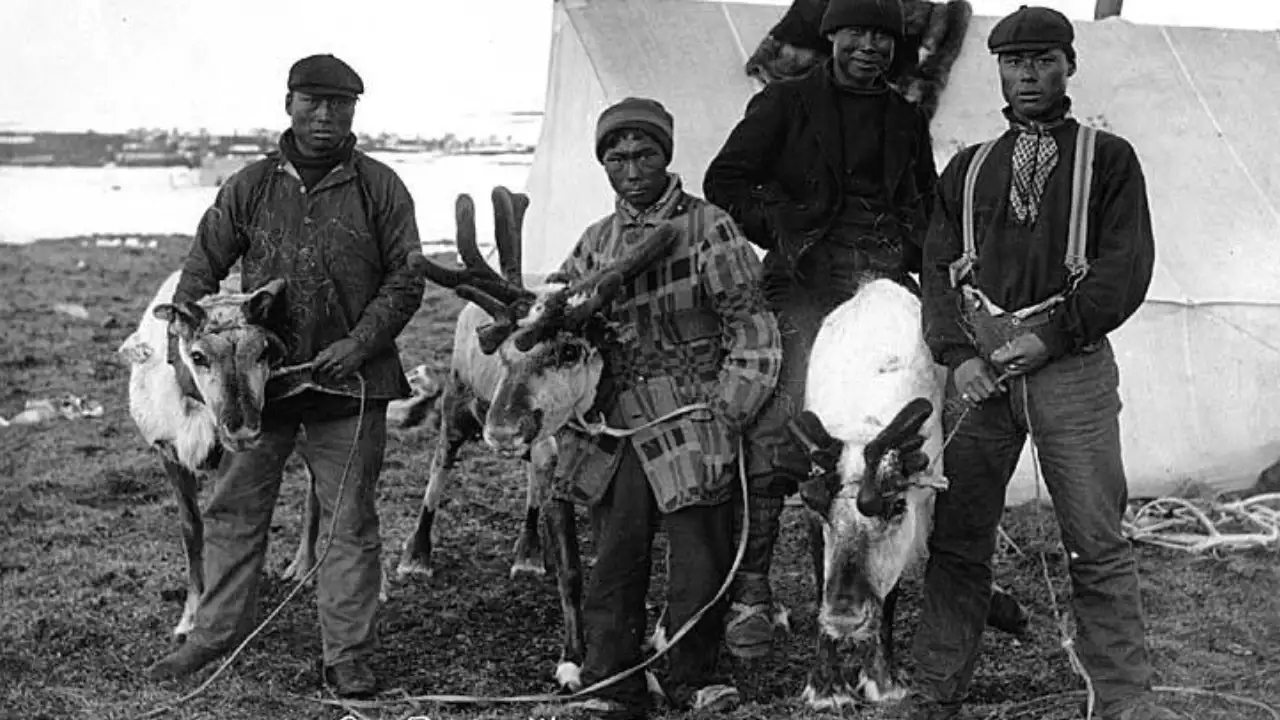
Hanson’s Importance and Development of the Reindeer Industry in Alaska, published in the Journal of Range Management, reports that numbers rose steadily to over 600,000 by 1932. Jim Dau’s Managing reindeer and wildlife on Alaska’s Seward Peninsula, published in Polar Research in 2000, looks at that last pressure more closely. When the reindeer was introduced during the period 1892-1902, no other ungulate animal was present, while the population of big carnivores was lower than what it would later be, according to Dau. Hanson’s report also tracked herd size from 1892-1951. Alaska native herders with reindeer, Cape Prince of Wales, circa 1905. Over the century that followed, herd numbers and range grew and then fell sharply, with most of the drop coming between 1932 and 1950; while wildlife spread across the Seward Peninsula through natural movement and translocations. The Reindeer Act of 1937 and what followed In 1937, Congress passed the Reindeer Act, which effectively limited reindeer ownership in Alaska to Alaska Natives, according to Title 25 of the US Code. In 1940, the federal government purchased the reindeer owned by non-Natives and gave them to Native herders. Vehicles of Change put the population at around 25,000 by 1950, after the fall and it held at roughly 25,000-30,000 from there, with most herds on the Seward Peninsula. By 1950, the account was down to about 25,000, a fraction of the 1932 peak of more than 600,000. The animals stayed on the Seward Peninsula and after the 1940 federal buyout, the herds were in the hands of Alaska Native herders, not the missionary groups and non-Native operators who had run the business before.
Because reindeer intermingle with the caribou herds and stray from their allotted range and through competition over the food, he further claims that the caribou affected the Seward Peninsula reindeer industry, more than any other wildlife animal.
Image credits: Wikimedia Commons The paper says the reindeer industry then became part of a much broader landscape change. Whites took over the business by the 1920s. Herbert C. Dau also notes that the industry was hit hardest by wildlife, especially caribou and that cooperative management efforts later tried to blend indigenous, scientific and local knowledge with government programmes. It was a small, quiet industry next to what Jackson had pictured in the 1890s. You use AI every day. Now get your AI Quotient. Take the AIQ test.
ADF&G found that the Sámi herder and the missionary churches derived more benefits from the industry before the 1920s than the Alaska Natives did.