
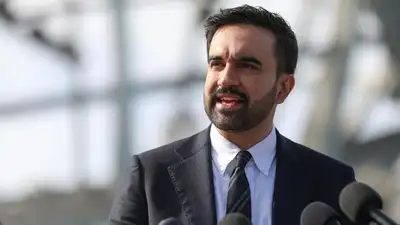
A New York City Democratic councilman has withdrawn his support for a controversial labour bill backed by Mayor Zohran Mamdani, citing concerns that the measure could lead to business closures and significant job losses, according to a report by the New York Post. The bill, introduced by fellow Queens Democrat Tiffany Cabán, seeks to overhaul employment practices for “last-mile” delivery workers by requiring companies such as Amazon to directly employ delivery drivers rather than relying on subcontractors. Queens Councilman Phil Wong recently removed his name as a co-sponsor of the Delivery Protection Act after meeting with small business owners and logistics operators who warned that the legislation could have serious economic consequences.
Councilwoman Tiffany Cabán introduced the bill in 2025, and Wong signed on as a co-sponsor. The legislation would end Amazon’s reliance on subcontractors by requiring it to obtain licences for its 15 last-mile facilities in the city and to hire delivery workers directly as full-time employees. The bill would affect more than 5,000 delivery workers employed by about 40 third-party contractors, according to Amazon. It has threatened to close its New York last-mile warehouses and lay off about 2,000 workers there if the bill passes. An AKFR study commissioned by Amazon estimates that delivery costs for New Yorkers would rise by $664 a year, or about $5.20 a package. The union says Amazon has spent more than $5 million on a campaign against the bill. The company has said such a move could result in the loss of about 2,000 warehouse jobs. A study commissioned by Amazon and conducted by AKFR estimated that New Yorkers’ delivery costs could rise by an average of $664 annually, or roughly $5.20 per package, if the proposal is enacted.
After she reintroduced it this year, he supported it again. Other companies, including FedEx, would face the same rules. Amazon doesn’t directly employ delivery drivers anywhere in the US. The Teamsters union, which strongly backs the bill, accuses Amazon of union-busting and of using the subcontracting model to dodge responsibility for worker and street safety. Amazon has strongly opposed the bill and has warned that it could shut down its last-mile warehouses in New York City if the legislation becomes law. The e-commerce giant also argues that consumers could face higher costs.
Ro Khanna, a California Democrat who is considering a 2028 presidential run, urged Council Speaker Julie Menin to schedule a vote, writing on X that delivery workers deserve safe and fair conditions. Mamdani and Teamsters members rallied at City Hall on October 22, urging her to call a vote immediately. Sources told the Post the Law Department is examining whether the bill violates the Federal Aviation Administration Authorization Act of 1994, which bars states from regulating the price, route or service of motor carriers. New York City’s Law Department is examining whether the proposal could conflict with the Federal Aviation Administration Authorization Act of 1994, which limits states and local governments from enacting regulations related to the prices, routes or services of motor carriers, according to the New York Post report.
Menin says the bill is being reviewed by the city’s Law Department, according to a spokesperson, who said she remains committed to legislation that protects workers and keeps the jobs in New York. Her office said the bill remains under review and continues to move through the legislative process. Rep. Menin, a centrist, has not taken a position on the bill. She has voiced concern that it could cause job losses and lead Amazon to raise prices. New York would be the first US city to adopt such a measure. Beyond the political debate, the bill faces legal scrutiny. Speaker Julie Menin has not publicly endorsed or opposed the legislation but has expressed concerns that it could lead to job losses and higher costs for consumers.