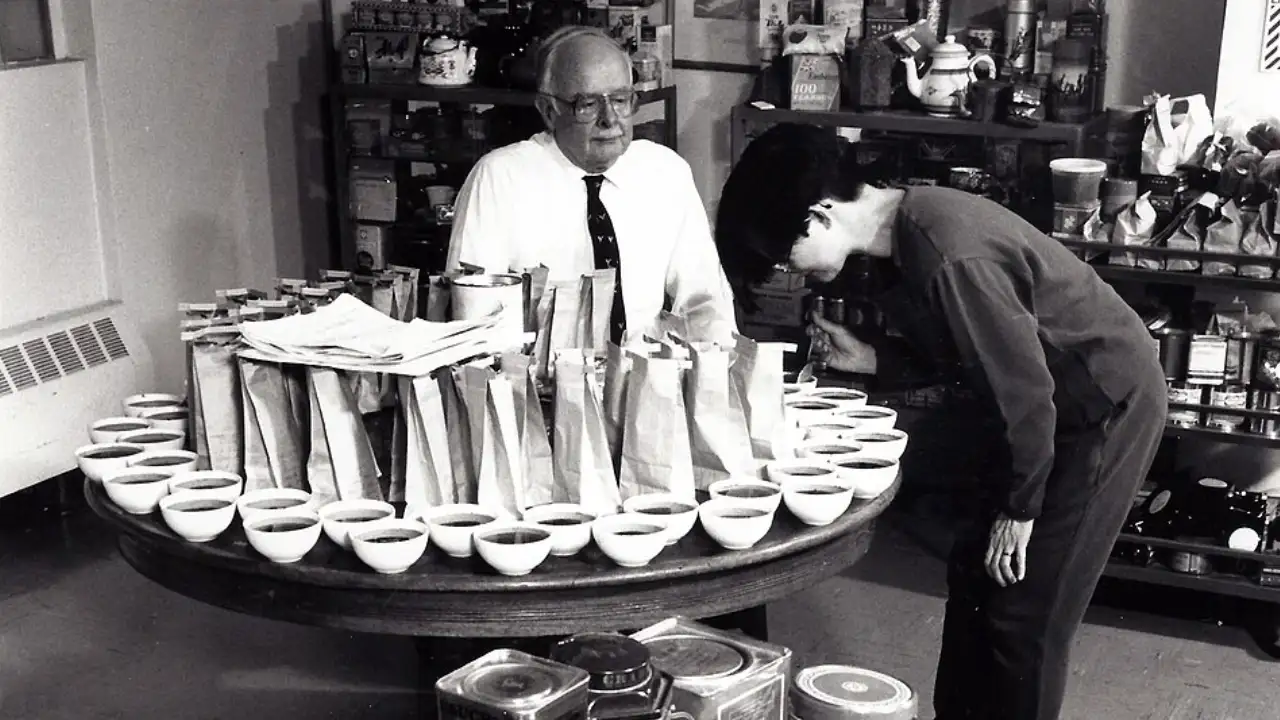
Representative AI image of tea tasters sampling and assessing different imported tea varieties. Image Credits: ChatGPT.
Food and Drug Administration , the system dates back to the Tea Importation Act of 1897. It also struggled for funding and, in the 1996 budget of the FDA, did not include any funding for the Board of Tea Experts, although the industry had helped fund it in the past. Congress eventually passed the Federal Tea Tasters Repeal Act of 1996, signed into law by President Bill Clinton on April 9, 1996. This legislation put an end to the Tea Importation Act of 1897 and the Board of Tea Experts and, in doing so, put an end to the federal system of annual tea quality standards and mandatory taste- testing inspection.
Because it depended on human ability to make judgment rather than simply on lab testing, it was a unique system partly.
According to the U.S. Around this time, there was much discussion about the quality and purity of imported tea, especially with respect to adulteration by artificial colouring and foreign substances. To regulate this, Congress enacted a law to establish standards for imported tea and to create a system where the government could designate inspectors to inspect all shipments of imported tea to determine if they conform to the prescribed standards. Expert inspectors observed the appearance, aroma, colour, and flavour of the tea after it had been brewed. Using their experience, they could tell the difference between acceptable tea and a beverage that would be rejected by the government. The legislation created a set of guidelines to ensure a consistent approach to imported tea. Why the unusual government programme eventually ended However, over the years, the system raised more and more questions about whether there was still any need for a separate federal tea quality program. As part of a wider food safety scheme of the US government, the FDA was empowered to oversee imported food of all kinds, and it also covered tea. By the 1990s, critics suggested the existence of the Board and the separate rules was an expensive and unnecessary layer of bureaucracy. The law’s repeal of the federal standards didn’t let imported teas off the hook. The FDA still has oversight authority over imports under the Federal Food, Drug, and Cosmetic Act and can now inspect for contamination and consumer safety.