
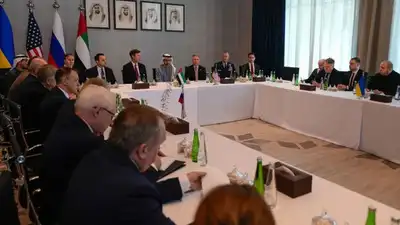
The first day of Ukraine, Russia and US peace talks ended with Washington claiming progress towards ending the war, but the biggest obstacles to a settlement remain firmly in place.
They have also floated the possibility of reactivating the Nato-Russia Council, which has remained largely inactive since 2022.
US President Donald Trump’s son-in-law Jared Kushner told delegates that Washington had “narrowed the gaps” between Moscow and Kyiv and hoped to move towards a “solution that hopefully ends the war” While Ukrainian and Russian representatives remained tight-lipped after the first day’s negotiations. Kushner said the negotiations were aimed at building a path towards ending the conflict, while US officials indicated that both sides had shown “a little bit of flexibility, privately” on the question of territorial control. Neither side has publicly shifted from its position, making the territorial dispute one of the biggest obstacles to a peace agreement, according to the BBC. “They will not solve the Donetsk issue and the territorial issue until they know what the security architecture is going to be after the war,” the official said, adding that neither issue could be finalised independently of the other. US officials have discussed security consultations, crisis communication hotlines and “reciprocal de-escalation measures” between the two sides, according to the BBC. Acknowledging their importance, Rubio said during a visit to Paris that the Europeans “are a part of solving this problem for the long term”. Ukrainian MP Oleksandr Merezhko, who heads the parliamentary committee on foreign affairs, told the BBC that he believed Trump wanted “a quick deal at the expense of Ukraine”, an outcome he said Kyiv would reject.
However, the precise nature of any movement in their positions has not been disclosed. Moscow has demanded that Kyiv surrender the remaining parts of the region under its control, while Ukraine wants the existing frontline to be frozen, allowing it to retain those areas. Their concerns stem from the possibility that decisions affecting Europe’s long-term security could be taken without their participation. The rejection highlights another divide between Russia and several European governments, which have pushed for a ceasefire as a prerequisite for broader peace negotiations.
Senior officials from the three countries are scheduled to reconvene on Wednesday for a second round of discussions, according to a BBC report. Russian foreign minister Sergei Lavrov reiterated Moscow’s opposition to the proposal on Tuesday, saying, “We will not agree to it.