
Democrats are set to confront President Trump’s strict immigration agenda following their congressional victories
Democrats have taken control of both chambers of the US Congress, setting up a major confrontation with President Donald Trump over his hardline immigration agenda. From mass deportations and detention policies to asylum restrictions and legal pathways for migrants, the incoming Democratic majority could reshape the debate over immigration. However, a change in congressional control does not automatically mean an end to Trump’s policies. Trump will remain in the White House for another two years, retain control over federal immigration agencies and have billions of dollars already approved for enforcement operations. For immigrants, including Indian professionals navigating work visas and green card backlogs, the question is whether the political shift will bring meaningful relief or simply open another chapter in America’s bitter immigration debate.
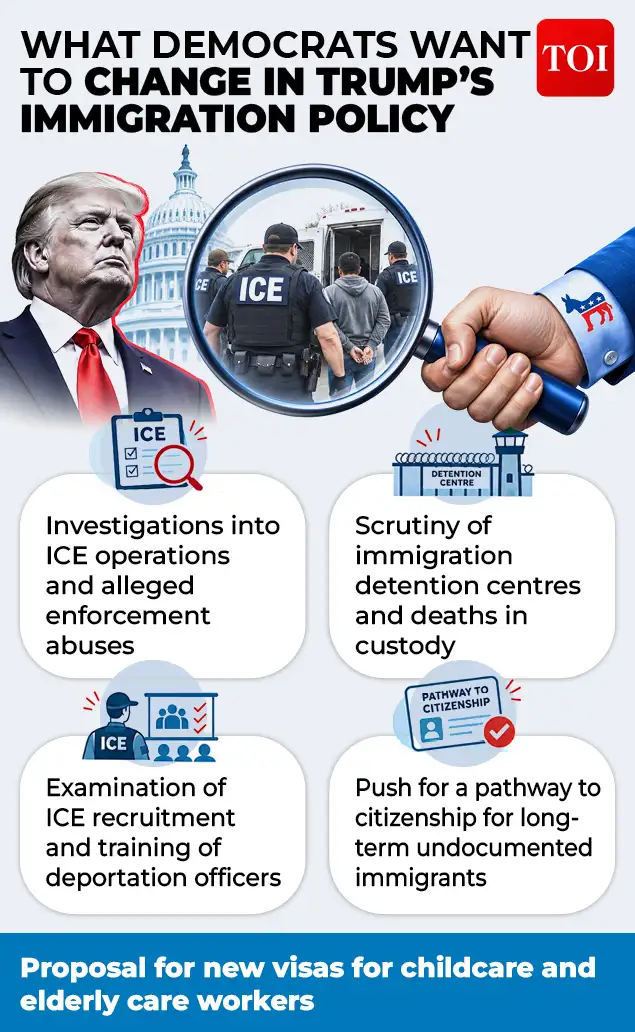
What Democrats want to change in Trump’s immigration policy
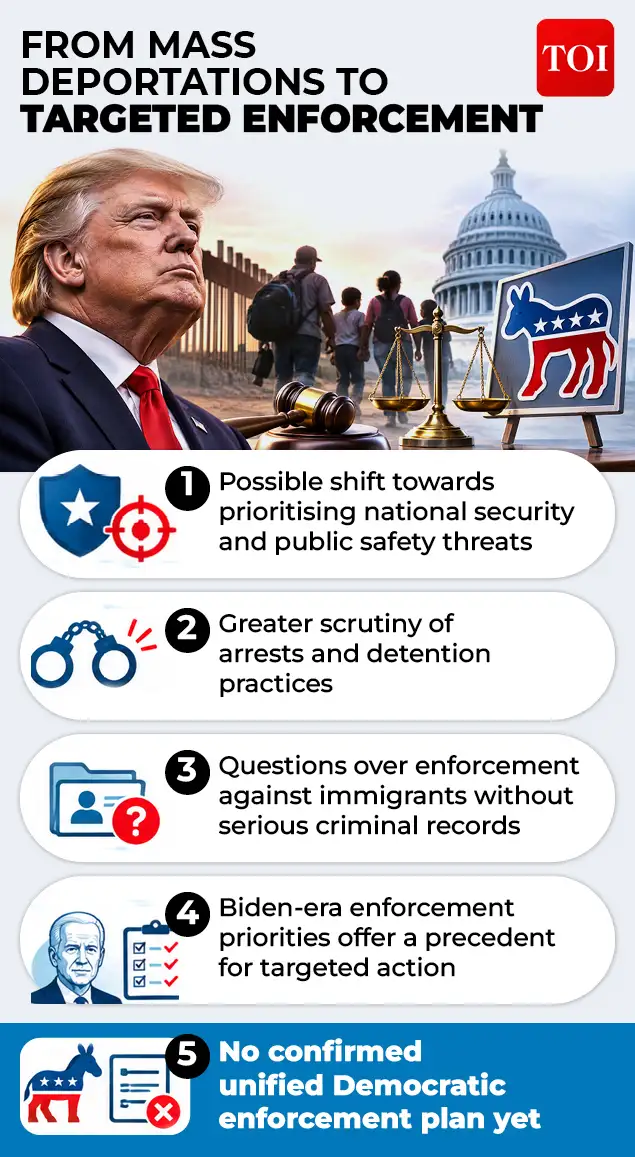
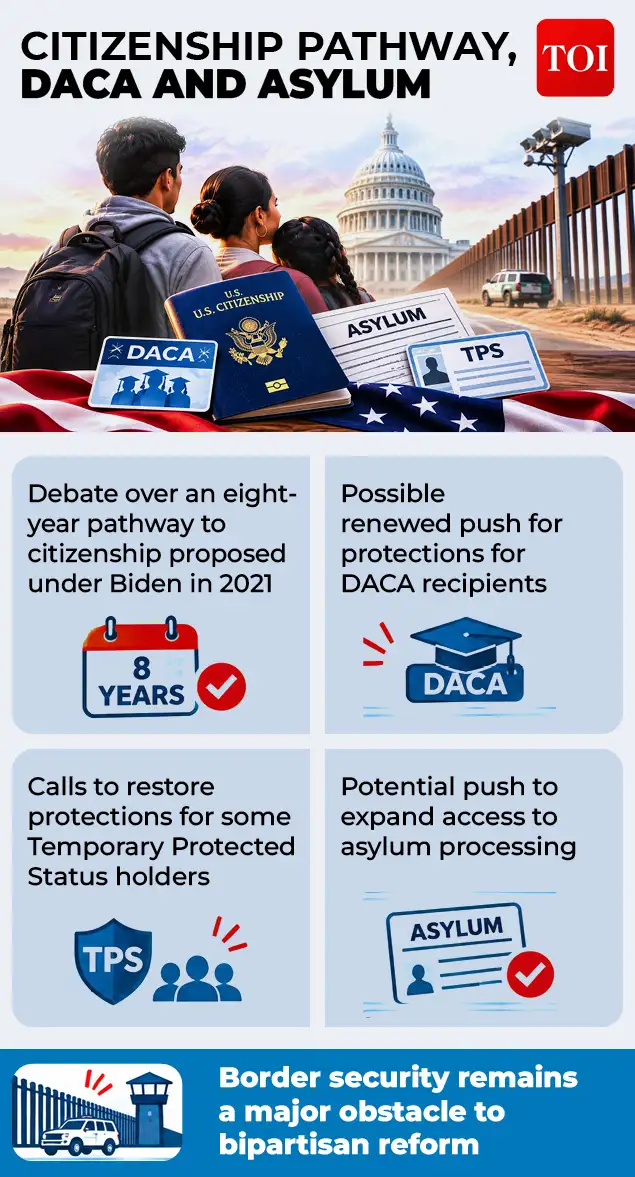
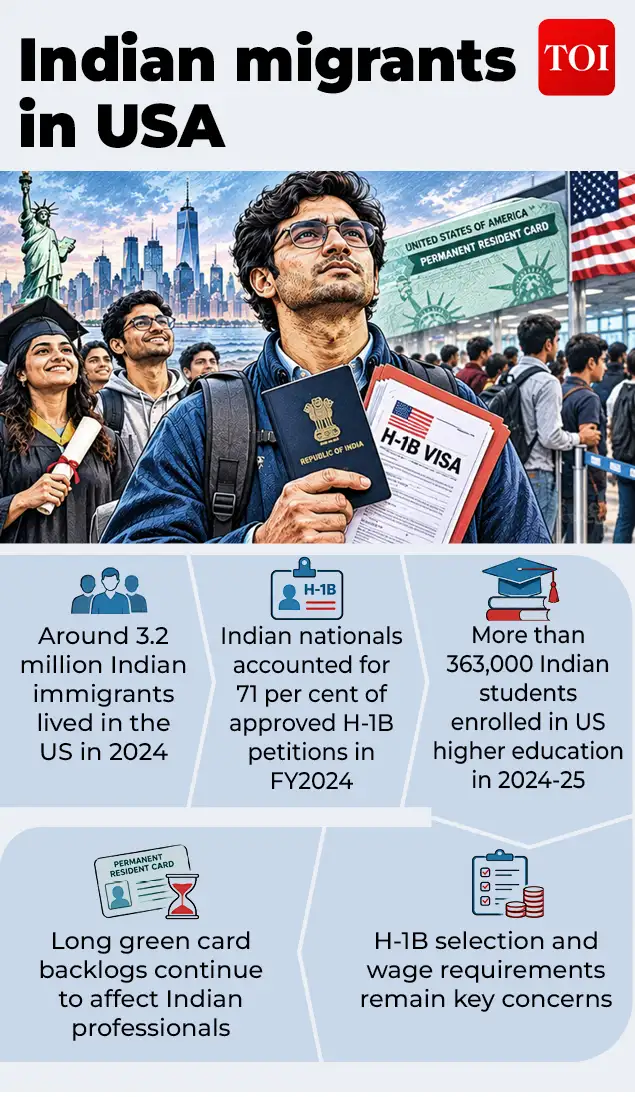
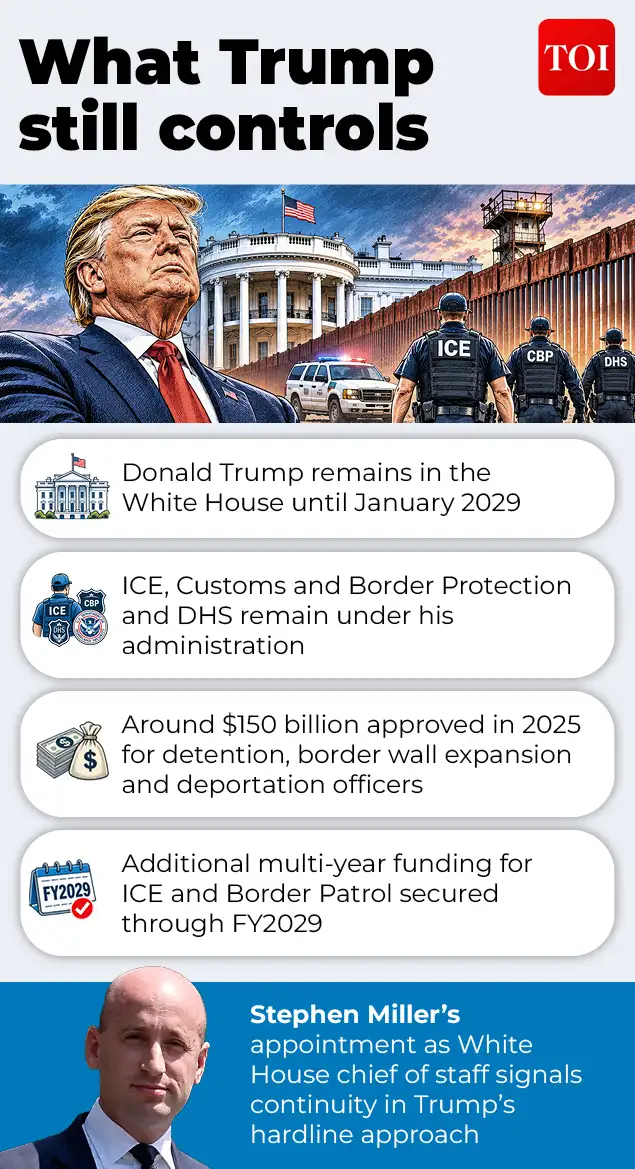
In September 2021, the Department of Homeland Security issued guidelines directing immigration authorities to prioritise national security threats, public safety threats and recent border crossers. A federal district court struck them down in June 2022, but the Supreme Court reversed that decision in June 2023, ruling that Texas and Louisiana lacked the legal standing to challenge the policy. In 2021, former president Joe Biden introduced the US Citizenship Act, which proposed an eight-year pathway to citizenship for eligible undocumented immigrants. Introduced under Barack Obama in 2012, DACA protects eligible immigrants brought to the US as children from deportation and allows them to obtain work authorisation. Biden attempted to strengthen the programme through a federal rule in 2022, but it faced legal challenges. In June 2024, his administration introduced restrictions limiting asylum eligibility for certain migrants crossing the southern border unlawfully when migrant encounters exceeded specified thresholds. Around 3.2 million Indian immigrants lived in the US in 2024, making them the country’s second-largest foreign-born population, according to the Migration Policy Institute (MPI). Indian nationals accounted for 71 per cent of approved H-1B petitions in fiscal year 2024, according to data cited by the Council on Foreign Relations. More than 363,000 Indian students were enrolled in US higher education institutions during the 2024-25 academic year, MPI reported. When the new Congress convenes on January 3, 2027, Democrats will be able to use committee investigations, subpoenas and oversight of future spending decisions to scrutinise immigration enforcement. Republicans approved around $150 billion in 2025 to expand immigration detention capacity, complete the border wall and recruit thousands of deportation officers, according to AP. Further multi-year funding for ICE and Border Patrol was also enacted in 2026.
For Indian migrants, therefore, a Democratic-controlled Congress could create an opportunity to revisit longstanding immigration concerns. The approach draws partly on enforcement priorities introduced under former president Joe Biden. Democrats could push for a review of stricter visa selection and wage requirements introduced under Trump, although such a move has not emerged as a unified party commitment.
Incoming lawmakers are considering investigations into Immigration and Customs Enforcement (ICE), detention conditions, alleged enforcement abuses and the agency’s recruitment of thousands of deportation officers, according to the Associated Press. Senator-elect James Talarico of Texas told Fox News after the election that the country needed comprehensive immigration reform, including a pathway to citizenship for people who had lived and worked in the US without legal status for years. Sarah Pierce, director of social policy at Washington-based think tank Third Way, told AP that the party needed to combine oversight with “a proactive vision for what immigration should look like in the United States. Existing recipients can continue applying for renewals, while new applications cannot currently be approved under court orders, according to US Citizenship and Immigration Services. House Democratic leader Hakeem Jeffries has also indicated that restoring protections for DACA recipients and people covered by Temporary Protected Status could provide a starting point for negotiations with the Trump administration, according to TIME. In an interview with CBS’s 60 Minutes , he acknowledged that his administration’s mass deportation policy might have been “too tough” and suggested discussing an arrangement for some immigrants who have lived in the country for 10 or 15 years.
Democrats are preparing to use their congressional majority to challenge Trump’s immigration agenda, focusing on investigating enforcement operations and developing an alternative vision for immigration reform. Control of congressional committees will also give Democrats greater authority to summon witnesses, demand documents and scrutinise the administration through oversight hearings. The push is expected to extend beyond investigations. Some Democrats want to revive efforts to create a pathway to citizenship for long-term undocumented immigrants and expand opportunities for legal immigration. Representative Gabe Vasquez of New Mexico has proposed creating new visa categories for workers providing childcare and elderly care. Speaking to AP, Vasquez argued that immigration reform could address labour shortages while giving eligible migrants a legal route to work and remain in the country. Representative Robert Garcia, who is set to lead the House Oversight Committee, has also identified investigations into alleged abuses by immigration authorities as a priority. These could examine spending on detention facilities, ICE recruitment and training procedures, and deaths in immigration custody. However, Democrats have yet to agree on a unified legislative programme. One of the most significant changes Democrats could pursue is a shift away from Trump’s sweeping deportation drive towards a more targeted approach to immigration enforcement. Under such a system, authorities would give priority to removing individuals considered threats to national security or public safety, rather than pursuing undocumented immigrants indiscriminately. It could also lead to a reassessment of how people who have lived and worked in the US for years are treated. The guidelines gave immigration officers greater discretion in deciding whom to pursue for deportation. Importantly, the Supreme Court did not rule on the merits of the enforcement priorities themselves. For the incoming Democratic majority, an immediate priority is likely to be greater scrutiny of how ICE identifies, arrests and detains immigrants. Congressional investigations could establish whether enforcement operations are sweeping up people without serious criminal records and whether existing legal safeguards are being followed. One of the biggest questions facing the incoming Democratic majority is whether it can revive efforts to provide legal status to undocumented immigrants who have lived in the United States for years. The legislation also included provisions for Dreamers, farmworkers and people holding Temporary Protected Status. However, it failed to advance through Congress. The Deferred Action for Childhood Arrivals (DACA) programme could become another priority. Asylum policy is another potential flashpoint. Democrats could seek to restore broader access to asylum processing, although Biden’s own record illustrates how politically complicated the issue remains. The measures, documented by the Congressional Research Service, demonstrated that Biden had also moved towards tighter border controls towards the end of his presidency. For Democrats, the challenge will be to balance legal pathways and humanitarian protections with stronger border management. Whether any of these proposals become law will ultimately depend on negotiations with Republicans and Trump’s willingness to sign the legislation. The outcome of the US midterms could have implications for India well beyond Washington’s political battle over deportations. Indian nationals make up a significant share of America’s skilled foreign workforce, particularly in the technology sector, while hundreds of thousands of Indian students depend on US universities and post-study employment opportunities. One of the biggest concerns for Indian professionals is the H-1B visa programme, which allows US employers to recruit foreign workers for specialised occupations. Indian students are another group vulnerable to changes in immigration policy. Tighter scrutiny of student visa applications, longer interview waits and uncertainty over post-study employment opportunities can complicate plans for those hoping to study and subsequently work in the US. However, one of the most persistent challenges for Indian professionals is the employment-based green card backlog. The US immigration system’s per-country limits have contributed to particularly long waiting periods for Indian applicants, leaving many professionals dependent on temporary visas for years while awaiting permanent residency. Democrats could reopen discussions on increasing employment-based visa availability or changing country-wise limits. But such changes would require legislation and cannot be delivered by the president alone. It does not, however, guarantee an immediate improvement in visa access, work opportunities or permanent residency prospects. The Democratic victory has opened a new front in the battle over America’s immigration policy. But while the party will have greater powers to challenge the administration, it will not control the agencies responsible for implementing Trump’s deportation agenda. The administration, however, will retain control over ICE, Customs and Border Protection, and the Department of Homeland Security. The financial backing for Trump’s crackdown presents another major obstacle. Trump has recently signalled that he could be open to an immigration deal. Homeland Security Secretary Markwayne Mullin has also indicated a willingness to engage in discussions with Democrats. However, these signals have been met with scepticism. Trump’s elevation of Stephen Miller, the architect of his hardline immigration agenda, to White House chief of staff has raised questions about how far the administration is prepared to go in making concessions.
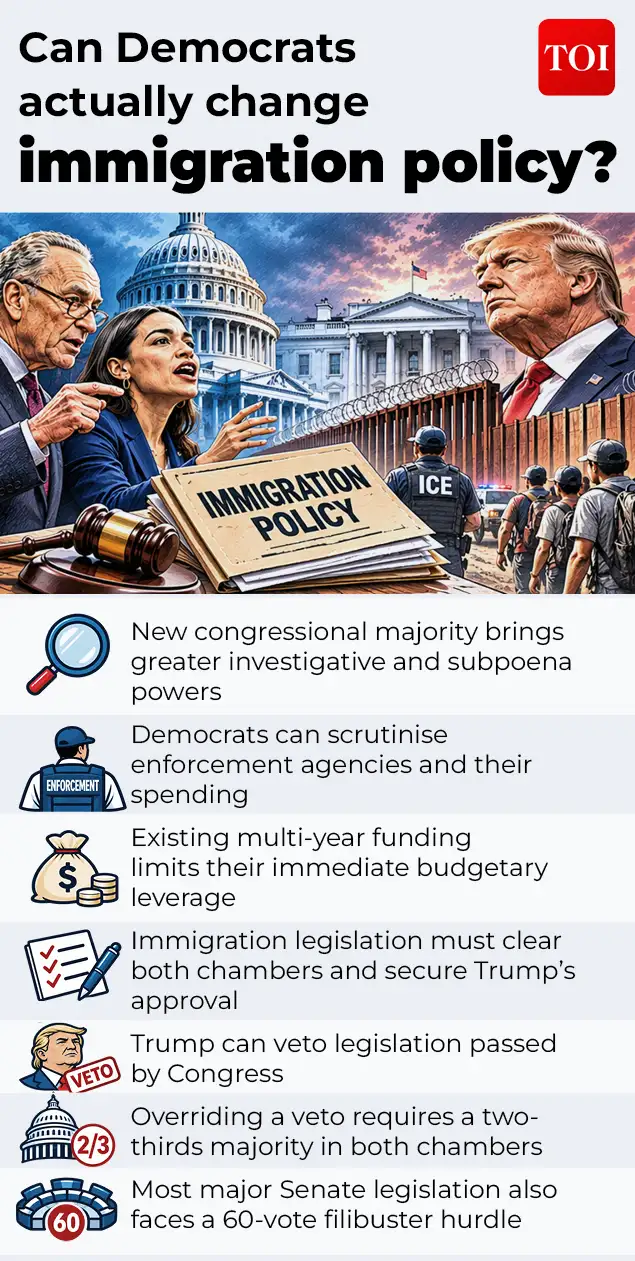
Most major legislation in the Senate also faces a 60-vote hurdle to overcome a filibuster. The political shift could therefore mean greater scrutiny of deportations, investigations into enforcement practices and renewed debate over legal pathways. Even if Democrats manage to pass immigration legislation through both chambers, Trump retains the power to veto it. Congress can override a presidential veto only with a two-thirds majority in both the House and Senate, a threshold Democrats are unlikely to reach. But it is unlikely to translate into an immediate change in the immigration status of millions of people. For Indian students and professionals, much will depend on whether Democrats can turn discussions around skilled-worker visas, student mobility and green card backlogs into concrete legislative proposals. You use AI every day. Now get your AI Quotient. Take the AIQ test.