
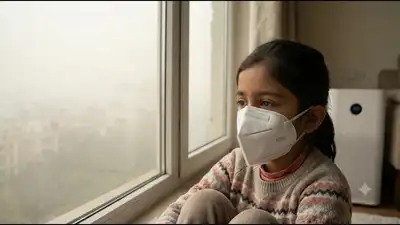
(AI generated representative image)
When AQI levels reach hazardous levels, protecting children from pollution requires a little extra care and attention. Parents should keep track of daily air quality, limit outdoor exposure and ensure that indoor spaces remain as clean as possible. Children with asthma, allergies or other respiratory conditions may need additional precautions and a clear medication plan. Most importantly, persistent coughing, wheezing, breathing difficulty or worsening respiratory symptoms should not be ignored. Consulting a doctor early can help prevent complications and keep children safer during severe pollution episodes. You use AI every day. Now get your AI Quotient. Take the AIQ test Get the latest Lifestyle News and more. Download the TOI app.
With AQI levels frequently touching the 500 mark, even everyday activities such as playing outdoors, cycling or walking to school can expose them to dangerous pollutants. 5 Oct 2026 | 12:06 Even indoors, children will be affected. As air pollution levels continue to rise across Delhi-NCR, children are becoming increasingly vulnerable to its harmful effects. Children’s lungs are still developing, making them more susceptible to the effects of polluted air. From avoiding outdoor activities to keeping indoor air clean, a few precautions can help reduce their exposure. Dr Gargi Mathur, paediatrician at Shalby International Hospital , Gurugram, shares some important steps parents should follow when pollution levels become dangerously high. dangerous levels of pollution can cause serious health issues While we often encourage our children to be active outdoors. Dr Mathur explains that ‘When AQI levels rise very high, children should avoid doing any strenuous activities outdoors such as sports, cycling, running etc. These activities cause children breath heavily. During higher AQI, children can breathe small air pollution particles and these pollutants can affect their lungs badly. ’ If children have to go outside then they should wear a mask. Dr Mathur suggests that getting your children used to wearing an N95 or N99 mask that fits well will help prevent these harmful particulate matters from entering their lungs. Using an air purifier that fits the size of the room makes a big difference. Dr Mathur recommends, ‘You should focus on the room where children spend most of their time. Avoid using any smoke indoors. Stop using incense sticks (Agarbatti), burning Camphor and smoking indoors. These small steps can toll big effects. Join conversation Share your thoughts in the comments Be respectful · TOI community guidelines If your child suffers from allergies, asthma, sinus or breathing problems then you should take extra precautions during high pollution days. Dr Mathur recommends that ‘Parents of children suffering from these conditions should be extra cautious during higher AQI levels. Ensure they have their medication and inhalers available. If they begin to show symptoms then speaking to your doctor ahead of time to ensure you have a good plan in place will help. Taking a few extra precautions can easily prevent your child from having a major health issue.’