
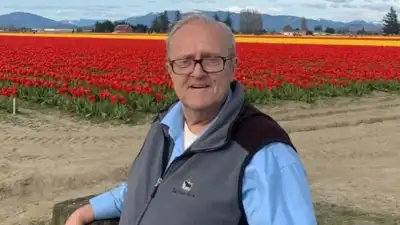
A Montana-born photographer who spent much of his adult life in Seattle has left behind an unusual legacy, 480 acres of farmland worth an estimated $1 million, now earmarked to support Alzheimer’s research in his hometown. Arnold Swanberg, who died in October 2024, bequeathed two parcels of agricultural land to the research institute in Great Falls, Montana, according to an announcement by the Weissman Hood Institute. In 2026, the donation is drawing attention for the role it could play in advancing research into Alzheimer’s, Parkinson’s and other neurodegenerative diseases.
The institute estimates the combined value of the two parcels at approximately $1 million, making it one of the largest donations in its history. Born in Great Falls in 1948, Swanberg spent most of his adult life in Seattle, Washington. After graduating from the University of Montana with a history degree in 1970, he served in the Montana Air National Guard before moving to Seattle.
A former Great Falls mayor and one of Swanberg’s closest friends, the photographer had witnessed the impact of these conditions within his family, according to Randy Gray. Swanberg’s will reportedly specified that the land should be held as an endowment to fund Alzheimer’s research, ensuring that the farmland would continue contributing to the community long after his death. However, he maintained a strong connection to Montana, particularly through the agricultural properties he had inherited. The two parcels are located in different parts of the state: one south of the Great Falls airport in Cascade County and another in Teton County, north of Benton Lake. Not a farmer himself, Swanberg leased the properties to local agricultural workers. Over the years, he developed friendships with the people who cultivated the land and continued visiting Montana twice annually, usually in spring and autumn, to check on the properties. His decision to leave the farmland to the Weissman Hood Institute was also influenced by personal experiences with neurodegenerative diseases. Speaking to KRTV, Gray explained that Swanberg’s family had a history of neurodegenerative diseases, giving him a personal reason to support research in this area. The institute’s official announcement also noted that Swanberg wanted his inherited Montana land to benefit the state over the long term. Gray recalled that Swanberg had discussed his estate planning with him and expressed a desire to ensure that the property continued serving Montana. Swanberg’s life followed a different path from that of his family’s three generations of lawyers in Great Falls. His military service sparked a lifelong fascination with aviation, which eventually developed into an ambitious photography project. He travelled internationally, photographing military aircraft and attempting to document aircraft tail numbers from every unit of the US military. Swanberg also managed his family’s real estate investments and published a military aviation magazine called Flight Line, which covered military aircraft around the world. His photography collection eventually became part of the Museum of Flight in Seattle. He also supported his former university by establishing an annual lecture in military history. Despite building his professional life elsewhere, Montana remained important to him. The land donation reflected that continuing connection and his interest in ensuring that scientific research could benefit people in the state where he grew up.
How will the $1 million farmland donation support Alzheimer’s research?
The 480 acres will not be converted into laboratories or research facilities immediately. The need for such research is particularly relevant in Montana, where the Alzheimer’s Association estimates that approximately 21,000 residents over the age of 65 are living with Alzheimer’s disease.
The endowment will provide researchers with greater financial flexibility, allowing them to pursue projects that may otherwise struggle to secure funding, according to the institute. Join conversation Share your thoughts in the comments Be respectful · TOI community guidelines Gray told KRTV that Swanberg’s farmland could potentially become a test site for research examining such connections. Instead, the farmland will continue to be leased to local farmers, with the proceeds directed towards Alzheimer’s research at the institute’s Center for Integrated Biomedical and Rural Health Research (CIB-RHR). The arrangement will allow the institute to preserve the agricultural use of the properties while generating a continuing source of financial support for scientific work. The donation also comes at a significant time for medical research in Montana. The CIB-RHR was established through a partnership involving the Weissman Hood Institute, Touro College of Osteopathic Medicine-Montana and Benefis Health System. Supported by funding from the National Institutes of Health, the centre focuses on bringing biomedical and clinical research to rural communities. Its research interests include Alzheimer’s disease, Parkinson’s disease, age-related vision loss and chronic wasting disease in deer. The state also faces a shortage of dementia specialists, making access to research and medical expertise an important concern. Swanberg’s donation could eventually contribute to research beyond its financial value. Scientists are increasingly interested in understanding whether agricultural environments and occupational exposures could influence the risk of developing neurodegenerative diseases. Farmers, for instance, have been found to face an increased risk of Parkinson’s disease in some studies. Researchers have been investigating whether repeated exposure to agricultural chemicals, including herbicides and pesticides, could be among the contributing factors. The institute is also exploring the relationship between genetics, lifestyle and neurological conditions among people living in rural environments. The research could help scientists understand whether environmental factors influence the development of diseases such as Parkinson’s and Alzheimer’s. For now, the properties will remain agricultural land, with the farmers who have worked there continuing their activities. Their lease payments will help support the institute’s research priorities. You use AI every day. Now get your AI Quotient. Take the AIQ test.