

Simon Clulow
This emerged in the 1970s, swept the world and sent 100 species completely extinct, with another 400 facing huge population declines. ‘ ■ The green and golden bell frog used to be one of the most common species on the eastern seaboard of Australia — it’s now disappeared from over 90% of its range, occurring only in a very small number of scattered locations along the East Coast. I’ve spent 15 years researching this species and found that slightly elevated water salinity can be detrimental to the fungal pathogen while the frogs do fine — wet, cold conditions favour the pathogen. At 25 degrees, it starts to get suboptimal for the fungus — above 27 degrees can be lethal. Now, our research showed the green and golden bell frog prefers to be in 28 to 30 degrees.
Safety webs: The green and golden bell frog was once abundant across Australia till the chytrid fungus hit — scientists are now trying to rewild the 8.5 cm frog, related to the 55-milion-year-old tree frog family Over 40 frog species in Australia have declined heavily due to the disease linked to the chytrid fungus. Because it was only due to the disappearance of the unique gastric brooding frog that triggered people to realise there was a global problem of declining frog species, this is a worldwide problem but the story starts in Australia. What is the core of your research? ■ My research tries to tackle global environmental challenges. I’ve worked particularly on invasive species and I’ve been involved for two decades now on emerging diseases, especially the chytrid fungus which has swept the world, wreaking havoc on amphibian biodiversity. Many global problems are difficult to eradicate, so a lot of my work focuses on how we can mitigate impacts, so native species can survive. Seven went extinct completely. The cause was chytrid fungus, this microscopic invasive fungal pathogen that lives in water and infects frogs. It’s disappeared entirely in the Australian Capital Territory (ACT) region, which is inland and has a slightly higher elevation. Now, some frogs managed to just hang on in lowland areas towards the coast, where the climate is milder, temperatures slightly warmer through winter and wetlands have more saline influences. Those observations have led us to the approaches we trialed in my lab and in mesocosms at the university — we’ve shown that if you can create small pockets of habitat with these environmental stressor conditions, like temperature and salinity, the pathogen is harmed. These environmental stressors give frogs the upper hand potentially over the infection — rather than mass perishing, frogs might get sick but they’re able to clear themselves of the infection. Alongside, those conditions could make the pathogen less able to infect hosts.
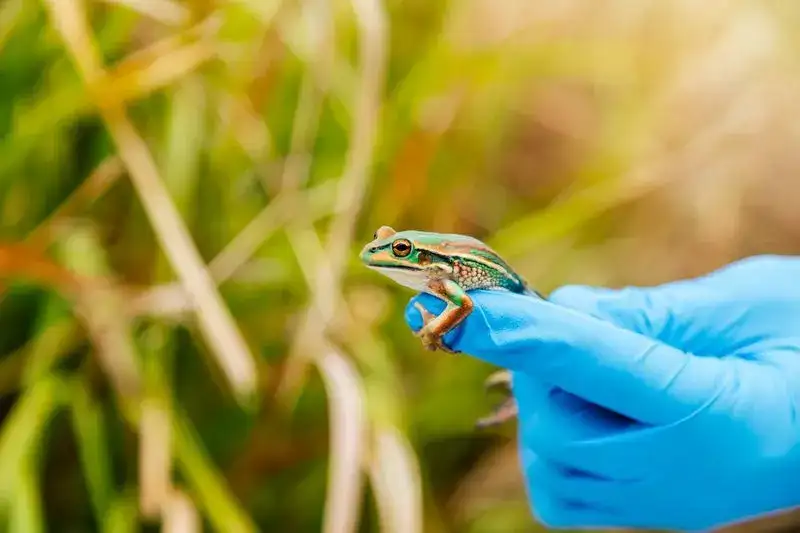
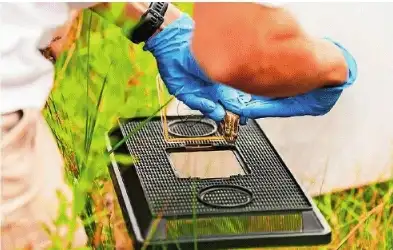
Local people are passionate about this — a small part of the reward is how we’ve got 400 green and golden frogs now finally hopping around on ACT soil. ■ Certainly — one aspect at the heart of this project is to engage community and local citizens in research, monitoring and conservation. There is an old history of believing conservation is best done behind locked gates — I believe the opposite. The more we engage community, the more they become custodians and the more people care helps to protect species. We’ve leveraged that in the incredible work of digging these ponds. They each have a microchip and number but we thought it’s more fun to attach an actual name as people relate to that — some community volunteers came up with creative names like Dua Leaper and James Pond.