What is the core of your research?
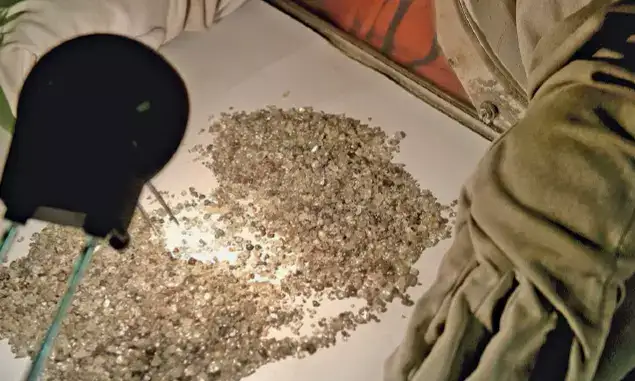
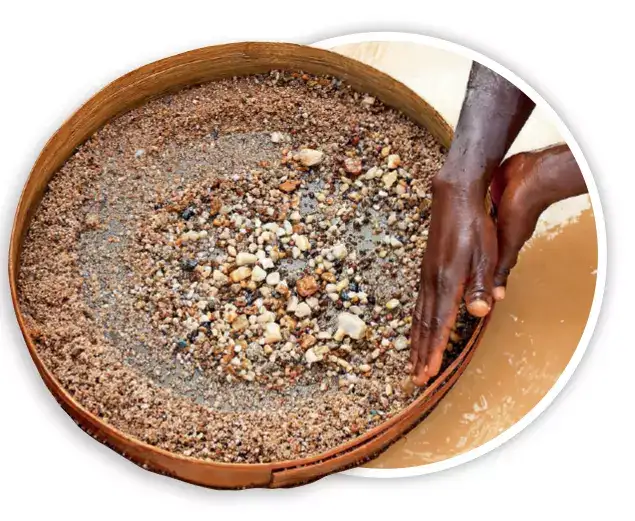
Earlier, it was thought to be some weird anomaly but by 1800, it was seen as a fundamental part of the universe. Because one often finds gems of different colours in the same mine while the entire European tradition, going back to ancient times, Pliny the Elder and Rome in the first century AD, was organised around colour, for example, it was known for centuries in South Asia that colour was not a particularly good way of classifying gemstones. The basic idea — and I was very surprised to discover it — is that gems are important in the history of science. They are not just an artistic or commercial item — they are a scientific object. I was initially working on electricity in 18th century France. I was studying Jean Francois Du Fay, an important figure in this field. In my research, I found manuscripts showing he had a large gem collection. I first treated this as a curiosity but the more I studied him and other early modern scientists, I found gems were taken very seriously and used in important intellectual work — gemstones have a scientific history. Gems are precious by definition — yet, we don’t usually think of science and technology in the same breath as preciousness. We think of these fields as making stuff, efficiently, powerfully — we don’t imagine scientists as connoisseurs, people who distinguish between the good, bad and ugly. Yet, the more I studied early science, the more I found that’s precisely what they were doing. They were using all their scientific techniques, new instruments, jargon and theories to distinguish good gemstones from bad ones, recognise high-quality diamonds, mark different types of red stone, recording the differences, for instance, between a corundum ruby and a spinel. I also look at Spanish and Portuguese empire building or voyages of discovery in the 16th century, which were fundamental in opening up new ideas. A lot of early European gem science is essentially Europe catching up with the rest of the world in knowledge. When European colonialists started making contact with South Asia, their ideas about gemstones began to change. Consider how the discovery that electricity is a general phenomenon of nature was a major advance in 18th century science. How did naturalists realise electricity was everywhere? They built up collections of gemstones, rubbed them and found that nearly all became electric when they did this, as in, they attracted light bodies. That was a really important step forward in physics — it also helped create experimental physics as its own discipline, distinct from chemistry, biology and other sciences, whereas, until the 18th century, ‘physics’ meant natural knowledge in general. Physics in the modern sense only really came about when these specific domains of phenomena — like electricity — were carved out from the general universe. In the 18th century, the word ‘connoisseurship’ was used in a much broader way. However, in the 18th century, you could be a connoisseur of textiles, steel, a connoisseur of paper even. Someone called this was meant to have a keen sense of the qualities of different types of materials. The word ‘connoisseurship’ was applied to gems thus as well — and it helped to bring together different groups of people who would usually be separated out. Under this broad heading, you’d find aristocratic scientists working at elite institutions like the Royal Society of London, alongside gem-cutters and merchants, people actually working on a daily basis with stones, collectors, even religious thinkers — in the Middle Ages, the word ‘virtue’ or ‘virtus’ in Latin was often used to describe gemstones, which persisted into the 17th century. So, this notion of connoisseurship gives us a much more holistic view of knowledge. He researched diamonds and other gemstones. His big discovery was ‘Raman Scattering’, a particular way in which light is scattered when it hits objects. Its main commercial use now is to determine the molecular structure of substances in a non-destructive way. As it turns out, this is very useful for evaluating gems, one of the most sophisticated techniques used.
So, ‘ Raman spectroscopy’ is a modern echo of these earlier exchanges between gemstone evaluation and connoisseurship, invented in one place and adopted elsewhere. Experimental physics would not exist as we know it today without gemstones. Today, when we think of connoisseurs, we generally mean paintings, sculptures, etc.