
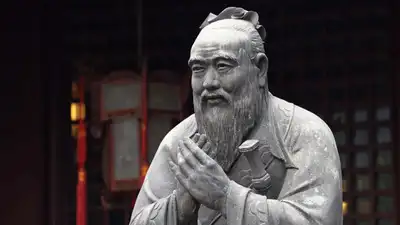
‘If I am walking with two other men, each of them will serve as my teacher’
Applying this ancient teaching in 2026 offers a powerful answer to today’s echo chambers and defensive attitudes. Historical records show that Confucius spent his final years editing ancient texts and teaching around 3,000 students, with 72 of them later becoming respected philosophers themselves. Because his advice remained closely connected to ordinary human experience, his influence lasted through centuries of political change.
At its heart, this teaching removes the traditional and strict idea of who can be called a teacher. It suggests that wisdom is not something found only in famous schools or held only by respected masters. Instead, learning becomes an ongoing and active choice. The quote explains that every human interaction, no matter how ordinary or frustrating, can become a chance for personal growth if a person has the right mindset. From a philosophical point of view, this teaching supports the central Confucian idea of xiushen, or the careful improvement of one’s own character. In the wider tradition of virtue ethics, becoming a good person is not about memorising fixed rules but about practising good behaviour every day. The image of walking beside two different companions creates two mirrors for understanding human nature. The first mirror encourages imitation, where seeing someone else’s strengths inspires us to develop the same qualities. The second mirror, which reflects bad behaviour, may be even more important. Instead of creating pride or encouraging criticism, the faults of others become an early warning that helps us recognise similar weaknesses within ourselves. This principle also quietly challenged the strict social and intellectual rankings of ancient China. It suggested that a farmer, a merchant, or even an aggressive soldier could teach just as much about good character as an experienced court scholar. The responsibility for learning rested completely with the student rather than the teacher, making wisdom available to anyone willing to observe others with humility. In modern workplaces, public life, and online discussions, it is easy to dismiss people who behave badly or disagree with us. Real leadership means looking beyond frustration and finding useful lessons even in difficult situations. The greatest strength of this philosophy is that anyone can practise it. It does not require university degrees, professional qualifications, or expensive training courses. It only asks people to make a conscious choice to see the world around them as a living classroom. The true measure of wisdom is not found in living alone, but in how well a person learns from the people walking beside them.