
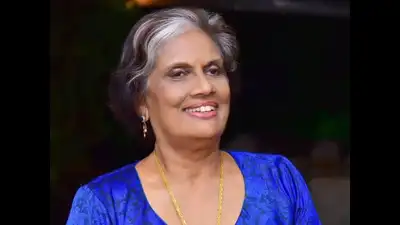
Quote of the day by former Sri Lankan president Chandrika Kumaratunga.
When Chandrika Bandaranaike Kumaratunga sat down with Australian journalist Michael Maher in July 2005 for an interview on the ABC program Foreign Correspondent, her presidency was drawing to a close. Born into Sri Lanka’s ultimate political dynasty, she was the daughter of two prime ministers: Solomon West Ridgeway Dias Bandaranaike, who was assassinated by a Buddhist monk in 1959, and Sirimavo Bandaranaike, the world’s first female prime minister. Because the idea of power thrills me – I find it a joke, and I’m in this, not to fill my pockets like lots of others, or.
And Kumaratunga said: “I’m a workaholic, I like to work. The only thing that attracts me in power is that it gives me the authority and the possibility of doing what I think should be done for this country,” Kumaratunga said. Asked about the allure of supreme political office, Sri Lanka’s first female president brushed aside the notion that she was captivated by high status. It’s always mesmerizing to study how powerful people of the world perceive power. Michael Maher was surprised and called the president a rare politician who does not like power and called it a joke. “I don’t like it at all. To evaluate this statement, one must look at the extraordinary personal tragedy and political inheritance that shaped her worldview.
Sweeping into office in 1994 on a massive public mandate, Chandrika promised to end the long-running civil war through negotiation and to roll back the authoritarian executive presidential system established by the United National Party.
However, when early peace talks with the Tamil Tigers collapsed in 1995, her administration pivoted to an aggressive policy known as “war for peace,” launching heavy military offensives in the north while attempting to push through constitutional reforms. Eleven years later, while serving as president, Chandrika herself was targeted by a suicide bomber from the Liberation Tigers of Tamil Eelam during an election rally, surviving the blast but losing vision in her right eye. From her perspective, political authority was an absurd, dangerous theater that brought immense personal suffering rather than genuine fulfillment. It was an instrument to be endured rather than celebrated, useful only for the structural authority it granted to implement policy. Yet this insistence on being a reluctant steward of power stands in sharp tension with the political reality of her governance. She framed her ascension as a mission to re-humanize Sri Lankan politics and resolve the ethnic conflict through devolution.