
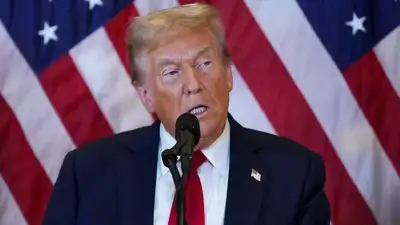
US President Donald Trump. Photo credit: ANI
Bilateral trade has already fallen more than 90% from its 2018-19 peak of about $17 billion. The rial dropped to 2.02 million to the US dollar as trading opened on currency markets. Iran’s official Central Bank rate stood at around 1.5 million rial to the dollar, but the market rate is what most Iranians pay. Since the war began, rice is up some 60% and prices of beef are more than 150% higher. The IMF forecasts that GDP will contract more than 5%.
What makes Monday’s announcement different is therefore enforcement and reach.
Bessent described the new strategy as a “one-two punch”: “We have the blockade … and we are going to have the toughest sanctions in history,” he said, adding the aim was to “collapse this regime”. For New Delhi, the immediate concern is trade rather than strategic alignment. Indian exports of rice, tea and pharmaceuticals to Iran have increasingly moved through Dubai, and UAE’s restrictions combined with tougher US sanctions could severely disrupt those flows. The administration has already imposed layers of sanctions on Iranian oil, shipping, banks and companies and has used a naval blockade to disrupt Iranian petroleum exports. Washington will target the third-country networks through which Iran has continued to sell oil, move money and obtain goods despite decades of sanctions. The message is essentially: doing business with Tehran will increasingly mean choosing between access to Iran and access to the US-dominated financial system. Iran’s currency hit a record low Monday as Washington announced new sanctions. Iran currency has repeatedly hit new lows as nearly six months of war have taken an even greater toll. Iranians find daily staples increasingly unaffordable.
Mohsen Rezaei, secretary of Iran’s supreme national security council, warned that if the “economic war” continues, “not a single drop of oil will be exported” from the Persian Gulf. Tehran has responded with a threat that could make the economic offensive a global energy crisis. UAE has already halted much of its trade with Iran, while Saudi Arabia, Qatar, Oman, Kuwait and Bahrain face the risk that Iranian retaliation could hit ports, shipping, energy infrastructure or trade routes.