
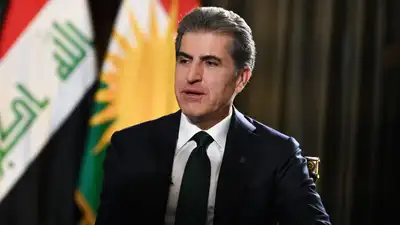
How Trump went around Iran’s negotiators to reach the IRGC through Barzani
The Donald Trump administration took an unusual route in its efforts to end the war with Iran, turning to Iraq’s Kurdistan President Nechirvan Barzani as a backchannel to the powerful and raging Islamic Revolutionary Guard Corps (IRGC) after long-running Supreme Leader Ayatollah Ali Khamenei’s death in American-Israeli strikes, according to an Axios report. The move allowed Washington to bypass Iran’s official negotiators, including parliamentary speaker Mohammad Bagher Ghalibaf and foreign minister Abbas Araghchi, amid growing doubts over whether they had the authority to speak for the IRGC.
But Iran delayed its response for more than 10 days, prompting US negotiators to question whether parliament speaker Mohammad Bagher Ghalibaf and foreign minister Abbas Araghchi had enough authority to finalise an agreement. Earlier reporting noted: The Kurdistan Counter-Terrorism Service said the drones, identified as Hadid-110 aircraft, targeted Barzani’s private office and the residence of the head of the region’s Security and Intelligence Agency. Earlier reporting noted: Two drones launched from Iranian territory targeted the office of Kurdistan Regional Government (KRG) Prime Minister Masrour Barzani and the residence of the region’s security chief early Monday, with no casualties reported, Kurdish authorities said. Earlier reporting noted: The strikes came after reports revealed that Nechirvan Barzani, president of Iraq’s Kurdistan Region, had been used by the Donald Trump administration as a secret channel to communicate with Iran’s Islamic Revolutionary Guard Corps (IRGC) during efforts to negotiate an end to the war. The agency said the drones were launched from Iranian territory.
Barzani had something few other potential mediators could claim, the trust of both US and Iranian leaders, according to the Axios report. Gabbard told Barzani that she was making the call with the approval of President Donald Trump and Vice President Vance, according to a source. After receiving the IRGC’s response, the Trump administration made another proposal: It wanted Barzani to host secret talks between senior US and Iranian negotiators in Erbil, according to a source familiar with the backchannel.
The concerns emerged in mid-May, as US negotiators trying to reach a deal with Tehran began questioning whether Iran’s negotiating team was actually in a position to make commitments to the powerful military force, which had gained greater influence over the country’s national security and foreign policy decisions. With Washington unable to establish whether the official negotiators had the IRGC’s backing, the Trump administration turned to Barzani, an unlikely but trusted intermediary with links to both sides. His long-standing links with Tehran, fluency in Farsi and relationships with senior Iranian officials made him a natural choice for the sensitive backchannel. By early May, the White House believed it was close to a deal.