
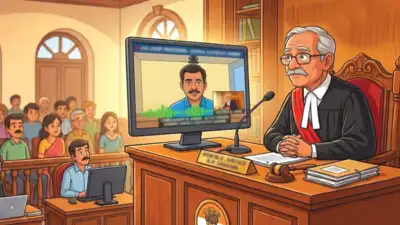
MADURAI: It will be a death of the witness box, the ubiquitous wooden structure one would see in Indian courts and cinema. It will not be even the ‘designated’ locations from where one could depose and get their statements recorded by trial courts.
Through a recent administrative order — Madras High Court Video Conferencing Rules, 2026 — dated Aug 12, the court has allowed witnesses before trial courts to depose through video conferencing from an appropriate location, including their home or workplace, if the court permits it.
Retired police inspector R Sakthivel said the changes could reduce trial duration and save police time. However, human rights activist and advocate D Karvendan said an accused participating from prison with police present could feel intimidated and affect a free and fair trial. “The rules require safeguards for fairness and opportunity to consult an advocate,” he said.
Madras high court has virtually freed witnesses from all procedural shackles, as it has ushered in a depose-from-anywhere regime. Normally, witness evidence can continue to be recorded from designated places such as an office of the superintendent of police or govt hospitals. In exceptional circumstances such as illness, hardship, delay or expense, the witnesses can present evidence from wherever they are located. Lok adalat and jail adalat proceedings may also be held through videoconferencing. Public servants, police officers and expert witnesses can also depose from appropriate locations without appearing at a designated place. In criminal proceedings, however, the advocate concerned or party should confirm location, willingness and availability of facilities. Identity should be verified through valid proof, which may be furnished electronically or shown on camera if directed by the court. “Many stations earmark one officer for court appearances and VC use could cut prisoner transport costs.