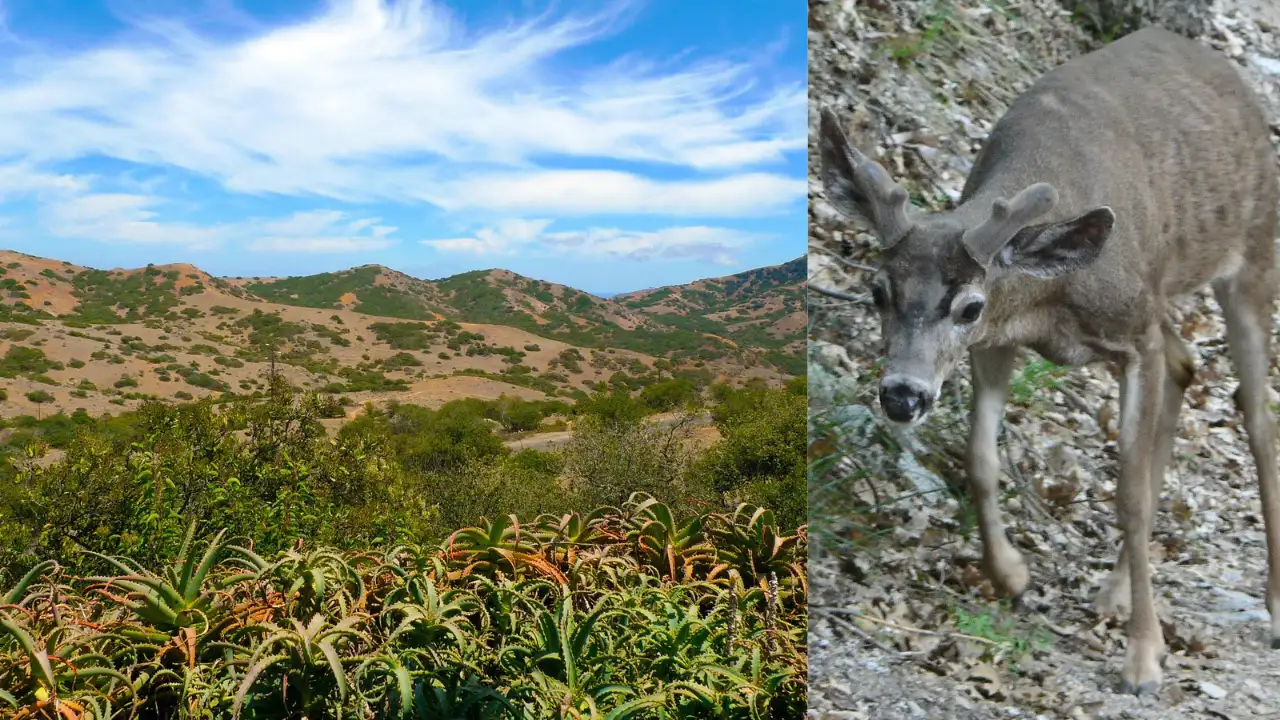
Twenty-two animals were brought to the island between 1928 and 1932, and by 1947, the population was estimated at about 2,500 | Wikimedia Commons
Twenty-two animals were brought to the island between 1928 and 1932, and by 1947, the population was estimated at about 2,500. A 2016 study published in Ecology and Evolution reports that 22 mule deer were introduced to Santa Catalina Island between 1928 and 1932. The animals came from mainland California, and by 1949, the population was estimated at roughly 2,000 deer. The paper also notes that more recent estimates had ranged from about 1,000 to 2,500 animals. The 2016 study focused on one species in particular: Crocanthemum greenei , more commonly known as island rush-rose. A 2022 population study by Paul Stapp, Emily Hamblen, Calvin Duncan and Julie King found that mule deer still persisted on Catalina and that population density varied substantially between years. The researchers estimated island-wide densities between 6.3 and 16.9 deer per square kilometer during the years examined. Conservation managers were dealing with a different question by 2021: was maintaining a smaller deer herd enough to protect Catalina’s native ecosystem? In January 2026, the California Department of Fish and Wildlife granted a Restoration Management Permit for a broader Catalina Island restoration project.
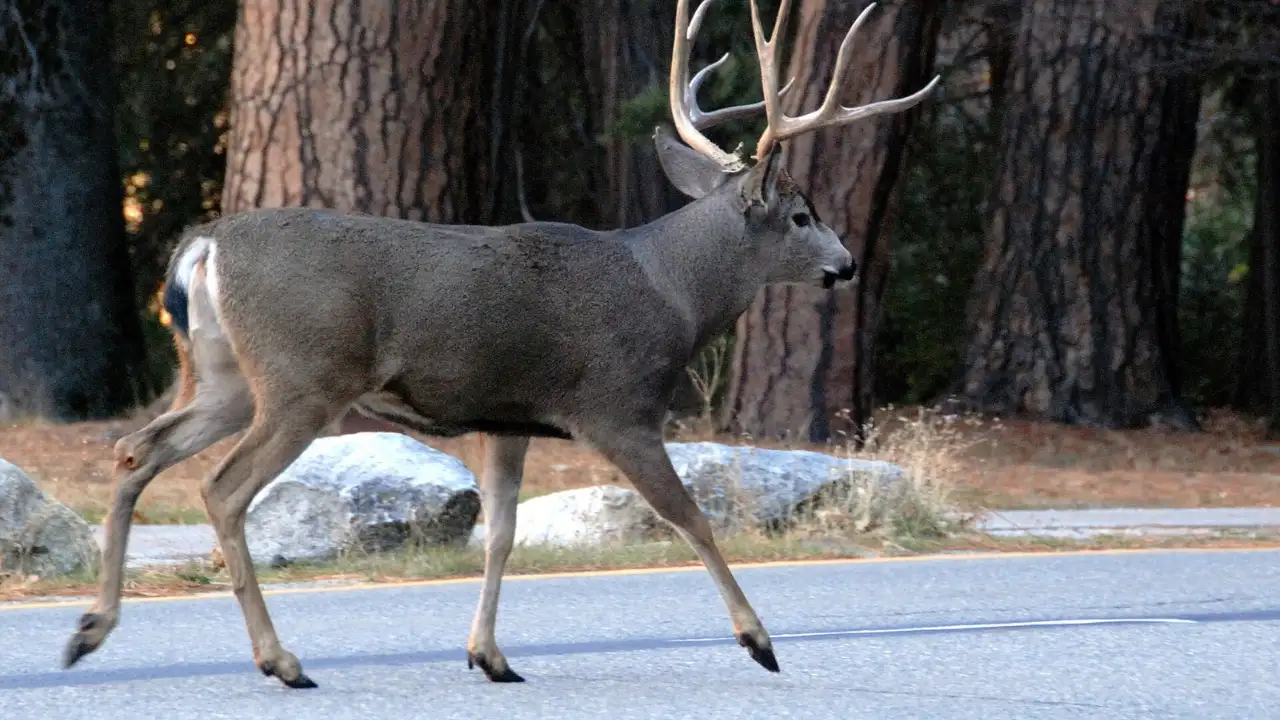
Mule deer were introduced to California’s Santa Catalina Island and grew into a long-running ecological problem. The deer were originally introduced as game animals. They were native to mainland Southern California but had not historically lived on the Channel Islands, and with no established population of large predators on Catalina, the introduced herd expanded rapidly. Researchers wanted to determine whether browsing by introduced mule deer was affecting the plant’s ability to grow and reproduce. Deer numbers fluctuated with rainfall, food availability and hunting pressure, and they remained established across Catalina while other introduced large mammals were eventually removed or greatly reduced. The Conservancy says the animals are the last remaining invasive mammalian herbivore on Catalina after other introduced ungulates were removed or substantially reduced.
A later scientific study found that the deer were also affecting rare plants that evolved without large mammalian herbivores. The story eventually became a conservation problem involving hunting, fenced research plots and efforts to protect Catalina’s native vegetation. Catalina’s native vegetation had evolved under conditions that did not include large populations of browsing deer, and that difference became important as the herd spread across the island. The plant is endemic to the Channel Islands and occurs on Catalina. Researchers used protected plots instead of simply comparing areas with different numbers of deer. Some island rush-rose plants grew inside fenced exclosures, where deer could not browse them, while others remained exposed. The researchers found that plants that were protected from deer browsing were larger and had greater seed-production success than plants exposed to deer. In the study, heavily browsed plants could fail to produce seeds, while non-browsed plants inside the exclosures produced seeds. That result gave researchers a direct way to connect deer browsing with a specific reproductive problem in an island-endemic plant, while it also showed why population control mattered beyond the number of deer seen across the island. The approach continued for decades, but it did not eliminate the population. The Catalina Island Conservancy has used fencing, hunting and other management measures, but deer have continued to browse native vegetation. State documents say mule deer browsing has reduced native vegetation and affected rare plants endemic to the island. The agency also describes shifts in some habitats toward nonnative annual grasslands and other vegetation less preferred by deer.