PC: AI Generated
Let the batter settle before steaming
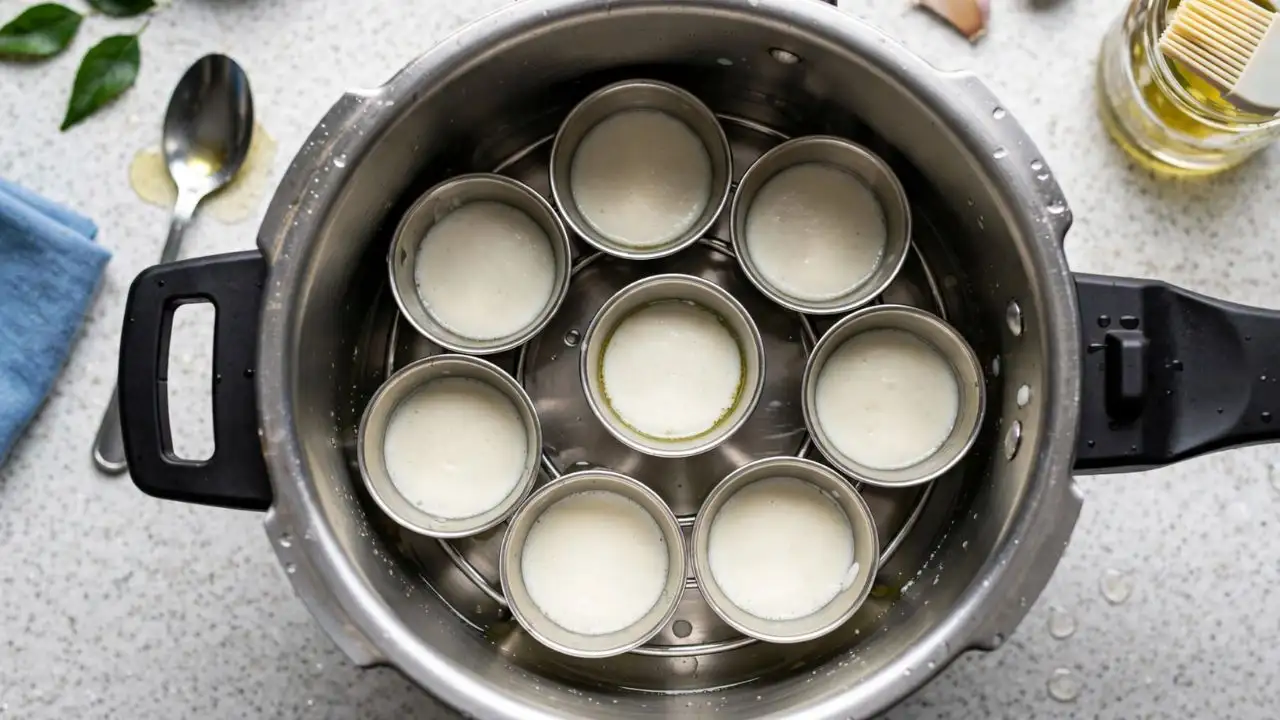
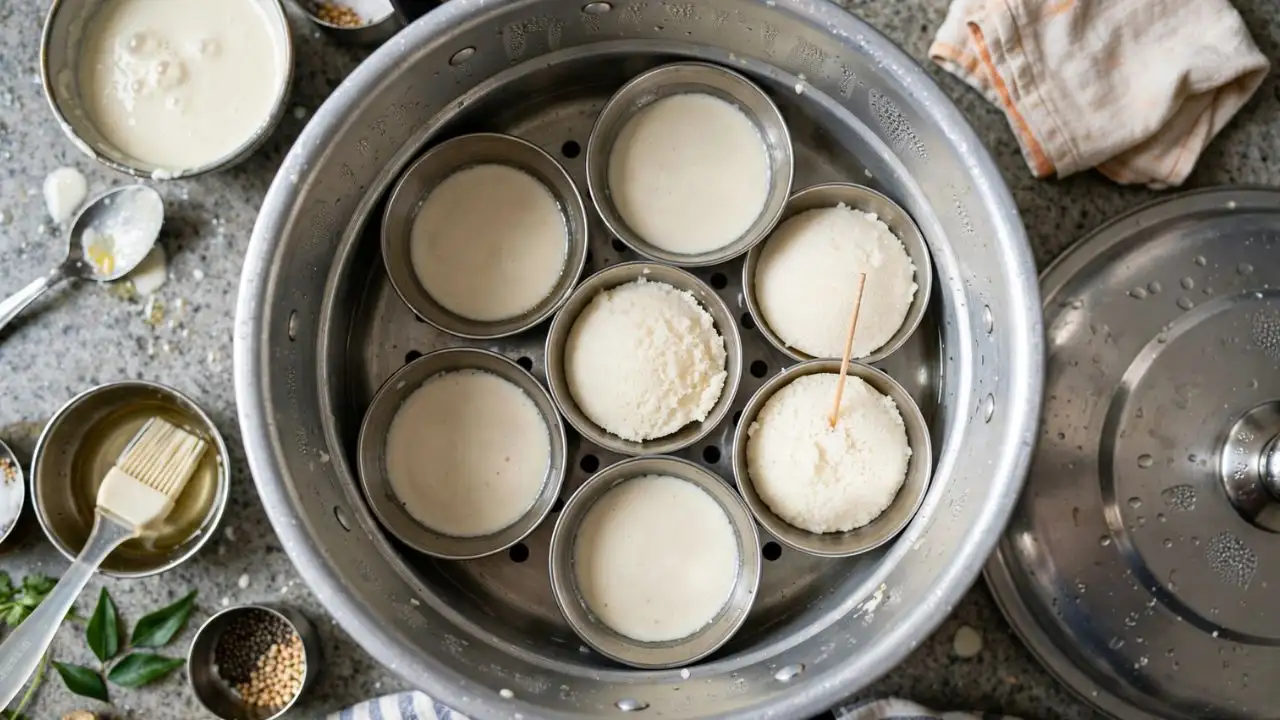
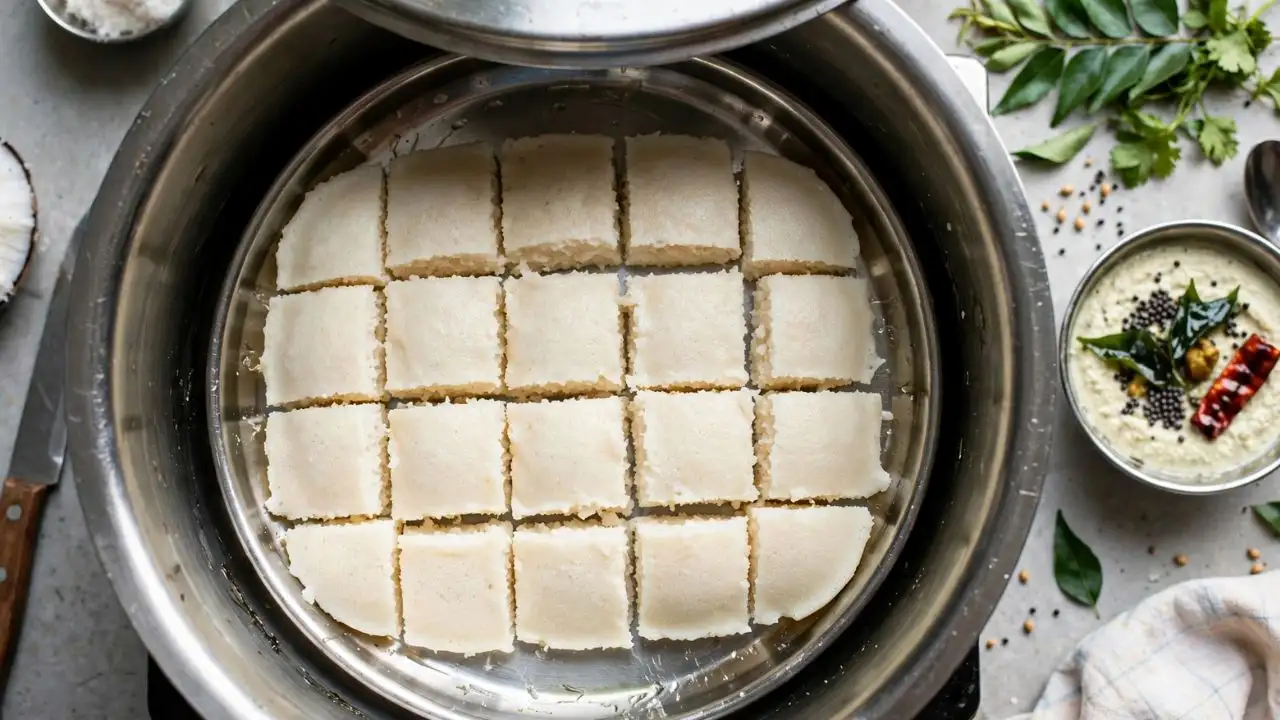
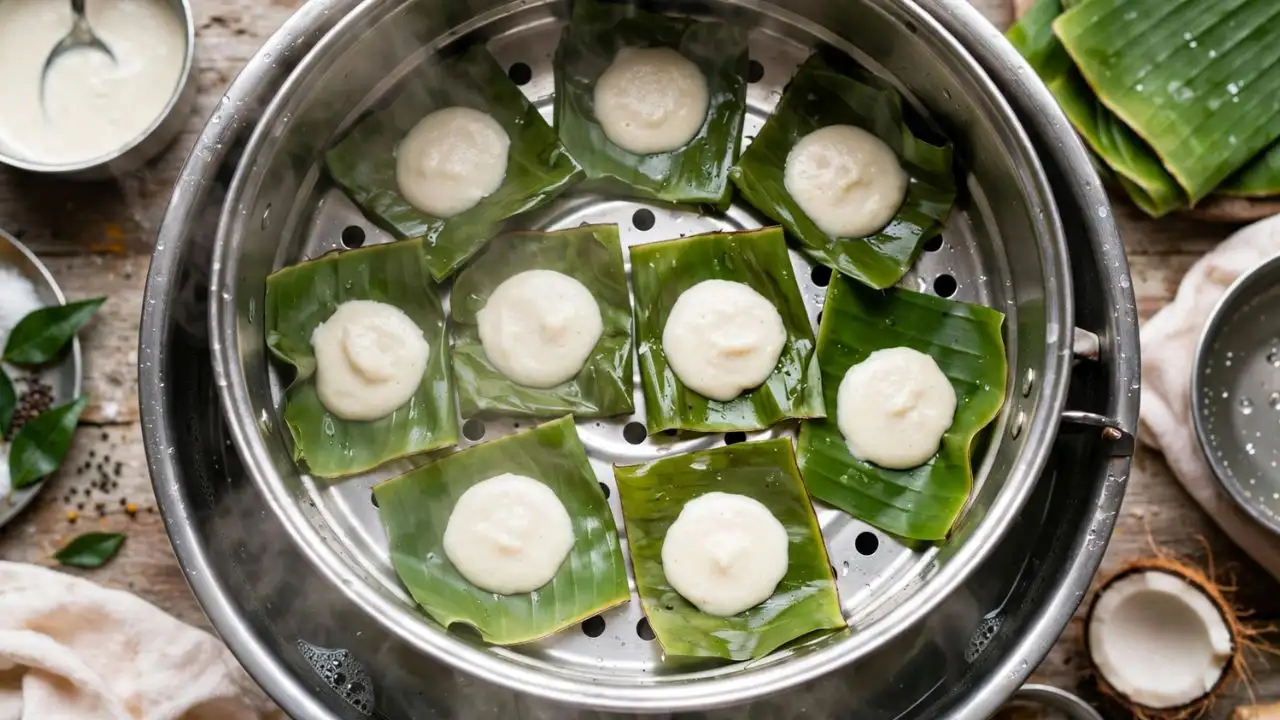
If you do not have katoris, use small steel bowls instead. The trick is to avoid filling them too deeply. A thin layer of batter cooks more evenly. Grease each bowl lightly before adding the batter. Place the bowls in a steamer or large covered pot. Leave a little space between them so steam can circulate. Check one idli with a toothpick before removing the bowls. If it comes out clean, the idli is ready. PC: AI Generated A steel plate can be useful when individual cups are unavailable. Grease the plate and spread the batter into an even layer. Place the plate inside a deep pot and cover it with a lid. Steam until the batter is fully cooked and the surface feels firm. Let it cool for a few minutes before cutting it into smaller pieces. This gives you soft, steamed pieces that can be served like regular idli. PC: AI Generated Banana leaves can be used when you want to steam idli batter without a conventional mould. Cut the leaves into manageable pieces and place them inside a steamer. Add small portions of batter to each piece. The leaf should remain above the water so the batter cooks through steam. Cover the pot and steam until firm. The batter can be removed from the leaf once it has cooled. This method also gives the idlis a subtle aroma from the leaf. Use fresh, clean leaves and soften them over low heat if they are too stiff to fold or place comfortably. PC: AI Generated One of the easiest ways to end up with dense idlis is to pour too much batter into the vessel. Batter expands as it steams, so a heavy cup can leave the centre heavy and undercooked. Give the batter a gentle stir before using it rather than mixing it vigorously. This helps even out the texture and prevents too much air from being knocked out. Let it rest for a few minutes before spooning it into the vessels. Leaving cooked idlis inside a closed steamer for too long can make their surface damp and their texture heavier. Once it is cooked, switch off the heat and carefully remove the vessels. Run a spoon around the edges and lift the idli gently. If it sticks, dip the spoon in water before removing it rather than scraping hard against the vessel. Looking for trusted parenting advice? Follow TOI Parenting Circle on Instagram for expert guidance, relatable stories, and practical tips delivered every day.
Idli is usually associated with a neat stack of moulds, but the stand is not what makes the steamed cakes soft. If you have idli batter ready and no mould at home, ordinary kitchen utensils can do the work. Small steel bowls, katoris or shallow heatproof dishes can hold the batter while it cooks. The bigger difference comes from how you fill them, how much steam reaches the batter, and when you take the idlis out. A deep bowl can leave the centre undercooked while an overfilled cup may produce a dense cake. Using smaller portions and giving the batter enough space to expand can help create a lighter texture. There are also a few simple ways to improve the result without changing the basic batter. From choosing the right vessel to controlling the steam, these methods can help you make soft idlis. Small stainless steel katoris can work well for making idli moulds. Grease the inner surface lightly with oil and pour in enough batter to cover only about half the vessel. This leaves space for the batter to rise as it steams. Arrange the katoris inside a wide pot or pressure cooker with a little water at the bottom. Keep them raised above the water so they are exposed to steam. Cover and steam until the centres are cooked. PC: AI Generated