
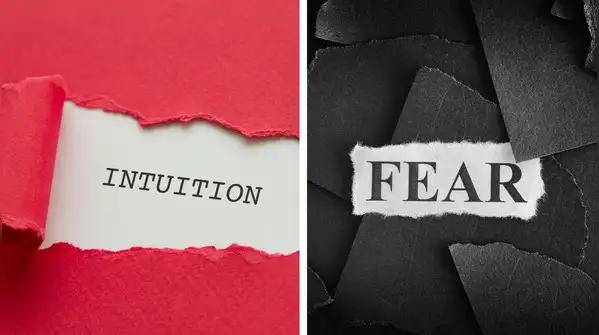
Sometimes your mind says, “Something is not right.”
There is a subtle difference between “This particular thing feels wrong” and “Everything feels dangerous. The two can feel surprisingly similar. Both can make your stomach drop. Both can make you want to step back. And both can arrive before you have consciously worked out what is bothering you. So how do you tell them apart? There is no foolproof test, but paying attention to the way the feeling behaves can help. Images: Canva (for representative purposes only) Intuition is often less dramatic than people expect. It may sound like a simple thought: I don’t think I should do this. You may not have a long explanation ready, but something about the situation feels off. Fear, on the other hand, tends to keep adding to the story. What if this goes wrong? What if they are upset with me? What if I regret this? What if something terrible happens? One thought leads to another, and suddenly your mind is running through several possible disasters. That difference can be useful. A quiet hesitation is not automatically intuition, but a rapidly multiplying list of worst-case scenarios is often a sign that anxiety or fear is influencing the decision. Think about a new person you have just met. You might notice that they repeatedly ignore your boundaries, contradict themselves, or behave in a way that makes you uncomfortable. Your mind quietly registers those details before you consciously put them together. That feeling that something is off may be worth paying attention to. Fear works differently. It can take a neutral situation and race several steps ahead. Someone takes longer than usual to reply, and suddenly you are imagining that they are angry, losing interest, or planning to leave. None of those things may have actually happened. A useful question is, “What do I know right now, and what am I imagining might happen? That small distinction can bring you back to reality. One of the best ways to examine a strong feeling is to test it against the facts. Suppose you have a bad feeling about a decision. Ask yourself why. If you can identify specific things that have happened, your concern deserves attention. Perhaps someone has broken your trust repeatedly, a situation has changed in a noticeable way or there is information you have been overlooking. Fear often becomes weaker when you examine the evidence. You may realize that the person has not actually done anything wrong, the situation is familiar rather than dangerous, or your worry is based mainly on something that happened to you in the past. That does not mean every fear is irrational. It simply means a feeling deserves to be examined before it is treated as a fact. Fear loves urgency. It can make you feel that you need to act immediately: send the message, cancel the plan, quit, confront someone, or make a decision before something terrible happens. Sometimes immediate action really is necessary, especially when there is an obvious safety concern. But in ordinary situations, giving yourself a little time can reveal whether you are responding to a genuine concern or simply reacting to uncertainty. Try asking, “Would I make the same decision after I have slept on it? If the answer is yes, you may have a concern worth exploring. If the feeling changes dramatically once you have calmed down, it may have been driven more by fear than by a clear reading of the situation. Intuition can be specific. You might feel uncomfortable around one person, question one opportunity, or sense that one decision does not fit with what you want. Fear can become much broader.





The difficult part is figuring out what kind of voice you are actually hearing. It could be intuition, that quiet feeling that makes you pause even when you cannot immediately explain why. Or it could be fear, which can make an ordinary situation feel dangerous, uncertain, or far more threatening than it really is.
Because you are worried about what might happen, you start avoiding conversations, people, decisions and possibilities. The problem is no longer one particular situation. It becomes the uncertainty itself. That is when it can help to ask, “Am I protecting myself from something specific, or am I trying to escape the feeling of uncertainty? The answer may tell you more than the feeling itself.